Hereford Cattle Facts: What Every First-Time Buyer Should Know
The Hereford cattle facts that matter most to a buyer aren't the trivia — they're the things that change how the animal performs on your place. Red body, white face, moderate frame, easy disposition, and a reputation for doing well on grass that wouldn't carry a fussier breed. That's the short version. The longer version is below.
We've bred and sold Herefords out of Rochelle, Texas for more than 25 years, and most of what follows is what we tell people standing at the fence, not something pulled off a spec sheet. If you're ready to look at cattle instead of just reading about them, our hereford cattle for sale listings are updated as animals become available.
Fact One: Hereford Cattle Facts Start With the Breed's English Origin
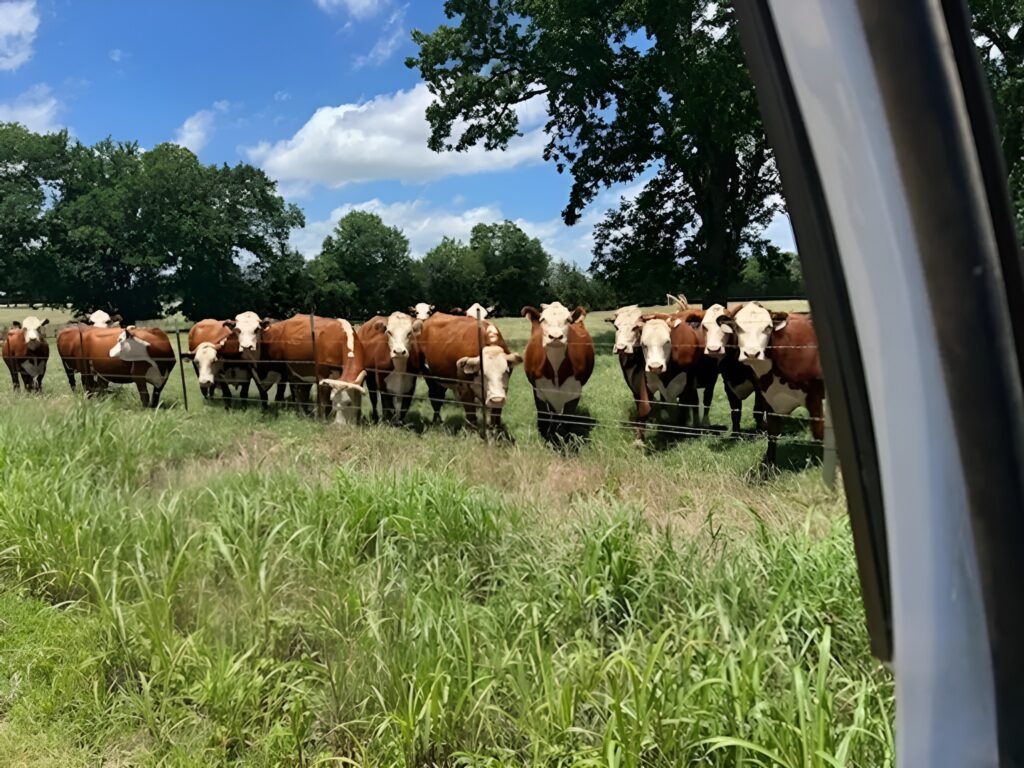
The breed takes its name from Herefordshire, England, where farmers developed the cattle over generations from local stock, selecting for animals that could work hard and finish well on pasture. Hereford cattle origin traces back to that county, and the breed was brought to the United States in the 1800s, where it found a natural home on the open range of the West and, later, Texas. That history explains a lot about the hereford cattle description you'll hear today — a moderate-framed animal built to do well without heavy feeding.
Fact Two: The Color Pattern Is Genetically Dominant
Every hereford cattle description starts the same way: a red body ranging from light red-orange to deep mahogany, with a white face, crest, dewlap, belly, and switch of the tail. What's less commonly known is how strongly that pattern is inherited — cross a Hereford onto almost any other breed and the white face tends to show up in the calf. That's part of why black baldy calves, out of a Hereford cow bred to a black bull, are such a common and recognizable cross in commercial herds.
Buyer note: coat color and pattern are cosmetic. They don't tell you anything about an individual animal's growth, fertility, or temperament — those still need to be evaluated animal by animal.
Fact Three: Horns and Polled Genetics Are Both "Real" Herefords
One of the hereford cattle facts new buyers get wrong most often is assuming horned and polled are different breeds. They're not. Polled Herefords carry a naturally occurring hornless gene that breeders selected for and stabilized over time, and both horned hereford cattle and polled lines are registered under the same breed standard.
Why Most Commercial Buyers Choose Polled
A polled hereford cow or bull skips the dehorning step entirely, which matters at working time and cuts down on bruising in transport. We currently have 20 Reg. Hereford Bulls that include both horned and polled animals if you want to compare the two side by side before deciding which fits your operation.
Fact Four: Herefords Are Built for Grass, Not Feed Bunks
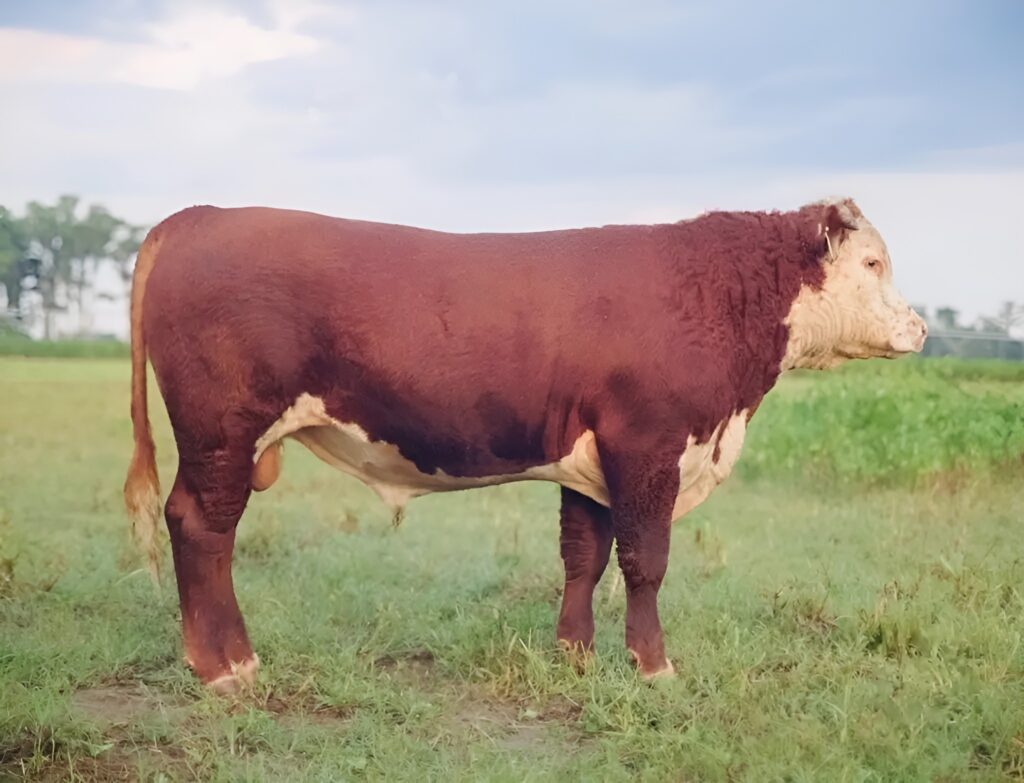
Among the hereford breed characteristics that matter most to a working operation is foraging ability. Herefords hold condition on pasture that would leave a higher-input breed thin, and they don't require the same level of supplementation to stay productive through a lean winter. That trait traces straight back to the breed's origin on working farms where cattle had to earn their keep on what the ground produced.
This is also why Hereford genetics show up so often in crossbreeding programs across the South and West — a Hereford cow adds hardiness and easy fleshing to almost any cross. If you want more on that side of things, our post on Hereford cattle characteristics covers frame, size, and temperament in more depth.
Fact Five: Disposition Is Bred In, Not Just Luck
Facts about Hereford cows consistently mention temperament, and for good reason — Herefords are known for being calm and easy to work compared to a lot of continental breeds. That's not an accident; generations of selection for cattle that could be handled by a working crew, not just a specialist, built it into the breed. It's a big reason Herefords are a common first choice for 4-H and FFA families.
Fact Six: Calving Ease and Maternal Strength
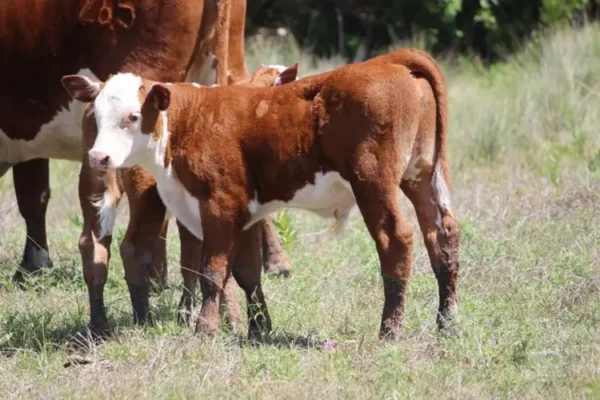
Hereford cows are known for straightforward calving — moderate birth weights and good pelvic structure mean fewer difficult pulls than you'll see in heavier-muscled breeds. Once the calf is on the ground, Hereford cows are attentive mothers with enough milk to raise a strong weaning weight relative to their frame. Our 50 Hereford Cows listing is a good example of a commercial group bred for exactly that combination — moderate frame, easy fleshing, and calving ease.
Fact Seven: Hereford Beef Has Its Own Identity
Beyond the pasture, Hereford genetics carry a long-standing reputation for marbling and flavor, which is part of why there's a dedicated Certified Hereford Beef program separate from the more familiar Angus beef brands. For registration standards, EPDs, and the full breed history, the American Hereford Association is the definitive source rather than secondhand summaries.
From Our Place
Twenty-five years in, the Hereford cattle facts that still hold up best on our operation are the practical ones: they forage well, they calve easy, and they're not hard on a crew at working time. We run Herefords straight and crossed onto Angus, and the black baldy calves out of that cross are some of the fastest-selling pairs we list. If you're weighing hereford vs angus for your own herd, our honest take is that the two complement each other more than they compete.
Frequently asked questions
What are some interesting Hereford cattle facts?
Beyond the red-and-white color pattern, Herefords are known for calving ease, calm temperament, strong foraging ability on marginal pasture, and a color pattern that's genetically dominant enough to show up clearly in crossbred calves like black baldies.
Are Hereford cattle good beef cattle?
Yes — Hereford beef has a long reputation for marbling and flavor, strong enough that there's a dedicated Certified Hereford Beef program. The breed is also valued for calving ease and foraging ability, which keeps input costs down without sacrificing carcass quality.
Do all Hereford cattle have horns?
No. Horned hereford cattle and polled Hereford cattle are both full-blooded Herefords under the same breed standard. Polled is a naturally occurring hornless trait that many breeders selected for; it doesn't change growth, temperament, or beef quality.
Where did Hereford cattle originate?
Hereford cattle originated in Herefordshire, England, where farmers developed the breed for hardiness and grass performance. They were brought to the United States in the 1800s and adapted well to the range country of the West and Texas.
What's the difference between a Hereford and a Black Hereford?
A Black Hereford carries the white face pattern of a traditional Hereford but with a black body instead of red, usually from crossing Hereford genetics with a black breed and then breeding back toward a stable type. They're registered separately from traditional red Herefords.
Knowing these Hereford cattle facts before you buy means fewer surprises once the animal is on your trailer — you'll know what frame to expect, how it should handle, and what questions to ask if something doesn't line up.
Ready to Look at Hereford Cattle?
Every listing is priced on the listing, comes with health papers, and can be delivered to all 48 states. New buyers can start with our how to buy cattle online page.
hereford cows for sale