
Hereford Cattle Calving: A Buyer's Guide for 2026
If you're buying into Hereford cattle for the first time, hereford cattle calving is usually the first practical worry — not color, not papers, but whether the cow you buy will calve on her own and raise that calf without you standing in the mud at 2 a.m. The short answer: Herefords have a long track record of easy, unassisted calving, but the details depend on frame, birth weight and whether you're buying bred females or picking a bull to breed your own.
We've calved out Hereford cows and heifers at Rochelle for more than 25 years, both horned and polled, registered and commercial. This guide covers what actually affects calving ease — birth weight, frame, horned versus polled, and how to read a bull's numbers before you buy him — along with what we do differently at calving time versus the rest of the year. If you're shopping bred females right now, our hereford heifers for sale listings show heifers already checked for calving readiness.
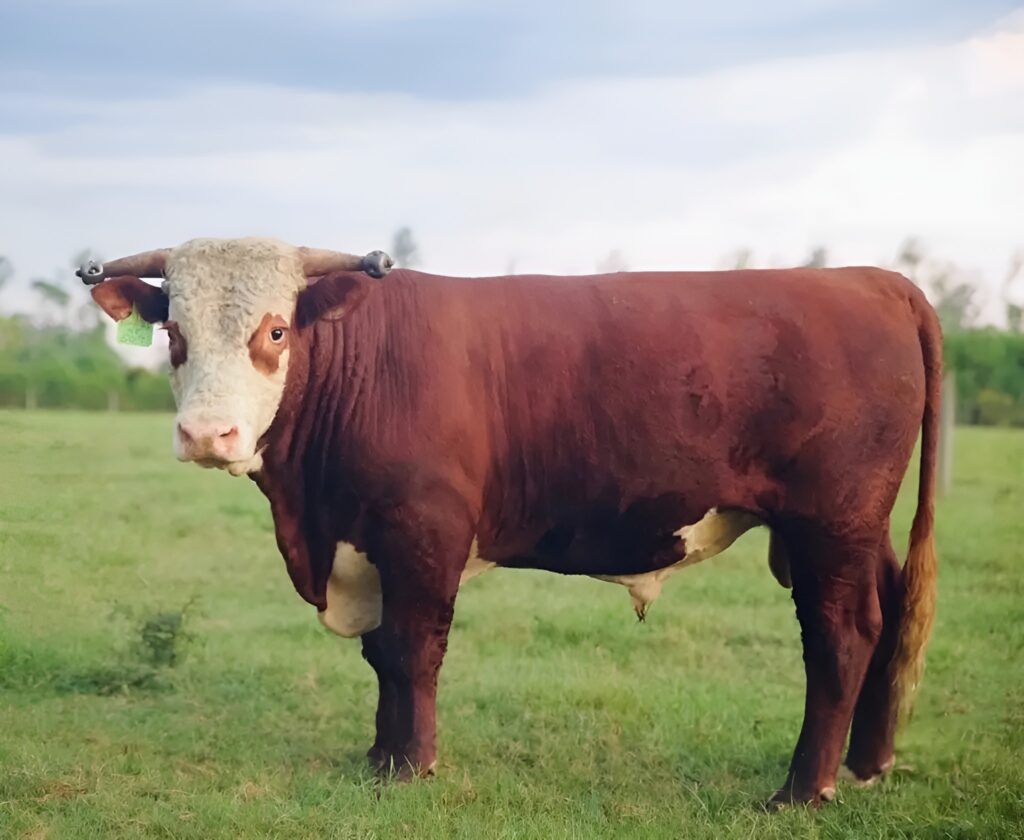
Hereford Cattle Calving Facts on Birth Weight
One of the more useful hereford cattle facts for a buyer is that birth weight, not frame, is the number that actually predicts calving ease. A big-framed bull can still throw light calves if his birth-weight EPD is low, and a moderate-framed bull can throw heavy calves if his numbers run high. Registered bulls carry EPDs through American Hereford Association records that track this back through the pedigree. Bulls we sell list an actual birth weight alongside their predicted numbers — our 5 Reg. Hereford Bulls ran about 80 lb at birth themselves, which is the kind of number worth checking before you turn a bull out on first-calf heifers.
Horned vs. Polled — Does It Change Calving?
Horned hereford cattle and polled hereford cow lines calve about the same; the horn gene itself has no bearing on calving ease. What changes is that a horned calf needs careful handling at branding and weaning, and some buyers choose polled genetics specifically to avoid that step later, not because it changes anything at birth. If you're deciding between the two for a first herd, it usually comes down to what you want to manage at working time, not what you're worried about at calving.
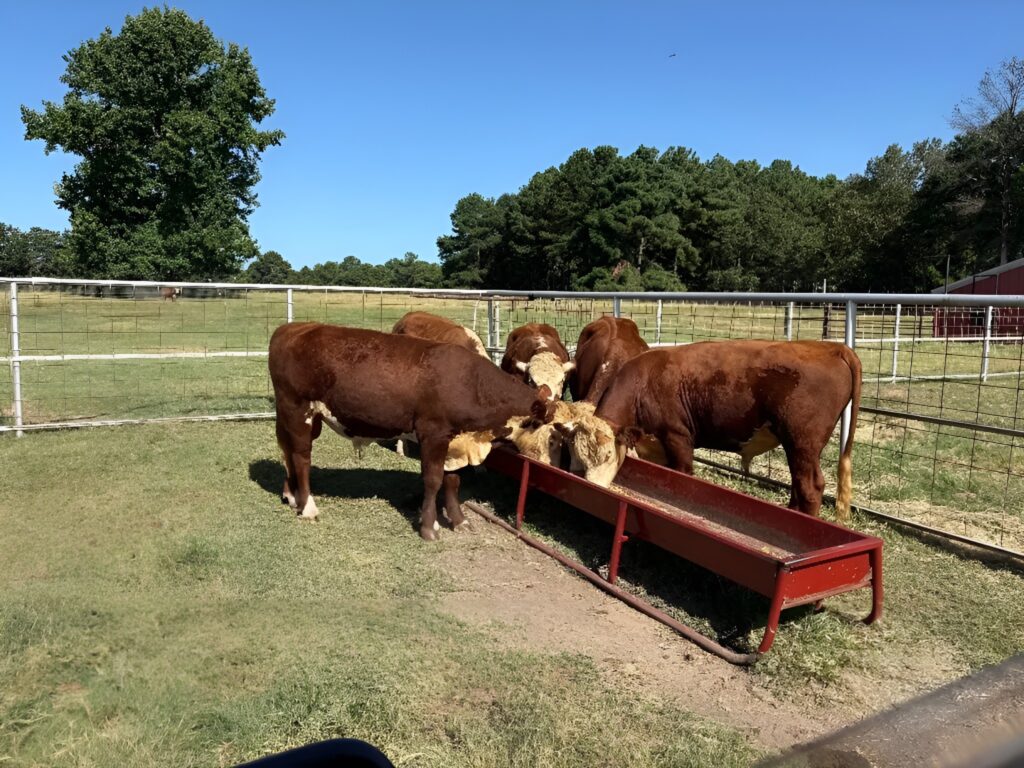
Frame, Hereford Cow Size and What It Means at Calving
Hereford cow size runs moderate compared to some of the larger continental breeds, and that moderate frame is part of why the breed has a reputation for calving without much help. A mature commercial Hereford cow typically weighs 1,100 to 1,400 pounds, similar to a commercial Angus cow, and that frame consistency across the breed's hereford breed characteristics is one reason commercial operations lean on Herefords for first-calf heifer programs specifically. This kind of consistency across hereford cattle characteristics — frame, calving ease and maternal instinct — is part of why the breed holds up across regions with very different forage bases, from Texas caliche country to fescue pasture further north.
What Assistance Rates Actually Look Like
These numbers reflect general hereford cattle traits rather than a guarantee for any single animal, but they're a reasonable starting point for budgeting labor and vet calls at calving time. Mature cows bred to a moderate-birth-weight bull rarely need help; the risk climbs mainly when you combine a first-calf heifer with an unproven or high-birth-weight bull.
| Scenario | Typical assistance rate | Notes |
|---|---|---|
| Mature cow, moderate-BW bull | Under 5% | Typical for a settled commercial herd |
| First-calf heifer, low-BW bull | 5–10% | Still low relative to continental crosses |
| First-calf heifer, unproven or high-BW bull | 15%+ | Where most trouble actually shows up |
Buying Bred Females vs. Raising Your Own
If hereford cattle calving risk is the main thing you're buying to reduce, a proven cow that has already calved once without trouble tells you more than any EPD sheet. Our 3 Reg. Hereford 2nd-Calf Pairs come from cows on their second calf, both with black baldy calves at side sired by a registered Angus bull, so you're seeing calving-ease traits play out rather than betting on paper. If you'd rather start with pairs already through their first calving, browse our hereford calves for sale listings.
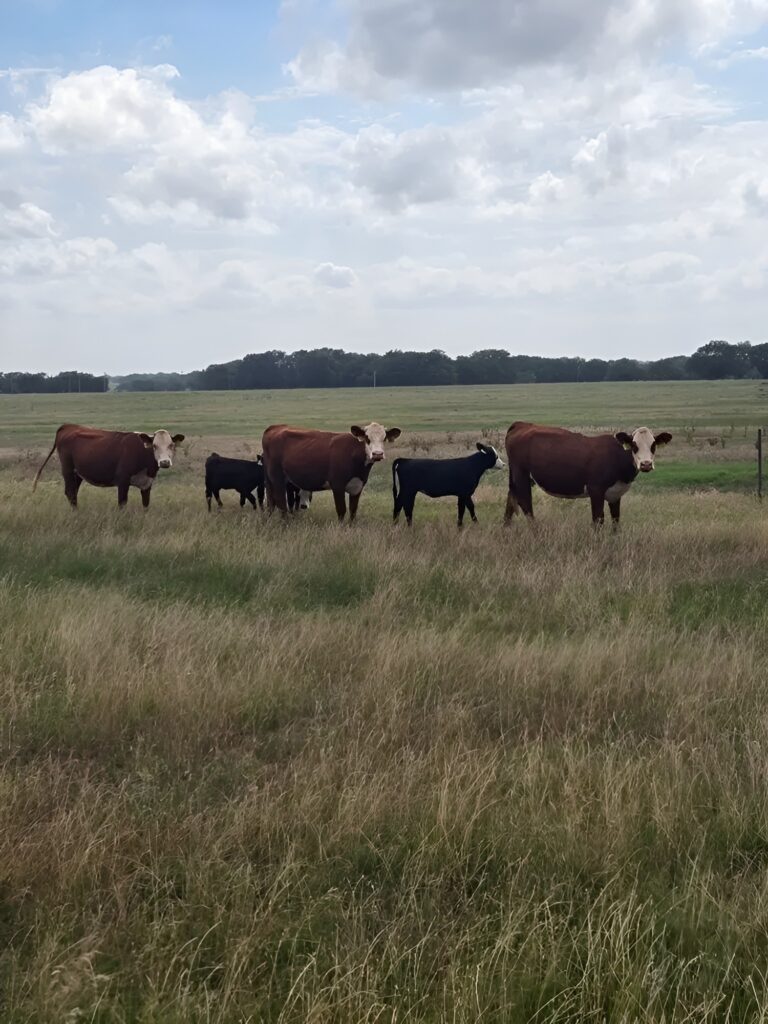
Buyer note: Ask for actual birth weights, not just EPDs, on any bull you're considering for heifers — the real number on his own calves matters as much as the predicted one.
From our place
At Rochelle we calve most of our commercial Hereford cows in late winter to catch spring grass, and we still walk the herd daily through the calving window even though assistance is rare. What we've learned over 25 years is that most of the trouble we do see comes from bulls with unproven numbers on first-calf heifers, not from the cows themselves, which is why we're particular about which bulls we turn out on young females and which ones we're comfortable putting anywhere. Most of the facts about hereford cows that actually change a buying decision come down to what her first calving looked like, not what her papers say — that's the question we ask before any of our own commercial cows go back into the breeding pasture. For general reference on calving-season timing and herd nutrition, Texas A&M AgriLife Extension is a resource we point buyers to as well.
We go deeper on frame specifically in our post on Hereford cow size and weight by age.
Frequently asked questions
Do Hereford cows calve easily?
Yes, in general. Hereford cows have a long-standing reputation for unassisted calving, largely because of their moderate frame and the breed's history of selection for maternal ease. Individual results still depend on the specific cow and the bull she's bred to, so checking actual numbers matters more than relying on breed reputation alone.
What birth weight should I look for in a Hereford bull?
For heifers, look for bulls with birth weights in the 65 to 80 lb range and a low birth-weight EPD relative to the breed average. Mature cows can typically handle a somewhat heavier calf, so the birth weight that matters most depends on what you're breeding him to.
Does horned or polled affect calving?
No. The polled gene affects whether a calf grows horns, not how easily it's born. Horned and polled Hereford cattle calve at essentially the same rate; the practical difference between the two shows up later, at branding and weaning.
What size is a Hereford cow at calving?
Hereford cow size for a mature commercial cow typically runs 1,100 to 1,400 pounds. That moderate frame, compared to larger continental breeds, is part of why the breed is associated with easier calving and lower assistance rates.
Should I buy a bred heifer or a proven cow for easier calving?
A proven cow that has already calved without trouble is the lower-risk option, since you're seeing results rather than predictions. Bred heifers cost less but carry more uncertainty, especially if bred to an unproven bull.
When do most Hereford cows calve?
Timing depends on when they were bred, but many commercial operations in Texas aim for late winter to early spring calving to match calf growth with green grass. Fall calving is also common depending on your forage program and market timing.
Birth weight, frame and horned-versus-polled cover most of what actually changes hereford cattle calving outcomes — everything past that comes down to the individual cow or bull in front of you.
Looking for Hereford Cattle Bred for Easy Calving?
Every animal we list is priced on the listing — see current hereford cow price figures and know that delivery is arranged to all 48 states.
Hereford cow for sale