Hereford Cattle Facts: Registered vs Commercial Cattle
Hereford cattle facts get repeated so often online that a lot of them are half-true by the time they reach a buyer — and the biggest point of confusion is the gap between registered and commercial Hereford cattle. They're the same breed underneath, but the paperwork, the price, and what you're actually buying are not the same thing, and mixing the two up is how buyers overpay or end up with cattle that don't fit their program.
We've raised both registered and commercial Herefords at our place in Rochelle for more than 25 years, and in this post we'll lay out the facts that actually matter — what "registered" means on paper, how commercial cattle differ, hide and horn traits, calving behavior, and what to check before you buy either kind. If you're weighing a set of hereford cattle for sale, this is the breakdown we'd want if we were the ones buying.
Hereford Cattle Facts: What "Registered" Actually Means
The most important of the hereford cattle facts to get straight is that "registered" is a paperwork status, not a quality guarantee. A registered Hereford has papers filed with the American Hereford Association tracing its parentage, and often comes with EPDs (expected progeny differences) that predict traits like birth weight and growth. Commercial Hereford cattle are unregistered — they may carry excellent genetics, sometimes from registered parents, but there's no paper trail and no EPDs to lean on. Both can be good cattle; the paperwork just tells you how much you can prove about them before you buy.
What the Paperwork Is Actually Worth
Registered cattle cost more because the paperwork lets a buyer plan breeding decisions with real data instead of guesswork — useful if you're building a seedstock herd or need documented genetics for a breeding program. Commercial cattle cost less and are the backbone of most cow-calf operations, where a rancher cares more about how a cow performs on grass than what her pedigree says. Our 20 Reg. Hereford Bulls listing shows what documented genetics look like at scale — horned and polled, tested fertile, ready to work.
Hereford Cow Characteristics You Can Verify Yourself
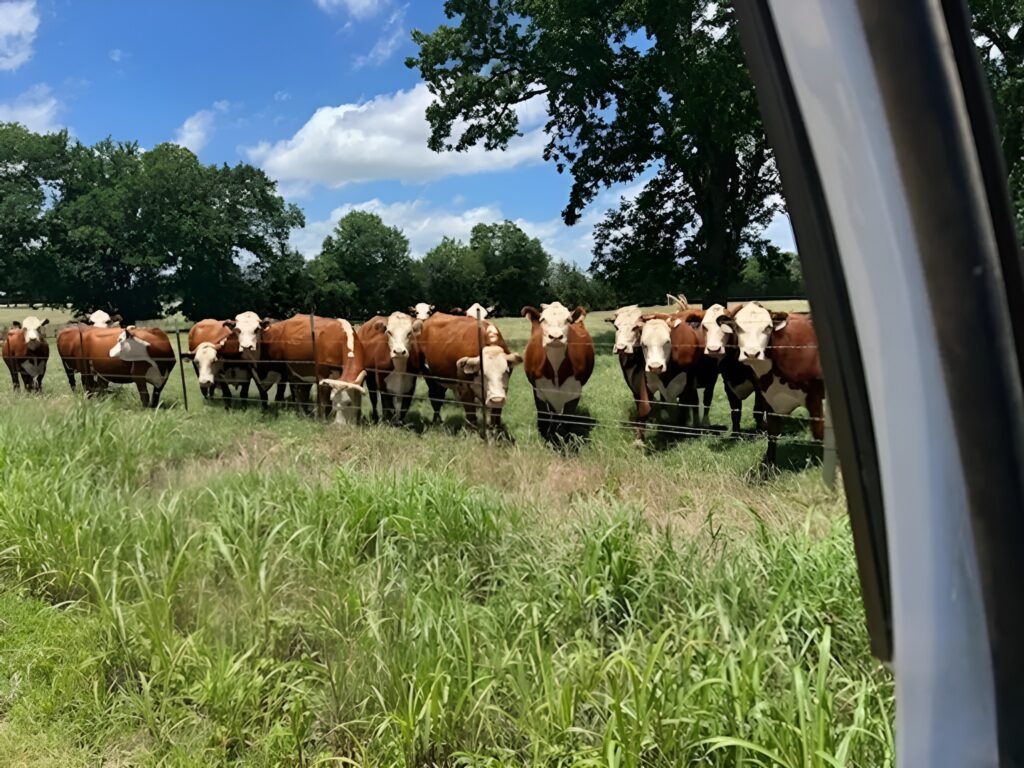
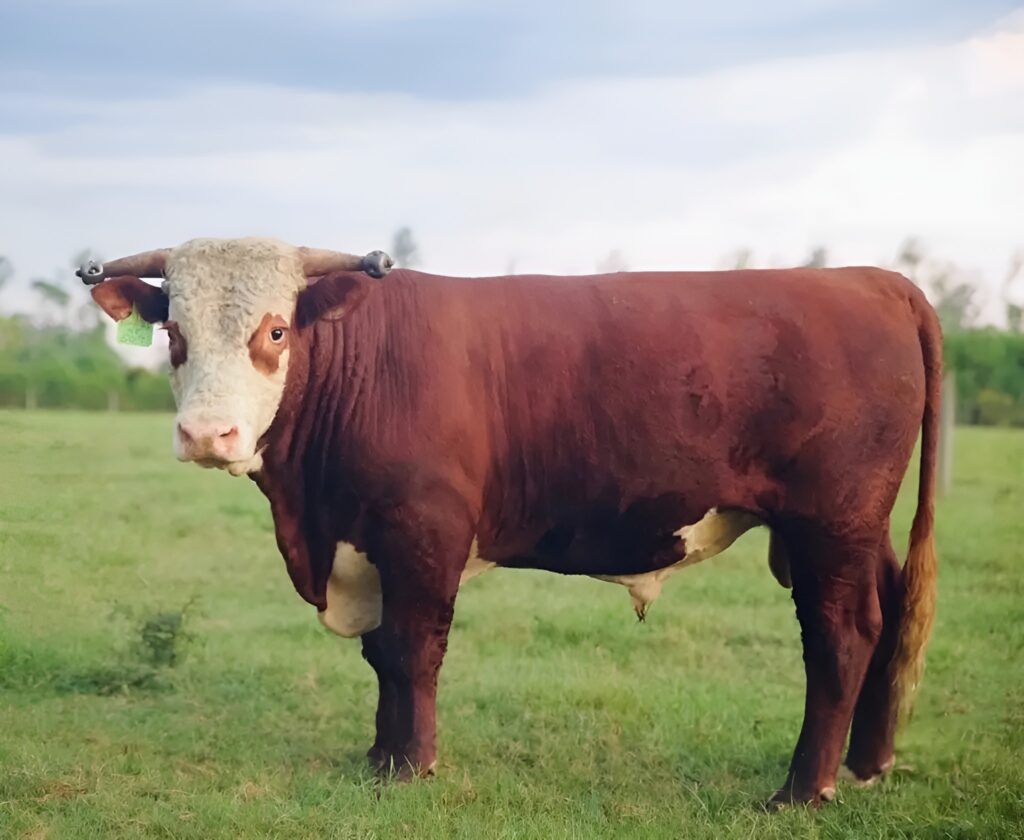
Some hereford cow characteristics don't need papers to confirm — you can check them standing at the fence. Red body color with a white face, crest, underline, and switch is the breed standard for both registered and commercial cattle. Horned or polled is a genetic trait either type can carry, so don't assume registered means polled or commercial means horned; ask, or look. A hereford cattle description worth trusting also covers frame: moderate to large-framed, deep-bodied, with enough bone to hold condition through a Texas summer without falling apart by fall.
| Trait | Registered Hereford | Commercial Hereford |
|---|---|---|
| Papers / EPDs | Yes, AHA registered | No, unregistered |
| Typical price | Higher | Lower |
| Best fit | Seedstock, 4-H/FFA show, breeding program | Commercial cow-calf, grass-based operations |
| Hide and frame | Same breed standard | Same breed standard |
If commercial numbers on grass are what you need, our 50 Hereford Cows listing is a straightforward example — preg-checked, polled, and priced to work as a commercial set rather than a show string.
Hereford Cattle Origin and Why the Facts Repeat So Much
Part of why hereford cattle facts get repeated so consistently is that the breed's story hasn't changed much in two centuries — Herefords trace back to Herefordshire, England, bred originally as a dual-purpose draft and beef animal before American breeders selected them hard for beef production and range hardiness. That long, stable hereford cattle origin is exactly why the breed reads as consistent today: a registered bull from Nebraska and a commercial cow from Texas still carry the same recognizable hide pattern and frame. The American Hereford Association keeps the full registry and EPD data if you want to verify a specific animal's background before you buy, and it's the place to go if you want to confirm any hereford cattle breed claims a seller makes on paper.
A good commercial Hereford cow and a good registered Hereford cow can stand in the same pen and look like twins — the difference is entirely in what you can prove on paper.
Calving and Temperament: Hereford Cattle Traits That Matter Day to Day
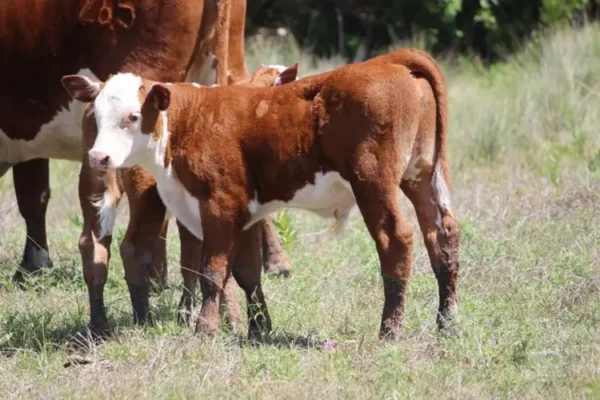
Beyond hide and papers, the hereford cattle traits that actually affect your workload are calving ease and disposition, and neither depends on registration status. Herefords are known for calving with less assistance than many continental breeds, largely because of moderate birth weights and good pelvic structure in the cows. Temperament runs calm across the breed, registered or commercial, which is one reason Herefords stay popular with families and first-time buyers. If calving ease is a priority, our hereford calves for sale come from cows we've already seen calve without trouble.
Buyer note: Ask any seller, registered or commercial, whether the cows have a history of calving unassisted. That single fact tells you more about a set's real value than a pedigree does.
Facts About Hereford Cows Worth Remembering Before You Buy
A short list of facts about hereford cows that hold true across registered and commercial lines: cows typically weigh 1,100 to 1,500 pounds at maturity depending on frame score, they breed back reliably on moderate pasture without heavy supplementation, and their white faces mean more attention to pinkeye and sunburn prevention than a solid-hided breed needs. None of that changes with a registration certificate — it's the breed, not the paperwork, doing the work. These are the same hereford cow facts we walk every buyer through before they commit to a set.
For herd sires with a documented pedigree behind those traits, our hereford bulls for sale near me selection includes both horned and polled bulls, tested fertile and ready to turn out.
From our place
After 25 years running both sides of this business, our honest take is that most buyers overthink the registered-versus-commercial decision. If you're building seedstock or need EPDs to plan matings, pay for registered. If you're stocking a commercial cow-calf operation and care about pounds weaned per acre, commercial cattle with the right hereford cow characteristics will make you just as much money for less up-front cost. We keep small, documented sets of registered cows on hand too, for buyers who do want that paper trail.
Frequently asked questions
What are the most important hereford cattle facts for a first-time buyer?
Registration is paperwork, not a quality guarantee; hide color and frame follow the same breed standard whether registered or not; and calving ease and temperament are consistent strengths across the breed. Those hereford cattle facts matter more than price alone when you're comparing two sets.
Is a registered Hereford always better than a commercial one?
Not necessarily — "better" depends on your goals. Registered cattle give you documented genetics and EPDs for breeding decisions; commercial cattle can perform just as well on grass for a lot less money if you don't need the paper trail.
What is the typical hereford cow characteristics buyers should check?
Red body with white face, crest, underline and switch; moderate to large frame; deep body; and either horned or polled heads, since both are normal for the breed. Structure and udder soundness matter as much as color.
Do commercial Hereford cows calve as easily as registered ones?
Yes — calving ease is a breed-wide trait tied to genetics and cow structure, not registration status. A commercial cow from a line selected for easy calving will calve just as well as a registered one from similar genetics.
Why do Hereford cattle facts online repeat so much?
Because the breed has changed very little in two centuries of selection — the hide pattern, frame, and temperament described a hundred years ago still describe the cattle today, so the same core facts about hereford cows keep getting repeated.
Whether you land on registered or commercial, the hereford cattle facts that matter most come down to structure, disposition, and how a set fits your ground. For more on where the breed comes from, see our post on Hereford cow origin, or check current numbers on the hereford cow price page before you call.
Looking for registered or commercial Herefords?
Every animal we list is priced on the listing, comes with health papers, and can be delivered to all 48 states.
Shop registered hereford cows for sale