Lowline Angus vs Standard Angus: Size and Cost Compared
Lowline Angus is a genuine small-frame branch of the Angus breed, not a miniature version created by crossbreeding — it was developed by selecting for smaller mature size within Angus genetics, starting at an Australian government research station in the late 1920s. Compared to a standard Angus, a Lowline runs roughly half the mature weight on a fraction of the pasture, while keeping the same black hide, calm temperament and much of the carcass quality the breed is known for.
We run standard commercial and registered Angus at Rochelle, so this post looks at Lowline Angus from a buyer's perspective — what actually separates it from a standard-frame Angus, what it costs relative to a full-size animal, and where to start if you want Angus genetics on our site while you search for a Lowline program specifically. Our angus heifers for sale listings are a reasonable starting point if a smaller standard heifer would work for your acreage in the meantime.
Where Lowline Angus Actually Came From
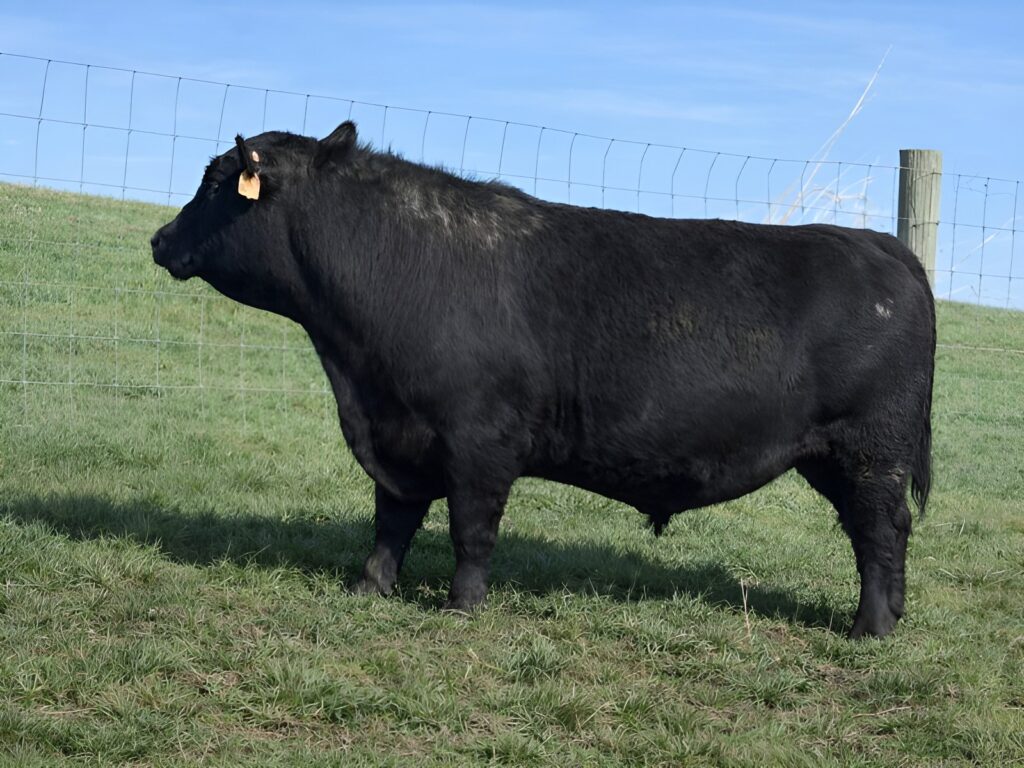
Lowline angus cattle trace back to a research herd at the Trangie Agricultural Research Centre in New South Wales, Australia, where scientists selected Angus cattle for smaller frame size starting in 1929 to study how frame size affects feed efficiency. The smaller-framed line proved efficient enough that breeders eventually developed it into its own registered type rather than keeping it as a research curiosity, and it made its way to the US in the 1990s.
Lowline Angus Size vs Standard Angus
Beef cattle angus size varies enormously between a standard commercial Angus and a Lowline, which is really the whole point of the breed. A mature Lowline cow typically weighs less than half what a standard Angus cow does, and a mature Lowline bull follows the same pattern relative to a standard herd bull. We cover standard angus cow weight by age in more detail elsewhere, but the short version is that a Lowline essentially takes that whole curve and scales it down.
We go deeper on standard Angus sizing in our post on Angus cow weight by age and frame.
Lowline Angus Bulls and What Carries Over
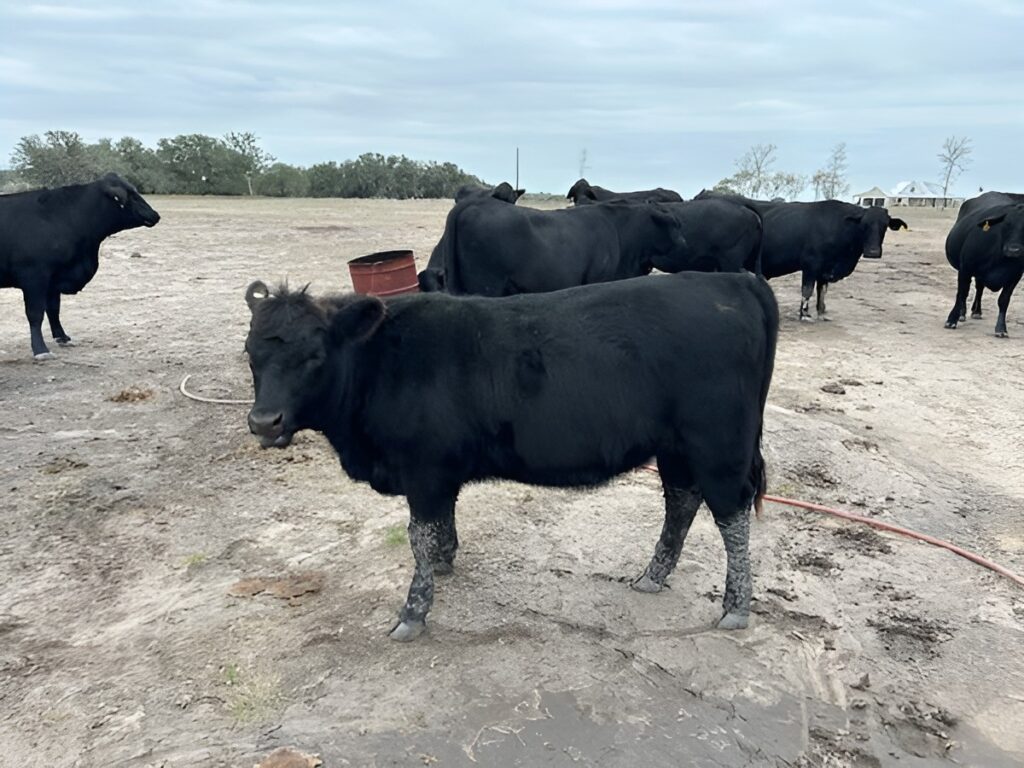
A lowline angus bull carries the same black hide and much of the same disposition as any black angus cattle, since the breed didn't change color or temperament when it was bred down for size — it only changed frame. Several angus characteristics buyers value in a standard bull, like calving ease and calm temperament, carried straight through to the Lowline, which is part of why the breed found a following with small-acreage owners rather than staying a research-only curiosity.
Why Buyers Choose Lowline Over Standard
Because of their reduced size, more Lowline cows can graze the same acreage than standard cattle, which matters on the kind of small acreage where stocking rate is the real limiting factor — Texas A&M AgriLife Extension publishes general stocking rate guidance if you want to run the numbers for your own ground. The angus cattle characteristics that matter most to a small-acreage buyer — calm temperament, easy calving, decent carcass quality — carry over from standard Angus, just packaged into a smaller, easier-to-manage animal.
Lowline Angus Carcass Quality
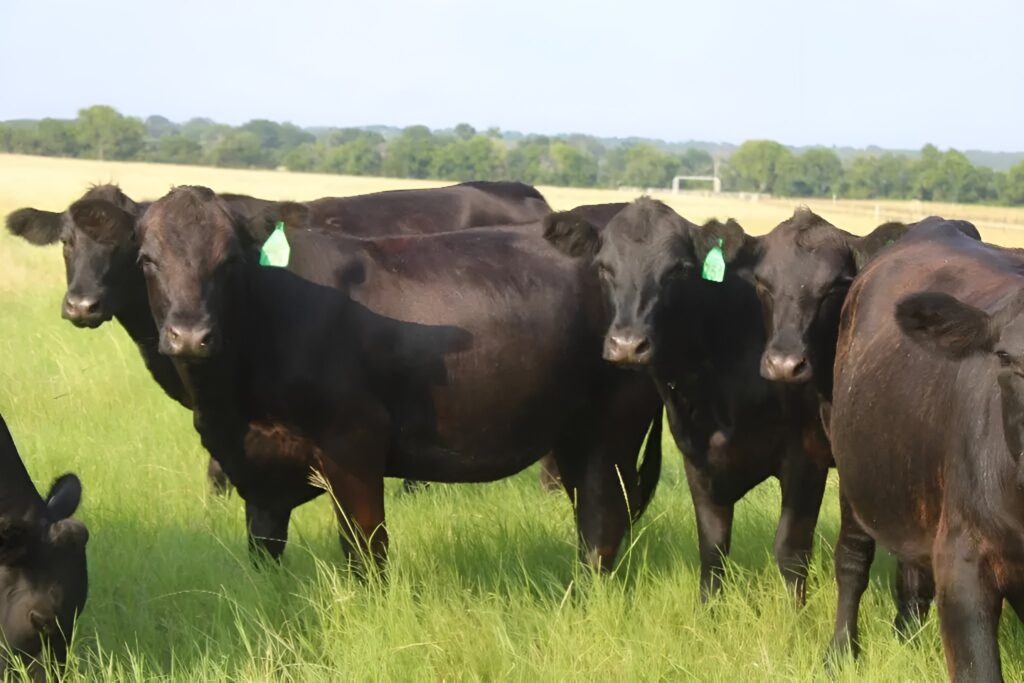
One thing that didn't shrink along with the frame is carcass quality. Lowline Angus still carries much of the marbling ability the parent breed is known for, and because the animal reaches maturity on a smaller overall frame, it can finish at a lighter live weight while still producing a reasonably sized carcass relative to its size. That's part of why the breed has found a niche with small-scale producers finishing their own beef rather than selling calves into a commercial feeder system — a Lowline steer can be a manageable, freezer-sized project in a way a standard 1,400-pound steer isn't. If you're comparing that angle against standard Angus genetics, our angus cattle for sale listings show what a full-frame animal looks like for the same comparison.
What Lowline Angus Actually Costs
Like most bred-down miniature or small-frame lines, Lowline Angus often costs more per pound of body weight than a standard commercial Angus, not less — you're paying for a specialized breeding program and registered genetics, not commodity beef weight. If you want to start with proven standard Angus while you search for a verified Lowline program, our Angus Heifer listing is a smaller individual animal from our own herd.
Buyer note: Ask for registry documentation through a recognized Lowline program, not just a seller's claim that an animal is "small" — a standard Angus that's simply undersized isn't the same as verified Lowline genetics.
From our place
We haven't run Lowline Angus ourselves, but we get asked about them by small-acreage buyers often enough that it's worth being straightforward: the appeal is real — less pasture pressure, easier handling, the same calm Angus temperament — but a true Lowline program takes verified genetics, not just a smaller-than-average calf out of a standard herd. What we can speak to firsthand is that frame size in Angus generally correlates less with temperament than people expect; small or large, a well-handled Angus tends to behave about the same, which lines up with the angus cow characteristics we've seen hold steady across every frame size we've worked with.
Frequently asked questions
Is Lowline Angus a separate breed?
It's a distinct registered type developed from within Angus genetics by selecting for smaller frame, rather than a cross with another breed. It functions as its own breed with its own registry today, though it started as a research line at an Australian government station.
How big is a Lowline Angus compared to standard?
A mature Lowline typically weighs less than half what a standard commercial Angus weighs, both for cows and bulls. Frame is reduced across the board, though the animal keeps proportionally similar build and muscling for its size.
Do Lowline Angus cost more than standard Angus?
Often, yes, per pound of body weight. Buyers are paying for specialized genetics and a smaller, harder-to-scale breeding program rather than commodity beef value, which tends to push price per animal higher relative to size than standard commercial Angus.
Are Lowline Angus good for small acreages?
Yes, that's a big part of their appeal. Their reduced size means lower forage requirements, so more animals can graze the same ground compared to standard-frame cattle, which fits well on limited acreage.
Do Lowline Angus have the same temperament as standard Angus?
Generally yes. The breed didn't change temperament when it was selected for smaller frame, so Lowlines carry the same reputation for calm, easy-to-handle disposition as standard Angus.
Where did Lowline Angus originate?
Lowline Angus originated at the Trangie Agricultural Research Centre in New South Wales, Australia, where researchers selected Angus cattle for smaller frame starting in 1929 to study feed efficiency, before the line was developed into its own registered type.
Lowline Angus comes down to the same breed, deliberately bred smaller through generations of selection — same black hide, same temperament, half the frame and often a higher price per pound to match.
Looking for Angus Genetics While You Search for a Lowline?
Every animal we list is priced on the listing — see current angus cattle prices and know that delivery is arranged to all 48 states.
Angus bull sales