
Black Hereford Cattle: What They Are and How They're Bred
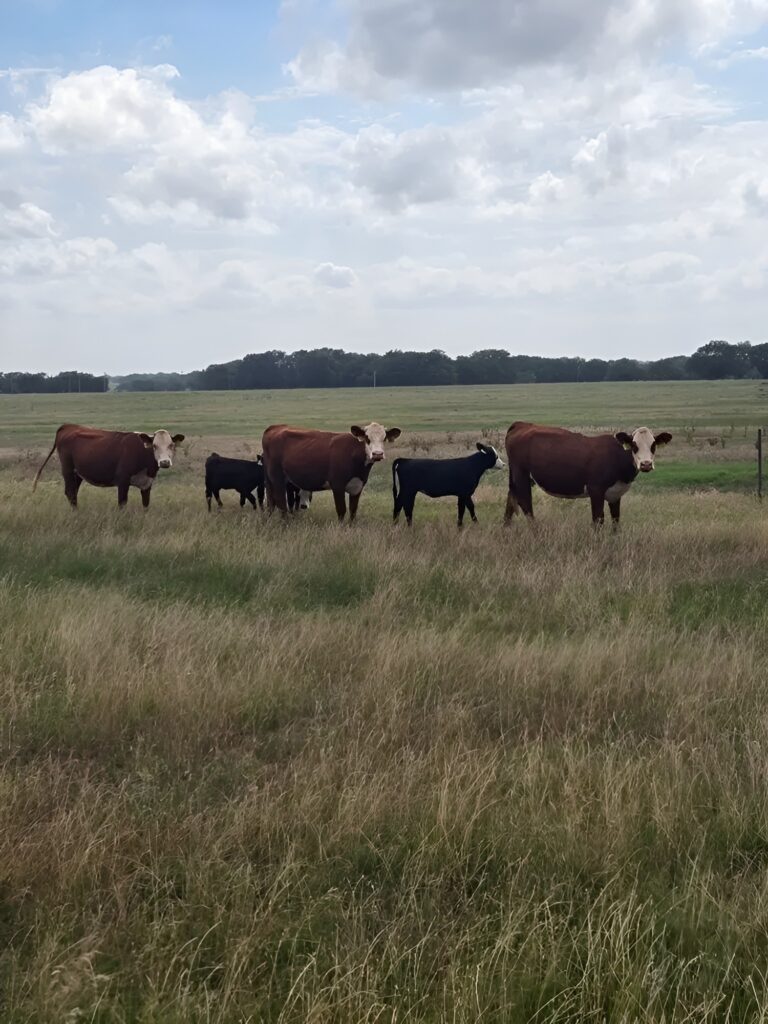
A black hereford isn't a separate breed the way Angus or Hereford are — it's a black-hided, white-faced animal that comes from crossing Hereford genetics with black cattle, usually Angus, and then working to stabilize that look and frame over generations. If you've seen a black baldy calf and wondered why it looks like a Hereford wearing a black coat, that's essentially the same genetic combination, just taken further by breeders who kept selecting for it on purpose.
We've raised plenty of black baldy calves at Rochelle over the years from crossing Hereford cows with Angus bulls, so we get asked about black Herefords regularly. This post covers where the color actually comes from, how it differs from a one-generation black baldy cross, and what to expect if you're buying one. If you want to see the type in person, our current black hereford cattle for sale listing shows what we have on hand.

Where the Black Hereford Color Comes From
Black hereford cattle get their color from the dominant black gene carried by Angus or other black-hided cattle, crossed onto Hereford genetics that carry the white face pattern. A single-generation cross — a black baldy — combines both traits in one calf, but it isn't a stable, repeatable type on its own. Breeders working toward a true black hereford cow selectively breed for the black hide and white face together across multiple generations, aiming for consistency rather than a one-off cross. This is different from simply running a hereford angus cross for one calf crop — a black Hereford program is aiming for a repeatable, predictable animal generation after generation, not a single cross.
Black Hereford vs. a One-Generation Black Baldy
One of the more useful hereford cattle facts here is that a black baldy calf and a black Hereford aren't automatically the same thing, even though they can look nearly identical. Our 37 Angus Super Baldy Bred Heifers are a good example of the type — black-bodied with the white face — produced through a Hereford-influenced Angus cross program rather than a single random pairing, which is closer to what buyers usually mean when they ask about black Herefords.
How Consistent Are Black Hereford Cattle Characteristics?
This is where a lot of buyers get surprised. Hereford cattle characteristics like frame, disposition and easy fleshing carry through fairly reliably from the Hereford side of a black Hereford program, but color and facial markings take longer to lock in. Early generations can show more variation — a white patch in the wrong place, a body color that leans brown rather than black — because the black gene and the white-face pattern are inherited somewhat independently. A breeder who has been selecting for the type over several generations will have a tighter, more predictable set of characteristics than one who's only a generation or two into the cross, which is worth asking about directly rather than assuming from a single photo.
Horned, Polled and Frame — What Stays the Same
Whether an animal is polled or horned has nothing to do with color; polled hereford cow lines and horned hereford cattle both contribute to black Hereford programs depending on which bulls and cows are used, and both are registered through the same American Hereford Association standards on the Hereford side of the pedigree. Frame and other hereford breed characteristics — moderate size, easy fleshing, calm temperament — tend to carry through from the Hereford side of the cross, since those are the traits most black Hereford programs are trying to keep. The black hide itself traces back to American Angus Association-registered genetics somewhere in the pedigree, even a few generations back.
What to Look For When Buying
If you're specifically shopping for the black, white-faced look, ask how many generations of selection are behind the animal, not just whether the calf's dam or sire happened to be black. Our 3 Reg. Hereford 2nd-Calf Pairs come from polled Hereford cows already raising black baldy calves by a registered Angus bull, which is a fair hereford cattle description of the cross most buyers are actually picturing when they ask about black Herefords. If you'd rather start with a herd sire, our hereford bulls for sale page lists current Hereford bulls.

Buyer note: Ask about generations behind the color, not just the calf's parents — a stable black Hereford type takes more than one cross to establish.
From our place
We didn't set out to build a black Hereford program specifically — it happened because we've run Angus bulls on our Hereford cows for years to get black baldy calves that sell well at the sale barn. What we've learned is that consistency takes longer than most people expect; the first cross gives you the look, but holding that look, along with the frame and disposition we actually want, takes several generations of paying attention to which animals we keep back. If you'd rather start with a proven pair already raising a black baldy calf, browse our hereford calves for sale listings.
If calving ease is part of your decision, we cover that separately in our guide to Hereford cattle calving.
Frequently asked questions
Is a Black Hereford a real breed?
Not in the same sense as Angus or Hereford. Black Hereford describes a black-hided, white-faced type built by crossing Hereford genetics with black cattle, usually Angus, and then breeding for consistency. Some organizations maintain registries for the type, but it's a composite rather than a long-established purebred.
What's the difference between a Black Hereford and a black baldy?
A black baldy is typically the direct result of a single cross between a black-hided animal and a Hereford. A black Hereford program takes that same combination and selects for it across multiple generations to make the look and frame repeatable rather than a one-time result.
Are Black Hereford cattle polled or horned?
Either is possible. Polled and horned are separate genetic traits from color, so a black Hereford can carry either the polled or horned gene depending on which Hereford genetics are behind it.
Do Black Herefords have the Hereford white face?
Yes, the white face is one of the defining traits breeders select for, alongside the black hide. That combination — black body, white face — is what most buyers picture when they hear the term.
Why do breeders cross Hereford with Angus for color?
Black-hided calves with a white face often sell at a premium at the sale barn because buyers associate the look with Angus-influenced genetics and good hybrid vigor. Crossing also combines Hereford's moderate frame and disposition with Angus carcass traits.
Are Black Hereford cattle registered?
It depends on the program. Some breeders register black Hereford-type cattle through composite or crossbred registries, while others simply market them as commercial black baldy or black Hereford-type cattle without formal papers.
A black Hereford comes down to genetics and generations, not a separate breed standard — the black hide from one side, the white face and frame from the other, held together by consistent selection over time.
Looking for Black Hereford Type Cattle?
Every animal we list is priced on the listing — check current hereford cow price figures and know that delivery is arranged to all 48 states.
Hereford cow for sale