Blog

  • How to Register on 1xbest: Step‑by‑Step Guide

    1xbest – Practical Guide to Getting Started and Winning

    What is 1xbest? Overview and Licensing

    1xbest is a relatively new online gambling hub that mixes sportsbook, live casino and traditional casino games under one roof. The brand markets itself as a “one‑stop” destination for players who want instant access to a wide variety of wagering options without hopping between sites.

    The platform operates under a licence issued by the Curacao eGaming Authority, which means it must meet basic standards for fairness and security. While Curacao licences are not as strict as UKGC or Malta, they still require regular audits of the random number generator (RNG) and the payout system. For most casual players, this level of regulation offers a comfortable balance of protection and flexibility.

    Registration and Verification – Step‑by‑step

    Getting started on 1xbest is intentionally simple. After clicking the 1xbet ethiopia login registration link you’ll be taken to the sign‑up page where you fill in your email, create a password, and choose a currency. The form also asks for a preferred payment method, which can be changed later.

    Verification is triggered only when you request a withdrawal that exceeds the platform’s low‑value limit (usually $100). At that point, you’ll be asked to upload a photo ID, proof of address and possibly a selfie. The KYC (Know Your Customer) check usually finishes within 24‑48 hours, after which you can enjoy unrestricted payouts.

    Quick registration checklist

    • Valid email address
    • Strong password (mix of letters, numbers, symbols)
    • Chosen currency (USD, EUR, etc.)
    • Optional referral code for extra bonus

    Welcome Bonuses and Wagering Requirements

    First‑time players on 1xbest are greeted with a layered welcome package: a 100% match bonus on the first deposit up to $200, plus 50 free spins on selected slot titles. The match bonus comes with a 30× wagering requirement on the bonus amount, while the free spins winnings are subject to a 20× requirement.

    It’s important to read the fine print because some game categories contribute only 5‑10% towards the wagering total. Slots usually count 100%, but table games and live dealer titles often have reduced contribution. If you’re a fan of low‑variance slots, you’ll clear the requirement faster than if you chase high‑roller blackjack tables.

    Typical bonus terms at a glance

    • Minimum deposit to activate bonus: $10
    • Maximum bonus amount: $200
    • Wagering requirement: 30× bonus + 20× free spin winnings
    • Expiry: 7 days from credit

    Payment Methods, Deposits, and Withdrawal Speed

    1xbest supports a mix of traditional and modern payment channels. You can fund your account with Visa, Mastercard, Skrill, Neteller, and several regional e‑wallets. Deposits are processed instantly, allowing you to jump straight into the action.

    Withdrawals are a bit slower, mainly because of the verification step mentioned earlier. Most e‑wallet withdrawals are completed within 1‑2 business days, while card withdrawals may take up to 5 days. The platform does not charge a fee for standard withdrawals, but some third‑party processors might apply a small surcharge.

    Supported payment options

    • Credit/Debit cards (Visa, Mastercard)
    • E‑wallets (Skrill, Neteller, ecoPayz)
    • Bank transfers (for larger sums)
    • Prepaid vouchers (Paysafecard)

    Mobile Experience – App and Browser Play

    Whether you prefer a downloadable app or a responsive web browser, 1xbest has you covered. The iOS and Android apps are lightweight, open in seconds, and keep your balance synced across devices. They also send push notifications for bonus drops and live event start times.

    If you don’t want to install anything, the mobile‑optimized website runs smoothly on most smartphones. All core features – sportsbook, casino, live dealer, and account management – are accessible with a few taps. The only minor drawback is that the live casino video feed can lag on slower 3G connections.

    Mobile pros and cons

    • Pros: Instant deposits, push alerts, full game library
    • Cons: Live dealer streams need stable 4G/5G, occasional UI quirks on older browsers

    Live Casino and Sports Betting Options

    1xbest’s live casino section features real‑time dealers for blackjack, roulette, baccarat and a few specialty games like Dream Catcher. The video quality is HD, and you can chat with dealers in English, Spanish or Mandarin, which adds a personal touch.

    The sportsbook covers major leagues – football, basketball, tennis – as well as niche markets such as e‑sports and virtual sports. Odds are competitive, and the platform offers both single bets and multi‑bet parlays with boosted payouts. For bettors who like to hedge, the cash‑out feature works across most markets.

    Customer Support, Security, and Responsible Gambling

    Support is available 24/7 through live chat and email. The average first‑response time is under two minutes, and agents are fluent in several languages. For more complex issues, there’s a ticket system that guarantees a reply within 24 hours.

    Security-wise, 1xbest employs SSL encryption, two‑factor authentication (2FA) for withdrawals, and regular penetration testing by third‑party firms. The responsible gambling toolkit includes self‑exclusion, deposit limits, and a “cool‑off” timer that can be set for as short as one day or as long as six months.

    Below is a quick snapshot of how 1xbest stacks up against two of its main competitors in the global market. The table focuses on the most relevant criteria for beginners and mid‑level players.

    Feature 1xbest Competitor A Competitor B
    License Curacao UKGC Malta
    Welcome Bonus 100% up to $200 + 50 FS 150% up to $300 200% up to $400 + 100 FS
    Wagering Req. 30× bonus, 20× FS 35× bonus 25× bonus, 15× FS
    Withdrawal Speed 1‑2 days (e‑wallet) Instant (e‑wallet) 3‑5 days (bank)
    Mobile App iOS & Android iOS only Android only
    Live Casino Yes – 20+ tables Yes – 15 tables No

    Overall, 1xbest offers a balanced mix of bonuses, speed and game variety, especially for players who value a strong live casino experience without paying a premium for a top‑tier licence.

    Final Tips for Beginners

    If you’re new to 1xbest, start with a modest deposit to test the waters. Use the welcome bonus but focus on low‑variance slots or simple blackjack games so you meet the wagering requirement quickly. Keep an eye on the “promo calendar” inside the app; many limited‑time offers can boost your bankroll without extra risk.

    Always set a budget before you begin and stick to it. Remember that the most important part of gambling is entertainment, not profit. With the tools 1xbest provides – from self‑exclusion to deposit limits – you can keep the experience fun and safe.

    © 2026 Elisabeth Buecher. All rights reserved.

  • 1xbet QPK : étapes et méthodes pour s’inscrire et profiter du casino en ligne

    Guide pratique 1xbet QPK : tout ce qu’il faut savoir

    Pourquoi choisir 1xbet QPK ?

    Les parieurs français recherchent un site qui combine une large offre de jeux, des promotions attrayantes et une plateforme fiable. 1xbet QPK se positionne comme une réponse à ces attentes, proposant à la fois un sportsbook complet et un casino live riche en variantes. L’interface est disponible en français, ce qui simplifie la navigation pour les nouveaux venus. De plus, le site propose régulièrement des bonus qui peuvent vraiment booster le capital de départ, à condition de bien comprendre les exigences de mise.

    En plus de l’offre de paris sportifs, 1xbet QPK propose un casino en ligne avec des jeux à haute RTP, des machines à sous à volatilité variée et un live dealer qui recrée l’ambiance d’un vrai casino. La combinaison de ces deux univers permet aux joueurs de passer facilement du pari sur le football à une session de blackjack sans quitter la plateforme.

    1xbet QPK : Inscription et vérification

    Création du compte en quelques minutes

    L’inscription débute par un formulaire simple où il faut renseigner votre adresse e‑mail, un mot de passe et votre pays de résidence. Aucun dépôt n’est exigé à ce stade, ce qui permet de tester la plateforme avant de s’engager. Une fois le compte créé, vous recevez un e‑mail de confirmation contenant un lien d’activation.

    Après activation, la plupart des fonctions sont immédiatement disponibles : dépôt, jeu en mode réel et accès aux bonus de bienvenue. Toutefois, pour pouvoir retirer vos gains, il faut passer par la procédure de vérification d’identité (KYC).

    Processus KYC – que faut‑il préparer ?

    Le KYC chez 1xbet QPK demande généralement une copie d’une pièce d’identité officielle (passeport ou carte d’identité) ainsi qu’un justificatif de domicile récent (facture d’électricité ou relevé bancaire). Le téléchargement se fait directement depuis le tableau de bord, dans la section « Vérification ». Le délai de validation est habituellement de 24 à 48 heures.

    Cette étape n’est pas une contrainte inutile : elle assure la sécurité de vos fonds et vous protège contre les fraudes. Une fois votre compte vérifié, vous pourrez profiter des retraits instantanés proposés par certaines méthodes de paiement.

    Bonus de bienvenue et exigences de mise

    Offre d’accueil pour les nouveaux joueurs

    Le premier dépôt bénéficie d’un bonus de 100 % jusqu’à 200 €, ce qui double votre mise initiale. En plus du bonus, 1xbet QPK propose parfois des paris gratuits (free bets) sur des événements sportifs sélectionnés. Ces offres sont affichées clairement sur la page d’accueil, avec un code promo à saisir lors du dépôt.

    Il est crucial de lire les conditions de mise : le bonus est soumis à un wagering de 30× le montant bonus + dépôt. Cela signifie que vous devez parier au moins 30 fois la somme reçue avant de pouvoir retirer les gains associés.

    Comment optimiser les exigences de mise

    Choisissez des jeux ou des marchés avec un faible taux de volatilité pour atteindre le wagering plus rapidement. Les paris simples à cote basse (ex. 1,10) permettent d’accumuler du volume de mise sans trop risquer votre capital. Au casino, privilégiez les machines à sous à RTP élevé (≥ 96 %) pour maximiser vos chances de récupérer le bonus.

    Enfin, surveillez la date d’expiration du bonus ; généralement, vous avez 7 jours pour remplir les exigences, sous peine de voir le bonus annulé.

    Méthodes de dépôt et de retrait

    1xbet QPK accepte un large éventail de moyens de paiement, ce qui facilite la gestion de votre bankroll. Voici les options les plus populaires parmi les joueurs français :

    • Cartes bancaires : Visa, Mastercard – dépôts instantanés, retraits sous 2‑3 jours ouvrés.
    • Portefeuilles électroniques : Skrill, Neteller – dépôts rapides, retraits généralement en 24 h.
    • Virements bancaires – sécurisés, mais le délai de traitement peut atteindre 5 jours ouvrés.
    • Cartes prépayées : Paysafecard – dépôt uniquement, aucune option de retrait.

    Les dépôts sont traités immédiatement, ce qui vous permet de commencer à jouer sans attendre. Les retraits, eux, dépendent du mode choisi ; les portefeuilles électroniques offrent les temps les plus courts, souvent qualifiés d’« instant payouts ». Pensez à vérifier les limites minimales et maximales de chaque méthode avant de procéder.

    L’application mobile et l’expérience live

    L’application 1xbet QPK, disponible sur iOS et Android, reproduit l’ensemble des fonctionnalités du site web. Elle est optimisée pour les petits écrans, avec des temps de chargement réduits et une navigation fluide. Vous pouvez placer des paris sportifs en temps réel, accéder au casino live et gérer vos dépôts sans quitter l’application.

    Le live casino mérite une mention spéciale : les tables de roulette, blackjack et baccarat sont diffusées en streaming haute définition, avec des croupiers professionnels. Le chat intégré permet d’interagir avec les autres joueurs, ajoutant une dimension sociale proche d’un vrai casino terrestre.

    Sécurité, licences et jeu responsable

    1xbet QPK opère sous licence de Curaçao, reconnue dans l’industrie du jeu en ligne. La plateforme utilise le cryptage SSL 256 bits pour protéger les données personnelles et financières. Les transactions sont surveillées en permanence afin de détecter toute activité suspecte.

    Le site propose également des outils de jeu responsable : limites de dépôt, auto‑exclusion, et un questionnaire d’auto‑évaluation. Si vous sentez que le jeu devient problématique, vous pouvez activer le mode « pause » directement depuis votre compte.

    Support client et assistance

    Le service client de 1xbet QPK est disponible 24 h/24 et 7 j/7 via chat en direct, e‑mail et téléphone. Les agents parlent français et sont formés pour répondre aux questions liées aux bonus, aux dépôts, aux retraits et aux problèmes de compte. Le temps de réponse moyen est inférieur à 2 minutes pour le chat.

    En plus du support direct, la plateforme propose une FAQ exhaustive qui couvre les sujets les plus courants : comment réclamer un bonus, comment vérifier son identité, quelles sont les limites de mise, etc. Cette ressource est très utile pour les joueurs qui préfèrent trouver une réponse rapidement sans attendre un interlocuteur.

    Comparatif rapide des points forts de 1xbet QPK

    Critère 1xbet QPK Concurrents français
    Bonus de bienvenue 100 % jusqu’à 200 € + free bets 50 % jusqu’à 150 €
    Wagering requis 30× dépôt+bonus 35× dépôt+bonus
    Délais de retrait (e‑wallet) 24 h 48‑72 h
    Variété de jeux Casino live, slots, sportsbook Casino + sportsbook limité
    Application mobile iOS & Android, full features iOS uniquement, fonctions réduites

    Comment démarrer rapidement sur 1xbet QPK

    Pour profiter de l’offre, visitez le site officiel de 1xbet rs et suivez les étapes suivantes :

    1. Créez votre compte en remplissant le formulaire d’inscription.
    2. Activez le compte via le lien reçu par e‑mail.
    3. Effectuez votre premier dépôt en utilisant votre méthode préférée.
    4. Entrez le code promo affiché pour débloquer le bonus de bienvenue.
    5. Commencez à jouer ou à parier, en respectant les exigences de mise.

    En suivant ces étapes, vous serez opérationnel en moins de 10 minutes et pourrez immédiatement tester la variété de jeux et les cotes sportives proposées par 1xbet QPK.

  • Free OnlyFans Zero Cost Guide: Legit Methods, Risks, and How to Access Free Content Safely

    Free OnlyFans Zero Cost – Practical Guidance for Getting Content Without Paying

    What Does “Free OnlyFans Zero Cost” Mean?

    The phrase “free onlyfans zero cost” is commonly used by people who want to explore OnlyFans without spending money. In essence, it refers to any method—legitimate or otherwise—that allows a user to view photos, videos, or other creator‑driven content without a subscription fee. While the platform is built around paid subscriptions, many creators occasionally share free posts, run promotions, or offer limited‑time trial access. Understanding the difference between official free content and third‑party shortcuts is crucial before you start searching for zero‑cost options.

    From a user‑intent perspective, most visitors are looking for practical steps: how to discover free posts, whether any tools exist, and what the legal and security implications might be. The guide below focuses on legitimate, safe pathways while also highlighting the risks of questionable shortcuts. By the end of this article you’ll have a clear picture of what is possible, what to avoid, and how to enjoy the platform responsibly.

    Who Can Benefit From Free OnlyFans Access?

    New users who are curious about the platform’s format often want to test the waters before committing to a subscription. For these individuals, a “free onlyfans zero cost” approach provides a low‑risk way to see the type of content creators publish and decide if they want to become paying members later. Additionally, fans of a specific creator may want to catch occasional free updates, giveaways, or teaser clips that are posted publicly.

    Beyond curiosity, there are also budget‑conscious consumers who simply cannot afford recurring payments but still wish to support creators they admire. By leveraging official free promotions, they can stay engaged without breaking their budget. The following sections outline how each of these user groups can approach free content responsibly.

    Common Methods and Their Legality

    Official Free Posts and Creator Giveaways

    Many creators use the platform’s built‑in free‑post feature to share teaser images, short videos, or behind‑the‑scenes updates. These posts are publicly viewable to anyone who follows the creator, regardless of subscription status. Some creators also run timed giveaways or “free subscription days” as part of a marketing campaign.

    Since these methods are directly provided by the platform and the creators themselves, they are completely legal and pose no risk to your account. The best way to stay informed is to follow the creator’s social media channels where they announce such events.

    Trial Periods and Promotional Codes

    OnlyFans occasionally offers trial periods for new users, allowing a limited amount of free access for a set number of days. Promotional codes shared by creators or influencers can also unlock a free trial. These promotions are time‑bound and usually require you to create an account, but they do not charge you until the trial expires.

    To take advantage of a trial, you must provide a payment method, but you can cancel before the trial ends to avoid any charges. This approach complies with OnlyFans’ terms of service and keeps your account in good standing.

    Third‑Party Websites and “Free‑OnlyFans” Tools

    There is a sizable market of third‑party sites that claim to deliver “free onlyfans zero cost” by bypassing subscription fees. These services often require you to submit login credentials or install software that can compromise your personal data. In many jurisdictions, using such tools violates OnlyFans’ terms and may be illegal.

    Beyond legal concerns, these platforms can expose you to malware, phishing attempts, and account bans. For the reasons above, we strongly advise against using any unofficial method that promises unlimited free access.

    Risks and Limitations of Unofficial Free Access

    Even if a third‑party service appears to work, the hidden costs can be significant. First, your OnlyFans credentials may be harvested and sold on the dark web, leading to identity theft. Second, the platform’s automated detection systems can flag and permanently suspend accounts that access content through unauthorized means.

    Additionally, the quality and reliability of unofficial sources are unpredictable. Content may be low‑resolution, incomplete, or even tampered with. In contrast, using official free posts guarantees that you see the creator’s intended content in its original format.

    How to Stay Safe While Exploring Free Options

    • Never share your OnlyFans password with anyone or any website that is not the official platform.
    • Use a unique, strong password and enable two‑factor authentication (2FA) if available.
    • Regularly monitor your account activity for any suspicious logins or unauthorized purchases.
    • Only accept promotional codes from creators you follow on verified social channels.

    By following these safety tips, you protect both your personal information and your access to the platform. Remember that the best way to enjoy free content is through the channels that creators themselves provide.

    Step‑by‑Step Setup for Legitimate Free Access

    Below is a practical workflow that guides you from account creation to enjoying free content without any hidden fees.

    1. Visit the official OnlyFans website and click “Sign up”. Fill in your email, create a strong password, and verify your account.
    2. Browse creators’ public pages or follow their social media for announcements about free posts or trial codes.
    3. If you receive a promotional code, enter it in the “Redeem Code” section on your dashboard before the expiry date.
    4. Activate any available trial period, ensuring you note the trial’s end date to avoid accidental charges.
    5. Enjoy the free content, and consider supporting the creator by purchasing a subscription if you find value.

    This process respects OnlyFans’ terms of service, safeguards your data, and gives you a clear path to explore the platform without spending money.

    Comparison Table of Free Access Options

    Method Legality Security Risk Typical Availability Notes
    Creator’s free posts Legal Low Ongoing Directly from the platform
    Official trial periods Legal Low Occasional, based on promotions Requires payment method, cancel before end
    Third‑party “free onlyfans” sites Often illegal High Variable Risk of account ban and data theft

    Frequently Asked Questions

    Is it possible to get unlimited free OnlyFans content?

    Unlimited free access is not offered by the official platform. While creators may share some free material, the majority of premium content requires a subscription. Any service promising unlimited access without payment is likely violating OnlyFans’ policies and should be avoided.

    Can I cancel a trial without being charged?

    Yes. If you activate a trial, make sure to note the expiration date and cancel through your account settings before the trial ends. This will prevent any automatic charge from being applied.

    What should I do if I suspect my account has been compromised?

    Immediately change your password, enable two‑factor authentication, and contact OnlyFans support through the official help center. Review recent activity and revoke any unknown devices that may have accessed your account.

    Where can I find reliable information about free promotions?

    Follow the creators you’re interested in on verified platforms like Twitter, Instagram, or TikTok. Many creators post links to free posts or announce trial codes directly to their followers.

    For a concise resource that aggregates legitimate free offers and safe practices, visit onlyfans free sute. This page consolidates verified information without exposing you to unnecessary risks.

  • Whales: Giants of the Ocean

    Whales: Giants of the Ocean

    Whales are among the largest and most remarkable animals on Earth. These marine mammals live in oceans around the world, from warm tropical waters to the cold seas surrounding the poles.

    Life Beneath the Surface

    Although whales spend their lives in water, they breathe air through blowholes located on top of their heads. They must regularly return to the surface to breathe before diving again in search of food or traveling through the ocean.

    Whales are warm-blooded, give birth to live young, and nurse their calves with milk. A thick layer of fat called blubber helps protect them from cold water and stores energy during long migrations.

    Two Main Groups

    Whales are generally divided into baleen whales and toothed whales. Baleen whales filter small animals from the water using flexible plates inside their mouths. This group includes blue whales, humpback whales, and gray whales.

    Toothed whales use teeth to catch fish, squid, and other prey. Many of them also use echolocation, producing sounds and listening for returning echoes to understand their surroundings. Sperm whales, belugas, and orcas belong to this group.

    The Blue Whale

    The blue whale is the largest known animal to have ever lived. An adult can grow longer than a city bus and weigh well over one hundred tonnes. Despite its enormous size, it feeds mainly on tiny crustaceans called krill.

    Communication and Migration

    Whales communicate using clicks, whistles, pulses, and complex songs. Some sounds can travel across great distances underwater. Humpback whales are especially famous for their long, patterned songs.

    Many species migrate thousands of kilometres each year. They often feed in cold, nutrient-rich waters before traveling to warmer regions where they mate and give birth.

    Protecting Whales

    Commercial hunting once caused severe declines in many whale populations. Today, whales also face threats from fishing gear, ship collisions, underwater noise, pollution, and changes to ocean ecosystems.

    Conservation programs, safer fishing practices, protected habitats, and international cooperation can help whale populations recover. Protecting whales also supports healthier oceans because these animals play an important role in marine food webs and nutrient cycles.

  • Black Angus Cattle Breed: History, Traits and the US Market

    Black Angus Cattle Breed: History, Traits and the US Market

    Black Angus Cattle Breed: History, Traits and the US Market

    The black angus cattle breed dominates American beef production for reasons that go beyond a solid black hide — it’s the traits behind that hide, built up over more than 150 years of selection, that made Angus the most-registered beef breed in the country. If you’re buying into the breed for the first time, it helps to know where those traits came from and why they still command a premium today.

    We’ve run Angus and Angus-cross cattle at our place in Rochelle for more than 25 years, and this post covers what actually defines the black angus cattle breed — its Scottish origins, the traits that made it spread across US ranches, its carcass reputation, and where it stands in today’s market. If you’re comparing a set of black angus cattle for sale, this is the background we’d want before we bid.

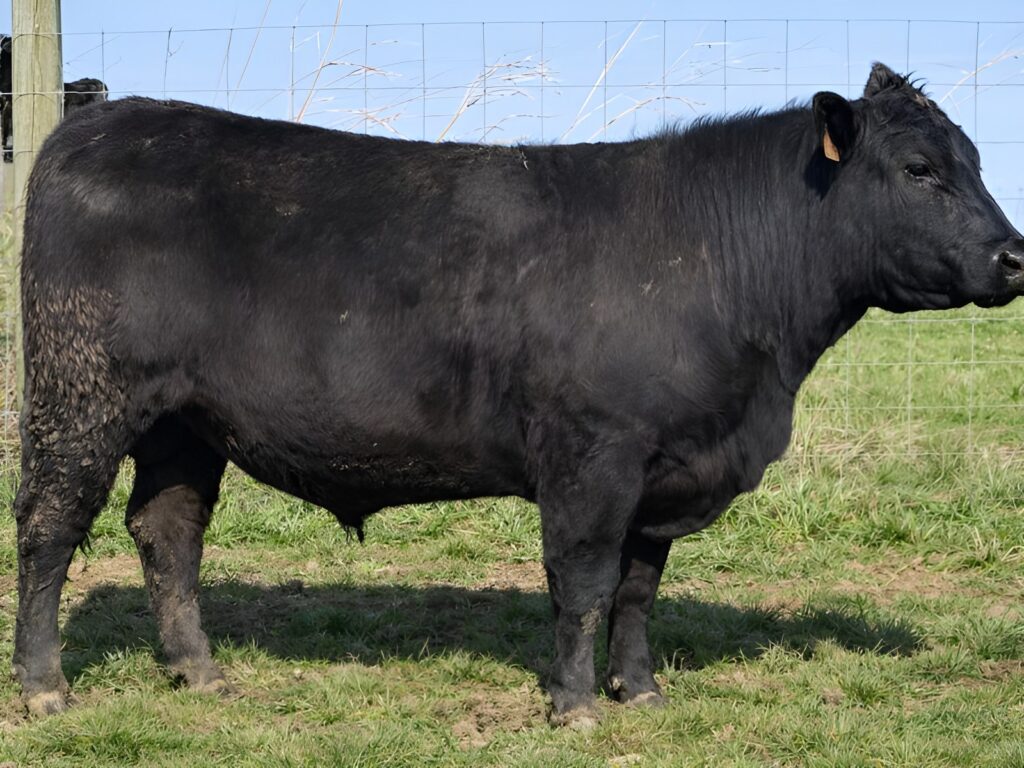
    Purebred black angus cattle breed bull standing in pasture
    A purebred Black Angus bull — the solid hide and moderate frame that define the breed.

    What Defines the Black Angus Cattle Breed

    Anyone who’s spent time around cattle can pick out the black angus cattle breed without a second look: solid black hide, no horns, and a body that’s deep and wide rather than tall and rangy. Angus cows characteristics run consistent across the breed — moderate frame, good bone, and enough natural fleshing to hold condition through a dry summer without extra feed. Black angus cattle also handle Texas heat and fescue toxicity better than white-faced breeds, since the dark hide doesn’t sunburn around the eyes and udder.

    Why the Breed Spread So Fast

    Angus were bred polled from the start, which sounds minor until you’ve dehorned a pen of calves by hand — ranchers who switched to the breed didn’t have to do that anymore. Combined with calm temperament and easy calving, it’s a big part of why the breed spread across American ranches so quickly. Our Black Angus Bulls listing shows correct polled genetics bred for performance and calving ease.

    The Breed’s History: From Scotland to the US Range

    The black angus cattle breed traces back to Aberdeenshire and Angus County in Scotland, where the polled, black cattle were prized for hardiness on rough ground long before they were imported to the United States in the 1870s. American breeders selected hard for the traits that mattered on this side of the Atlantic — fertility, calving ease, and the ability to finish on grass or grain — and the breed grew from a regional curiosity into the most-registered beef breed in the country. The American Angus Association keeps the registry, EPDs, and performance data that trace that history animal by animal.

    A correct Angus cow should look like she’s doing her job without help — deep-bodied, easy-fleshing, and quiet enough you forget she’s even there.
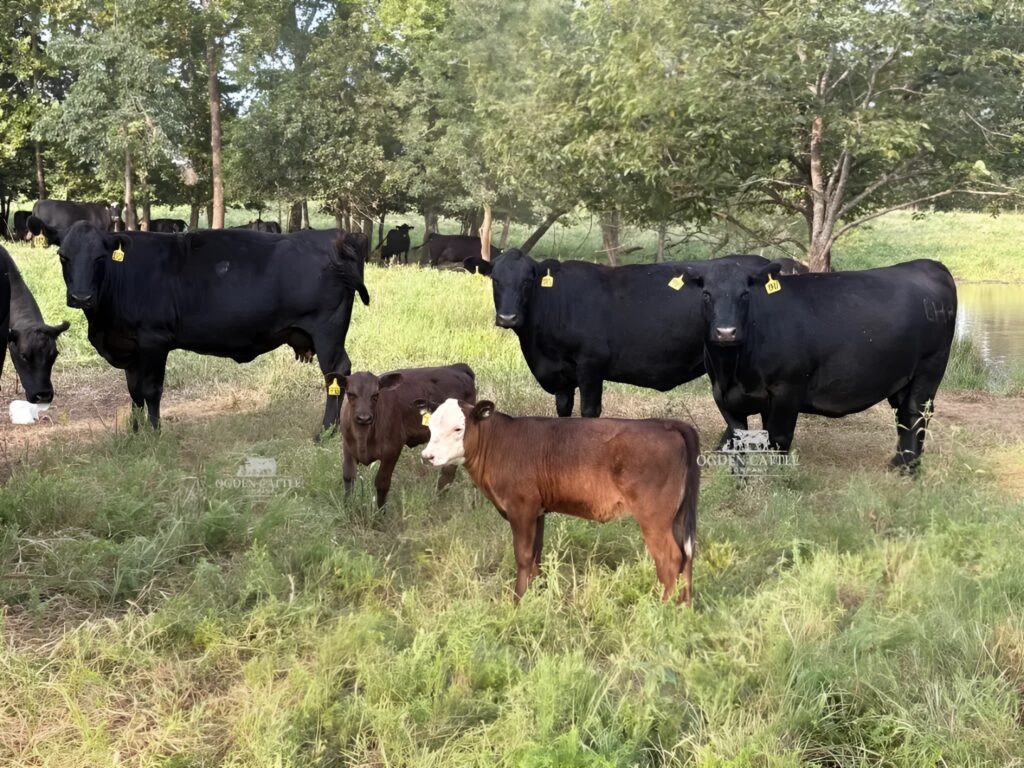
    Black angus and BWF cow calf pairs grazing on native pasture
    Angus and Black Baldy pairs on native pasture — the breed’s genetics show up across a lot of commercial herds.

    Angus Beef Cattle Characteristics and Carcass Quality

    Part of why the black angus cattle breed commands a premium comes down to angus beef cattle characteristics that trace directly back to marbling. The breed deposits intramuscular fat more readily than most British and continental cattle, which is the trait behind branded-beef programs like Certified Angus Beef. That doesn’t mean every black animal grades the same — marbling still depends on genetics, age, and how the animal was finished — but it’s exactly why commercial buyers pay attention to Angus influence in a set of feeder calves. Beef cattle angus size also plays into this: a mature cow typically runs 1,100 to 1,400 pounds, with enough frame to grow calves fast without getting so big she costs more to feed than she’s worth.

    ClassTypical weightWhat buyers check
    Weaned calf450–600 lbGrowth, uniformity
    Bred heifer850–950 lbPelvic capacity, condition
    Mature cow1,100–1,400 lbDeep rib, easy fleshing

    Buyers restocking a feeder program often look specifically for black angus calves because of how consistently they finish and grade once they hit the rail.

    Where the Breed Stands in the US Market Today

    The black angus cattle breed now makes up the majority of registered beef cattle in the country, and its genetics show up even in herds that aren’t purebred Angus — a lot of commercial Black Baldy and crossbred cattle carry Angus influence for exactly the traits described above. A full accounting of characteristics of an angus cow has to include how well the breed crosses, since that flexibility is part of why it dominates the commercial market, not just the seedstock side. If frame and calving ease matter to your program, our angus heifers for sale are bred to low-birth-weight bulls specifically to keep first-calf heifers out of trouble.

    Buyer note: Angus influence doesn’t require a purebred animal to show up in performance. A Black Baldy or commercial cross with strong Angus genetics can carry a lot of the same carcass and maternal traits.

    From our place

    After 25 years running this breed, the angus cattle description we trust is the one that holds up in the pasture, not the one that sounds good in a sale catalog. The cattle that make us the most money are rarely the flashiest in the pen — they’re moderate-framed, easy-fleshing, quiet cows that breed back every year without extra feed. Our black angus cows for sale are handled regularly before they ship, which is the easiest way we know to confirm those traits before they become your problem or your profit. We’ve culled hard on structure and disposition for a quarter century now, and it shows in how little trouble these cattle give us at the chute.

    Two year old black angus bull raised in the united states
    A two-year-old Black Angus bull — correct structure and the moderate frame the market rewards.

    Frequently asked questions

    What makes the black angus cattle breed different from other beef breeds?

    Solid black hide, polled heads, moderate frame, and genetics that favor marbling and easy calving. Those traits combine to make the breed both commercially efficient and popular for branded beef programs.

    Where did the black angus cattle breed originate?

    Aberdeenshire and Angus County in Scotland, where the breed was prized for hardiness before being imported to the United States in the 1870s and selected hard for American ranching conditions.

    Why do Black Angus genetics show up in so many crossbred cattle?

    Because Angus bulls reliably pass on polled heads, calving ease, and marbling potential even in a cross, which is why commercial programs use Angus genetics to improve herds that aren’t purebred.

    How big is a typical black angus cattle breed cow?

    Most mature cows run 1,100 to 1,400 pounds on a moderate program. Registered seedstock lines can run heavier depending on how they were developed and fed.

    Are black angus calves worth more than other feeder calves?

    Often yes, because of consistent grading and finishing performance tied to the breed’s marbling genetics — a premium that reflects real angus beef cattle characteristics, not just breed popularity.

    Whatever your program looks like, the black angus cattle breed rewards buyers who understand the traits behind the hide, not just the color. For more on the facts worth knowing before you buy, see our post on Angus cattle facts, or check current numbers on the black angus cattle prices page before you call.

    Looking for Black Angus backed by real genetics, not just hype?

    Every animal we list is priced on the listing, comes with health papers, and can be delivered to all 48 states.

    Shop angus bulls for sale near me
  • Hereford Cattle Breed: Registered vs Commercial Explained

    Hereford Cattle Breed: Registered vs Commercial Explained

    Hereford Cattle Breed: Registered vs Commercial Explained

    The hereford cattle breed is one of the most recognizable in the country — red body, white face, and a reputation for hardiness that goes back nearly two centuries. What confuses new buyers isn’t the breed itself, it’s the gap between a registered animal and a commercial one, since both carry the same look but not the same paper trail or price tag.

    We’ve raised Herefords at our place in Rochelle for more than 25 years, both registered and commercial, and this post lays out what actually defines the hereford cattle breed — its history, its traits, how registered and commercial cattle differ, and what the breed’s beef reputation means for your bottom line. If you’re comparing a set of hereford cattle for sale, this is the background we’d want before we bid.

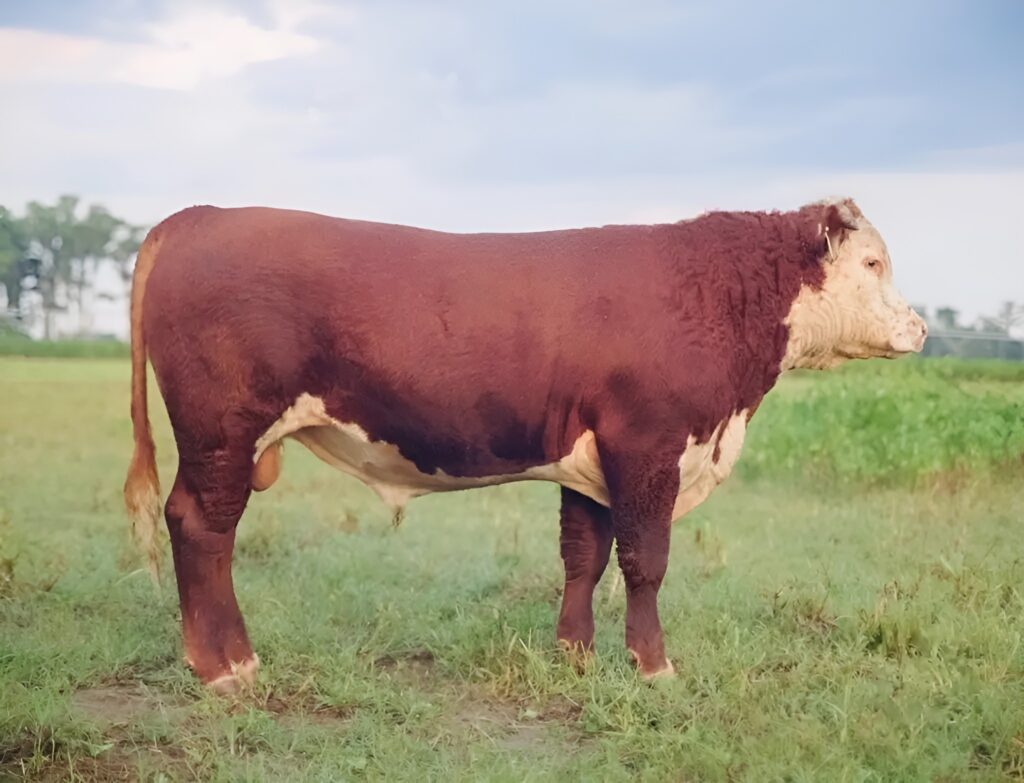
    Group of registered hereford cattle breed bulls on pasture
    A group of registered Hereford bulls — the red hide and white face that define the breed.

    What Makes the Hereford Cattle Breed Recognizable

    Anyone who’s spent time around cattle can pick a hereford cattle breed animal out of a mixed pen without thinking twice: solid red body with a white face, crest, underline, dewlap, and switch, and either horned or polled genetics depending on the line. Hereford cattle characteristics run consistent across the breed regardless of registration status — moderate to large frame, deep body, and enough bone to hold condition through a Texas summer. Any full rundown of hereford cattle breed characteristics also has to include disposition, since a calm herd is as much a selling point as a correct hide. That consistency is part of why the breed has stayed popular with commercial ranchers and 4-H families alike for generations.

    Hereford Cattle Traits That Matter Beyond Color

    Past the hide, the hereford cattle traits that actually affect a buying decision are calving ease, milk, and temperament. Herefords calve with less assistance than many continental breeds thanks to moderate birth weights, and the breed runs calm enough that families and first-time buyers gravitate toward it. Our 20 Reg. Hereford Bulls listing shows correct, documented examples of these traits at scale — horned and polled, tested fertile, ready to work.

    Registered vs Commercial: What Actually Changes

    The breed standard doesn’t change based on paperwork — a registered animal and a commercial one carry the same hide, frame, and hereford breed characteristics. What changes is documentation: registered cattle have American Hereford Association papers tracing parentage, often with EPDs predicting traits like birth weight and growth, while commercial cattle are unregistered and priced accordingly. Neither status changes the underlying hereford cattle description a buyer should be checking — hide, frame, feet, and disposition matter the same way in both.

    TraitRegisteredCommercial
    Papers / EPDsYes, AHA registeredNo, unregistered
    Typical priceHigherLower
    Best fitSeedstock, breeding programs, showsCommercial cow-calf, grass-based operations
    Hide, frame, traitsSame breed standardSame breed standard

    For commercial numbers on grass, our 50 Hereford Cows listing is a straightforward example — preg-checked, polled, and priced to work as a commercial herd rather than a show string. Most commercial operations don’t need papers at all; they need cows that breed back, raise a calf, and hold condition on what the ground actually grows.

    Color Variants Within the Breed

    Not every animal carrying Hereford genetics looks like the textbook version. Black hereford cattle — a cross between Hereford and black-hided breeds like Angus — keep the white face and much of the breed’s disposition and hardiness while adding a different hide color, and they’re sold as their own category rather than as straight Herefords. If you’re specifically shopping the traditional red-and-white pattern, it’s worth confirming with a seller whether an animal is a straight Hereford or a colored cross before you commit.

    Hereford Cattle Origin and How the Breed Developed

    The hereford cattle origin traces back to Herefordshire, England, where the breed was developed centuries ago as a dual-purpose draft and beef animal before American breeders imported it and selected hard for beef production and range hardiness. That long, stable breed history is exactly why the breed reads as consistent today — a registered bull from Nebraska and a commercial cow from Texas still carry the same recognizable pattern. The American Hereford Association keeps the full registry and EPD data if you want to verify a specific animal’s background before you buy.

    American breeders didn’t just import the breed and leave it unchanged — they selected specifically for traits that mattered on this side of the Atlantic: fertility on rougher forage, calving ease without assistance, and the ability to finish on grass instead of feedlot grain alone. That selection pressure over more than a century is why the modern breed performs so differently from its English ancestors, even though the hide pattern looks nearly identical. Herds established in Texas and the broader Southwest leaned especially hard on heat tolerance and drought resilience, since a cow that couldn’t hold condition through a dry August didn’t stay in the herd long.

    A correct Hereford, registered or not, should look like the same animal your grandfather would have recognized — that consistency is the whole point of the breed.
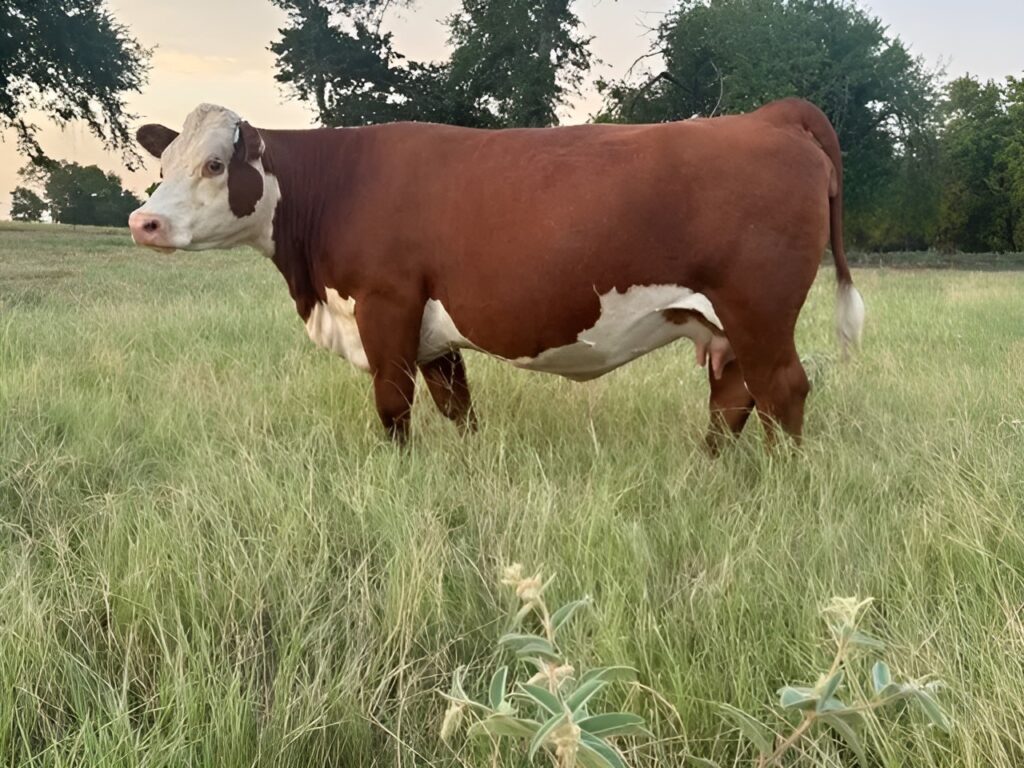
    Registered hereford cows with red hide and white faces on pasture
    Registered Hereford cows on pasture — the same breed standard whether papered or not.

    How the Breed Performs on the Rail

    Part of the breed’s staying power comes down to carcass performance, not just looks. Hereford cattle finish well on grass or grain and produce beef marketed through programs like Certified Hereford Beef, which sets standards for quality and consistency. A hereford calf destined for that kind of program still needs the right genetics behind it — growth, muscling, and marbling potential aren’t guaranteed just because the hide is red and white. Our hereford calves for sale come from cows selected for exactly that kind of consistent performance.

    Buyer note: Ask whether a seller’s cattle have documented calving or weaning records. That tells you more about real performance than a hide color ever will.

    Feet and leg structure deserve more attention than most first-time buyers give them. A Hereford with weak pasterns or a post-legged stance wears down faster on rocky Texas pasture than one with correct structure, no matter how good her hide and frame look standing in a pen. We walk every animal before it goes up for sale specifically to check that — structure holds up over a decade of grazing far better than papers do.

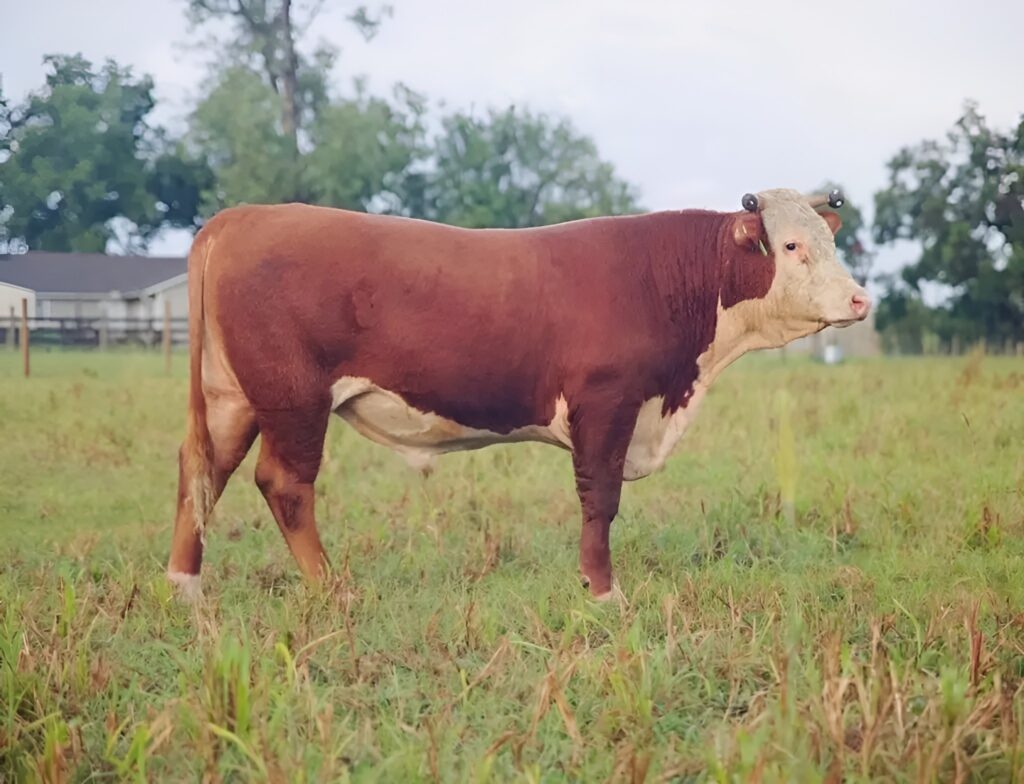
    Registered horned hereford bull standing on pasture
    A registered, horned Hereford bull — deep body, correct hide, documented genetics.

    From our place

    After 25 years working with this breed, our take on the hereford cattle breed is simple: the registration certificate matters for planning matings and proving genetics, but it doesn’t change what’s standing in the pasture. A commercial Hereford cow with the right frame, disposition, and calving history will make you just as much money as a registered one, for a lot less money down. We keep both kinds on hand for buyers who know exactly what they need.

    Frequently asked questions

    What defines the hereford cattle breed?

    A solid red body with a white face, crest, underline and switch, moderate to large frame, and either horned or polled genetics. Calving ease, calm temperament, and hardiness on rough ground round out the breed’s core hereford cattle characteristics.

    Is a registered Hereford worth more than a commercial one?

    Usually in price, yes, because of the documented pedigree and EPDs — but not necessarily in performance. A well-bred commercial cow can match a registered one on the traits that actually affect your operation.

    Where did the hereford cattle breed originate?

    Herefordshire, England, where it was developed as a dual-purpose draft and beef animal before American breeders selected it hard for beef production and range hardiness starting in the 1800s.

    What are the most important hereford cattle traits for a commercial buyer?

    Calving ease, moderate frame, easy fleshing, and calm disposition. Those traits affect your workload and your bottom line more directly than registration status does.

    Does a hereford calf need registered parents to perform well?

    No — commercial Hereford genetics can produce excellent growth and carcass performance. Registration provides documentation, not a performance guarantee on its own.

    Whether you’re buying registered or commercial, the hereford cattle breed rewards buyers who check structure and temperament over paperwork alone. For more on the traits that show up at the fence line, see our post on Hereford cow characteristics, or check current numbers on the hereford cow price page before you call.

    Looking for registered or commercial Herefords?

    Every animal we list is priced on the listing, comes with health papers, and can be delivered to all 48 states.

    Shop hereford heifers for sale
  • Hereford Cow Characteristics Explained by a Real Breeder

    Hereford Cow Characteristics Explained by a Real Breeder

    Hereford Cow Characteristics Explained by a Real Breeder

    Hereford cow characteristics are pretty consistent across the breed, which is exactly why so many buyers trust them for a first herd: red body, white face, moderate frame, and a temperament that doesn’t need a rodeo to load on a trailer. What trips people up isn’t the basics — it’s knowing which of those traits actually predict how a cow will perform once she’s on your ground.

    We’ve run Hereford cattle at our place in Rochelle for more than 25 years, and this post walks through the hereford cow characteristics that matter most before you buy — hide and frame, horns versus polled, calving and temperament, and what changes (and what doesn’t) between registered and commercial cows. If you’re comparing a set of hereford cattle for sale, this is the checklist we’d want if we were the ones bidding.

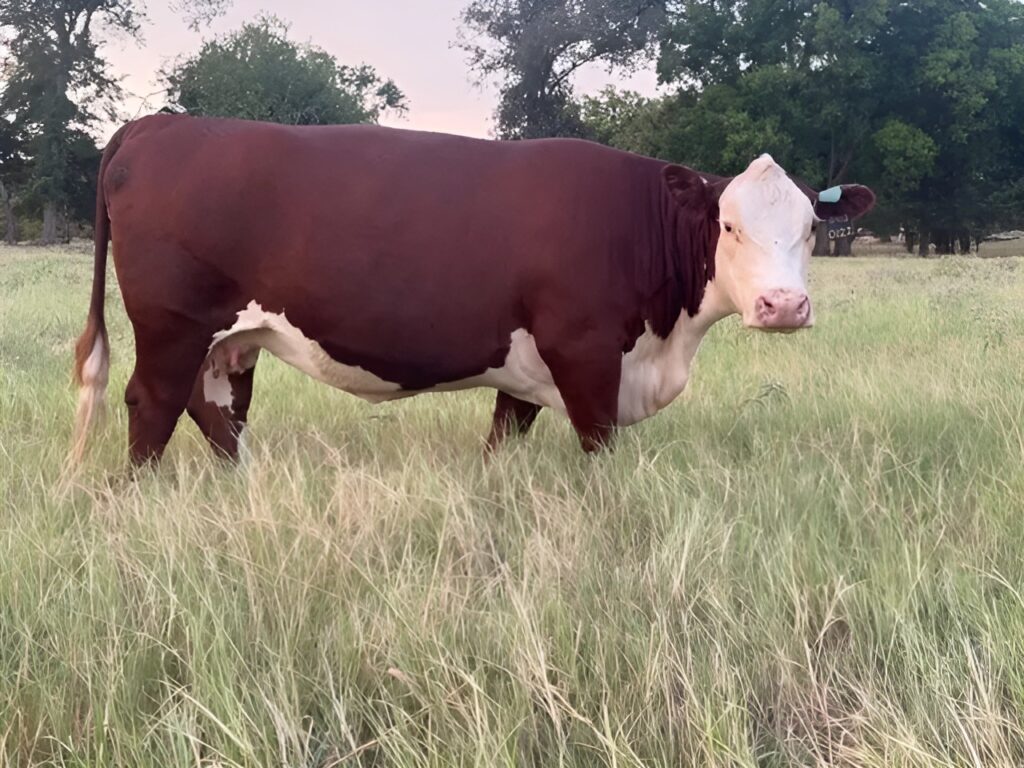
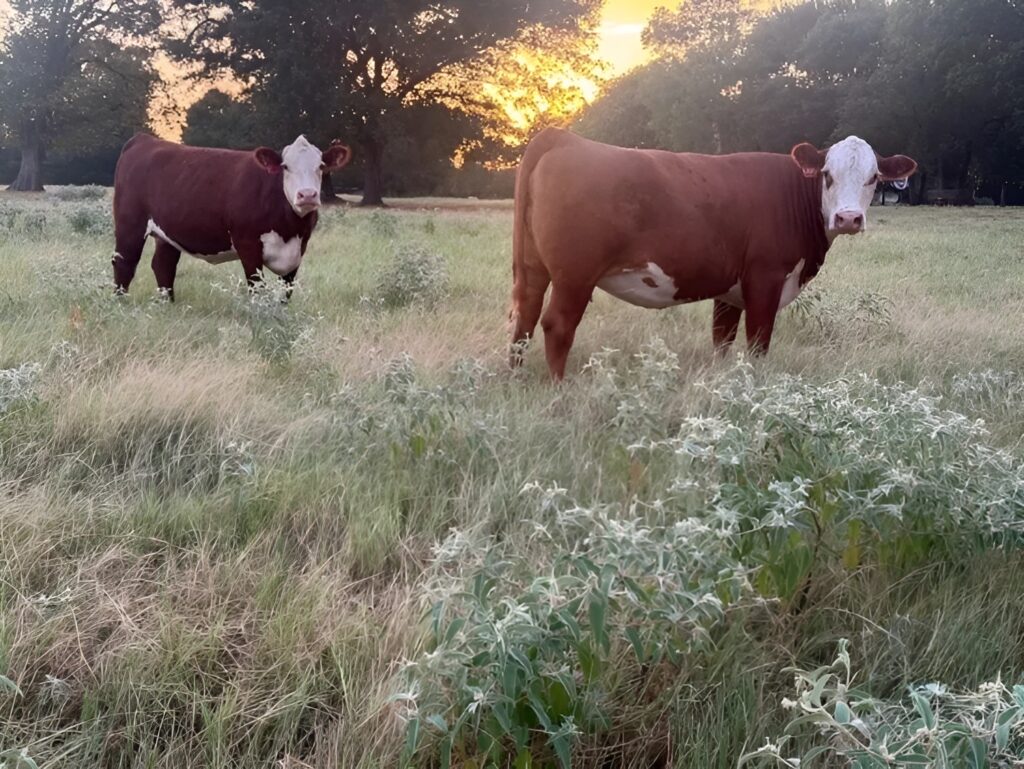
    Registered hereford cows grazing pasture at sunset, showing typical hereford cow characteristics
    Registered Hereford cows on tall pasture — the red hide and white face buyers recognize instantly.

    Hereford Cow Characteristics You Can Check at the Fence

    Most hereford cow characteristics don’t require papers to confirm — you can check them standing at the fence line. Red body color with a white face, crest, underline, and switch is the breed standard, no exceptions. A proper hereford cow description also covers frame: moderate to large, deep-bodied, with enough bone to carry condition through a Texas summer without falling apart by fall. Hereford cow size at maturity typically runs 1,100 to 1,500 pounds depending on frame score and nutrition, with registered seedstock lines sometimes running a bit heavier than commercial cows kept strictly for grass efficiency.

    Horned or Polled: Both Are Normal

    Don’t assume a hereford cow’s horn status tells you anything about her pedigree — polled hereford cow genetics and horned genetics both run through registered and commercial lines alike. It comes down to which bulls were used, not whether papers exist. Our 4 Reg. Hereford Cows are a good example of documented genetics with the breed’s full range of traits on display.

    Hereford Cow Description: Registered vs Commercial

    The hide, frame, and general hereford cow description are identical whether a cow is registered or commercial — the difference is entirely in the paperwork. Registered cows come with American Hereford Association papers and often EPDs that predict traits like birth weight and milk; commercial cows are unregistered but can carry excellent genetics without the documentation. Both types show the same physical hereford cow characteristics because they come from the same breed standard, not two different animals.

    TraitRegisteredCommercial
    Papers / EPDsYes, AHA registeredNo, unregistered
    Hide, frame, faceSame breed standardSame breed standard
    Best fitSeedstock, breeding programsCommercial cow-calf, grass-based operations

    For a straightforward commercial example, our 2 Unreg. Hereford Pairs from Evant, Texas show exactly this kind of solid, unpapered cow doing her job on native grass.

    Calving and Temperament: The Traits That Save You Work

    Beyond hide and horns, the hereford cow characteristics that affect your day-to-day workload most are calving ease and disposition. Herefords calve with less assistance than many continental breeds, thanks to moderate birth weights and good pelvic structure. Temperament runs calm across the breed, registered or commercial, which is a big reason Herefords stay popular with families and first-time buyers who don’t want a fight every time they doctor a calf.

    Buyer note: Ask any seller whether the cows have a history of calving unassisted. That single answer tells you more about a set’s real value than a pedigree ever will.

    Cows with a documented calving history are worth the extra look; our hereford cow for sale listings note calving records wherever we have them, so you’re not guessing.

    Registered hereford cow close up showing red hide and white face characteristics
    A registered Hereford cow up close — deep body, clean underline, correct white face.

    Where the Breed’s Consistency Comes From

    The consistency in hereford cow characteristics traces back to the breed’s hereford cow origin in Herefordshire, England, where cattle were selected for centuries as dual-purpose draft and beef animals before American breeders pushed hard for beef production and range hardiness. That long, stable history is exactly why a registered cow from Nebraska and a commercial cow from Texas still carry the same recognizable hide and frame today, and why a hereford cattle description written a hundred years ago still reads true. The American Hereford Association keeps the full registry and breed standard if you want to verify a specific animal’s background before you buy.

    A good Hereford cow looks like she’s built for the job the moment you see her — deep body, easy fleshing, calm enough that you forget she’s watching you.

    Hereford Breed Characteristics That Separate a Good Cow from a Great One

    Beyond the basics, the hereford breed characteristics that separate a good cow from a great one come down to udder soundness, structural correctness, and how she holds flesh through a dry summer. A black hereford cow crossed into commercial programs shows how flexible the breed’s genetics are when paired with other lines, but a straight Hereford still gives you the most predictable version of these traits. Feet and leg structure matter more than most buyers realize too — a cow with weak pasterns or post-legged conformation wears out faster on rough Texas ground, no matter how correct her hide and frame look standing still. If frame and calving ease are the priority, our hereford bulls for sale near me selection includes bulls proven to throw easy-fleshing, moderate-framed calves with sound structure underneath them.

    From our place

    After 25 years working with this breed, the hereford cow characteristics we trust most are the ones that show up in the pasture, not on paper. A cow that breeds back every year, raises a solid calf without extra feed, and doesn’t fight you at the chute is worth more than a stack of certificates. That’s what we select for, registered or not, before anything goes up for sale.

    Commercial hereford cow and calf pair on texas pasture
    A commercial Hereford cow-calf pair on Texas pasture — unregistered, but built to the same standard.

    Frequently asked questions

    What are the most important hereford cow characteristics for a first-time buyer?

    Red body with white face, moderate frame, calm temperament, and easy calving. Structure and udder soundness matter as much as color, and none of those traits require registration papers to confirm.

    Does hereford cow size vary much between registered and commercial cattle?

    Not dramatically — hereford cow size runs roughly 1,100 to 1,500 pounds at maturity in both types, though registered seedstock lines can run a bit heavier depending on how they were developed.

    Is a polled hereford cow different from a horned one in any other way?

    No — horned and polled are simply a genetic trait, not separate breeds or quality levels. Every other hereford cow characteristic, from hide color to temperament, stays the same either way.

    Do commercial Hereford cows calve as easily as registered ones?

    Yes — calving ease is tied to genetics and cow structure, not registration status. A commercial cow from a line selected for easy calving will perform just as well as a registered one with similar genetics.

    Where do Hereford cattle originally come from?

    Herefordshire, England, where the breed was developed as a dual-purpose draft and beef animal before American breeders selected it hard for beef production and range hardiness in the 1800s.

    Whatever set you’re comparing, the hereford cow characteristics that matter most come down to structure, disposition, and how well a cow fits your ground. For more on what to check before you buy, see our post on Hereford cattle facts, or check current numbers on the hereford cow price page before you call.

    Looking for Hereford cows with these traits?

    Every animal we list is priced on the listing, comes with health papers, and can be delivered to all 48 states.

    Shop hereford heifers for sale
  • Angus Cattle Facts Every Buyer Should Know Before They Bid

    Angus Cattle Facts Every Buyer Should Know Before They Bid

    Angus Cattle Facts Every Buyer Should Know Before They Bid

    Angus cattle facts get thrown around a lot online, and a good share of them are either outdated or apply only to registered show cattle, not the commercial black angus cattle most buyers actually put money down on. Before you bid on anything, you want the facts that hold up at the chute and the scale, not the ones that just sound good in a headline.

    We’ve run Angus and Angus-cross cattle at our place in Rochelle for more than 25 years, and this post covers what actually changes a buying decision — hide and polled genetics, frame and growth, temperament, calving, and what the breed’s carcass reputation really means for your bottom line. If you’re comparing a set of black angus cattle for sale, this is what we’d check first.

    Registered black angus yearling bulls on pasture, an example of angus cattle facts buyers should verify
    Registered Black Angus yearling bulls — the polled heads and moderate frame the breed is known for.

    Angus Cattle Facts About Color, Horns and Hide

    One of the first things buyers notice is hide color, but fewer understand why it matters beyond looks. Black angus cattle carry a solid black hide with no horns — Angus were bred polled from the start, which is one reason the breed spread so fast once ranchers realized they didn’t have to dehorn calves by hand. Black angus cow herds also tend to handle fescue toxicity and Texas heat better than white-faced breeds, since the dark hide doesn’t sunburn around the eyes and udder the way a Hereford’s can.

    Why Polled Genetics Still Matter

    Polled is a dominant trait in Angus, but it isn’t automatic — a bull with a scur or a stray horn gene can still throw horned calves if paired wrong. If correct polled genetics matter to your program, our 11 Reg. Angus Yearling Bulls are AAA registered with fertility guaranteed, so you know exactly what you’re breeding into your herd.

    Angus Cow Characteristics That Show Up at the Scale

    Angus cow characteristics worth checking before you buy start with frame and finish with fleshing ability. A mature Angus cow typically settles between 1,100 and 1,400 pounds on a moderate program, with deep ribs and a level topline that holds condition through summer without extra feed. Angus cattle description aside, the trait that separates a good cow from a great one is how she looks in September after a dry August — easy keepers stay in flesh, hard keepers don’t.

    ClassTypical weightWhat we check
    Weaned calf450–600 lbGrowth without excess frame
    Bred heifer, 18–20 mo850–950 lbPelvic capacity, condition
    Mature cow1,100–1,400 lbDeep rib, easy fleshing
    Mature bull1,800–2,100 lbStructure, tested fertility

    If frame and calving ease are the priority, our angus heifers for sale are bred to low-birth-weight bulls specifically so a first-calf heifer isn’t fighting an oversized calf.

    Temperament: One of the Angus Characteristics That Pays Off Daily

    Disposition doesn’t show up on a pedigree, but it’s one of the angus characteristics that decides whether cattle are easy to own or a daily fight. Generations of selection for docility have made well-bred Angus some of the calmest cattle on the market — they load, they work a chute, and they settle into new ground faster than flightier breeds. Individual temperament still varies, so we cull hard on it here and recommend any buyer watch a set move through a gate before they bid.

    Buyer note: A calm cow turns and follows the herd through a gate. A nervous one bunches in a corner or tries to jump the fence — watch for that before you buy, not after.

    Cow-calf pairs make temperament obvious fast, since a protective but flighty cow turns weaning into a fight every time. Our black angus cows for sale are handled regularly before they ever ship, which is the easiest way we know to weed out a nervous cow before she becomes your problem.

    Black Angus Calves: Growth Facts Worth Knowing

    Black angus calves are known for steady, efficient growth rather than explosive early weight — Angus genetics favor moderate birth weights for easier calving, then solid gains once they’re on grass and grain. A well-managed Angus calf typically weans between 450 and 600 pounds depending on the dam’s milk and the season. Buyers restocking a feeder program often look specifically for black angus calves because of how consistently they finish and grade. Our 120 Weaned, Backgrounded Black Angus Calves listing shows exactly that kind of consistency — 60 steers and 60 heifers, already weaned and backgrounded.

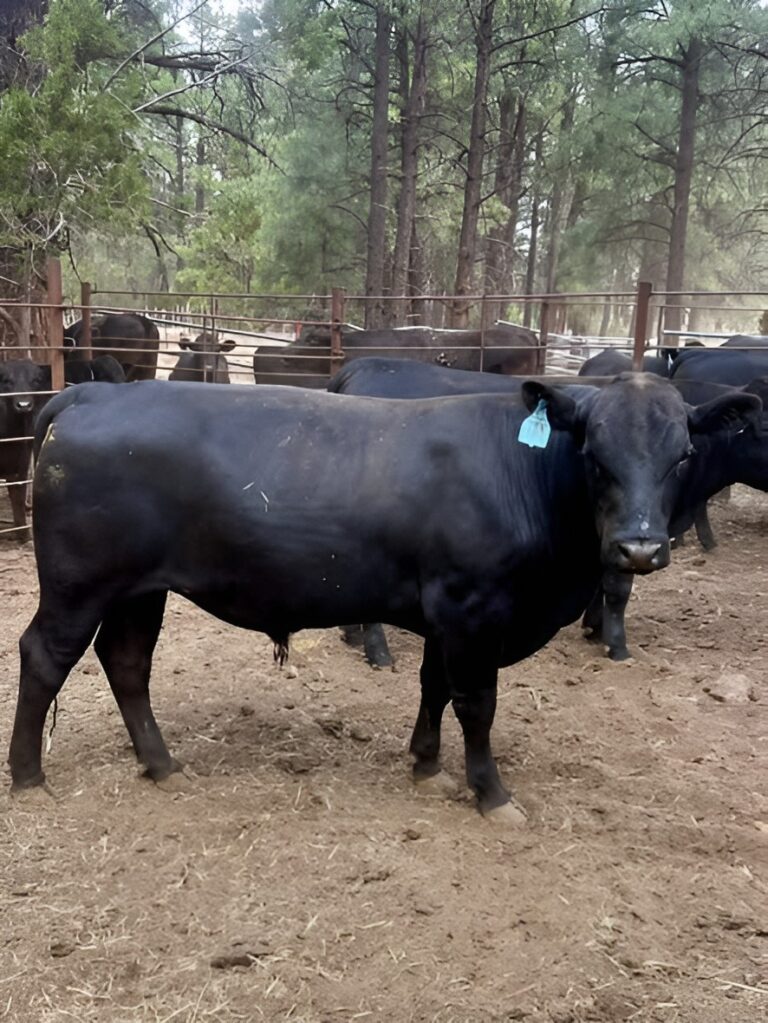
    Weaned black angus calves on rocky range
    Weaned, backgrounded Black Angus calves — the growth and uniformity buyers look for.

    What Angus Genetics Mean for Carcass and Beef Quality

    Part of why Angus command a premium comes down to angus cattle facts that trace back to marbling. The breed deposits intramuscular fat more readily than most British and continental cattle, which is the trait behind the branded-beef programs you see in the grocery store. That doesn’t mean every black animal grades the same — marbling still depends on genetics, age, and how the animal was finished — but it’s why commercial buyers pay attention to Angus influence in a set of feeder cattle. The American Angus Association keeps the registry, EPDs, and performance data seedstock buyers use to compare bulls on paper, and it’s worth checking any black angus cattle breed claim a seller makes before you pay a premium for papers.

    A correct Angus cow should look like she’s doing her job without help — deep-bodied, easy-fleshing, and quiet enough you forget she’s even there.

    From our place

    After 25 years running Angus at Rochelle, the angus cattle facts we trust most are the ones we’ve watched hold up year after year, not the ones that make a good headline. The cattle that make us the most money are rarely the flashiest in the pen — they’re moderate-framed, easy-fleshing, quiet cows that breed back every year without extra feed. We keep a few purebred herd bulls with that kind of structure on hand year-round for buyers building either a commercial or seedstock program.

    Commercial black angus cow and calf pair on pasture
    A commercial Black Angus cow-calf pair — the moderate frame and easy fleshing we select for.

    Frequently asked questions

    What are the most important angus cattle facts for a first-time buyer?

    Solid black hide, polled heads, moderate frame, easy fleshing, and calm temperament. Buyers should also weigh maternal traits like calving ease and milk, and on the carcass side, marbling ability, since those carry the most economic weight over time.

    Do all black angus cattle carry the same characteristics?

    No — hide color and polled heads are consistent, but frame, growth, and temperament vary by bloodline and management. Two black angus cows can look identical standing in a pen and perform very differently in the herd.

    What are the key characteristics of an angus cow to check before buying?

    Deep rib, level topline, clean underline, moderate frame, and calm disposition at the chute. For breeding stock, add calving history or EPDs if the animal is registered.

    Are black angus calves more expensive than other feeder calves?

    Often yes, because of consistent grading and finishing performance. The premium reflects real growth efficiency and carcass quality, not just breed popularity.

    Do Angus cattle handle Texas heat well?

    Better than white-hided breeds in most cases, since the dark hide doesn’t sunburn around the eyes or udder — though shade and water still matter in summer regardless of breed.

    Whatever set you’re comparing, weigh these angus cattle facts against what your own ground and program actually need. For a deeper look at frame, temperament and hide traits, see our post on Angus cattle characteristics, or check current numbers on the black angus cow price page before you call.

    Looking for Angus cattle backed by real facts, not hype?

    Every animal we list is priced on the listing, comes with health papers, and can be delivered to all 48 states.

    Shop angus bulls for sale near me