Author: Admin

  • Black Angus Cattle Breed: History, Traits and the US Market

    Black Angus Cattle Breed: History, Traits and the US Market

    Black Angus Cattle Breed: History, Traits and the US Market

    The black angus cattle breed dominates American beef production for reasons that go beyond a solid black hide — it’s the traits behind that hide, built up over more than 150 years of selection, that made Angus the most-registered beef breed in the country. If you’re buying into the breed for the first time, it helps to know where those traits came from and why they still command a premium today.

    We’ve run Angus and Angus-cross cattle at our place in Rochelle for more than 25 years, and this post covers what actually defines the black angus cattle breed — its Scottish origins, the traits that made it spread across US ranches, its carcass reputation, and where it stands in today’s market. If you’re comparing a set of black angus cattle for sale, this is the background we’d want before we bid.
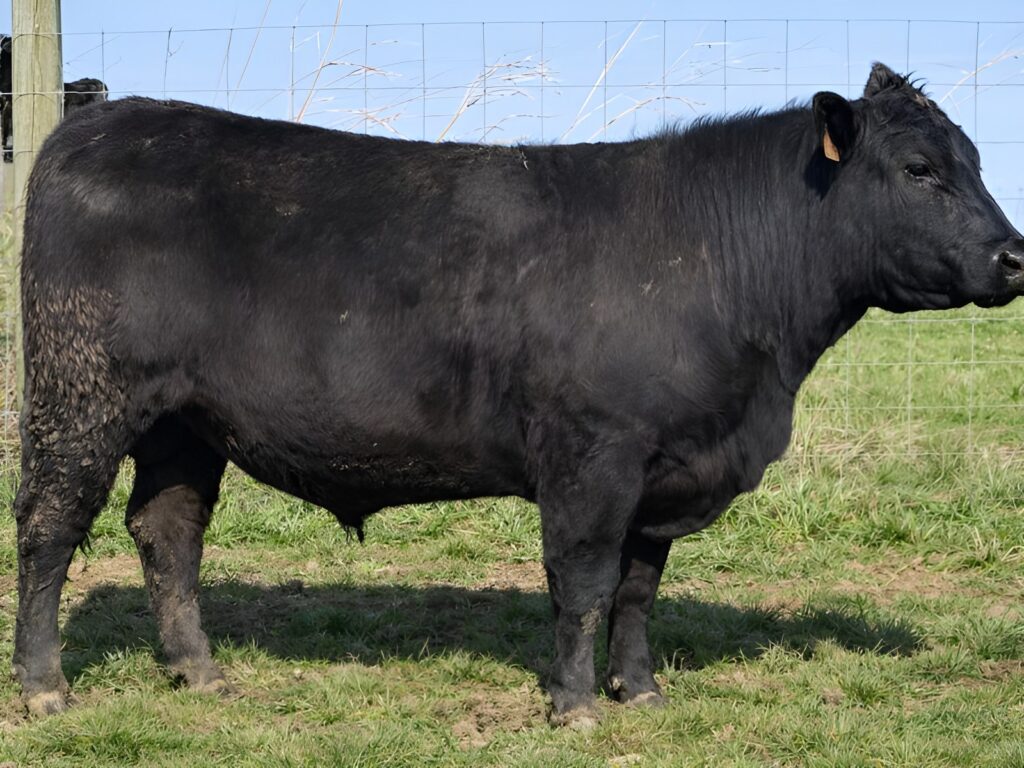
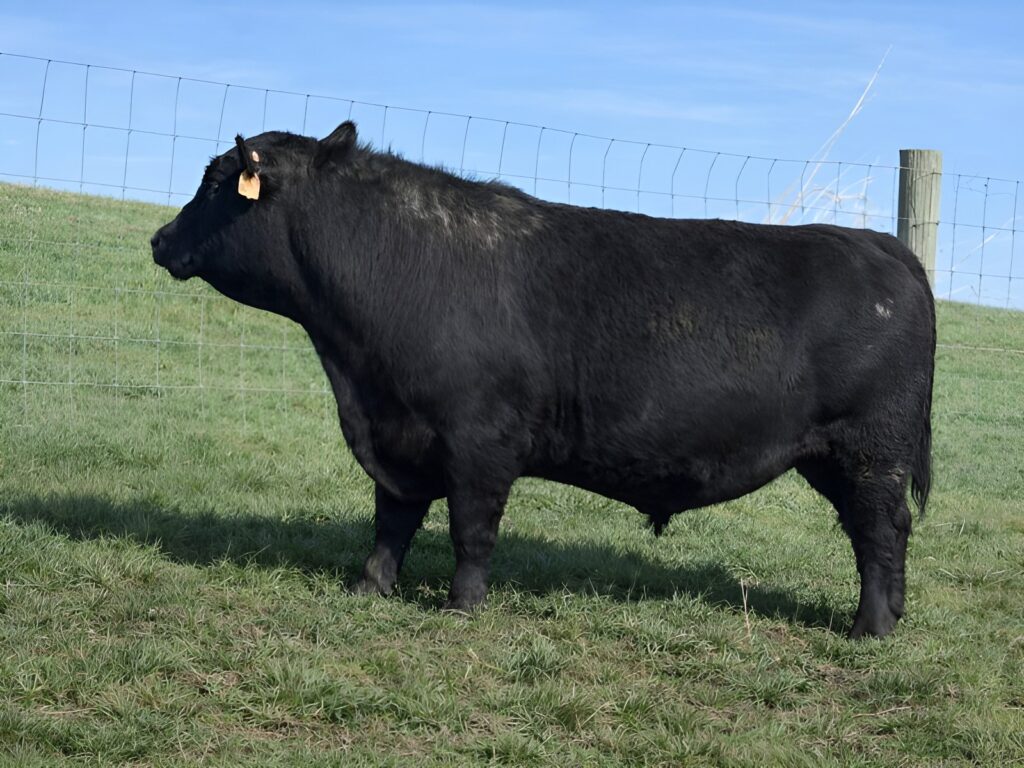
    Purebred black angus cattle breed bull standing in pasture
    A purebred Black Angus bull — the solid hide and moderate frame that define the breed.

    What Defines the Black Angus Cattle Breed

    Anyone who’s spent time around cattle can pick out the black angus cattle breed without a second look: solid black hide, no horns, and a body that’s deep and wide rather than tall and rangy. Angus cows characteristics run consistent across the breed — moderate frame, good bone, and enough natural fleshing to hold condition through a dry summer without extra feed. Black angus cattle also handle Texas heat and fescue toxicity better than white-faced breeds, since the dark hide doesn’t sunburn around the eyes and udder.

    Why the Breed Spread So Fast

    Angus were bred polled from the start, which sounds minor until you’ve dehorned a pen of calves by hand — ranchers who switched to the breed didn’t have to do that anymore. Combined with calm temperament and easy calving, it’s a big part of why the breed spread across American ranches so quickly. Our Black Angus Bulls listing shows correct polled genetics bred for performance and calving ease.

    The Breed’s History: From Scotland to the US Range

    The black angus cattle breed traces back to Aberdeenshire and Angus County in Scotland, where the polled, black cattle were prized for hardiness on rough ground long before they were imported to the United States in the 1870s. American breeders selected hard for the traits that mattered on this side of the Atlantic — fertility, calving ease, and the ability to finish on grass or grain — and the breed grew from a regional curiosity into the most-registered beef breed in the country. The American Angus Association keeps the registry, EPDs, and performance data that trace that history animal by animal.

    A correct Angus cow should look like she’s doing her job without help — deep-bodied, easy-fleshing, and quiet enough you forget she’s even there.
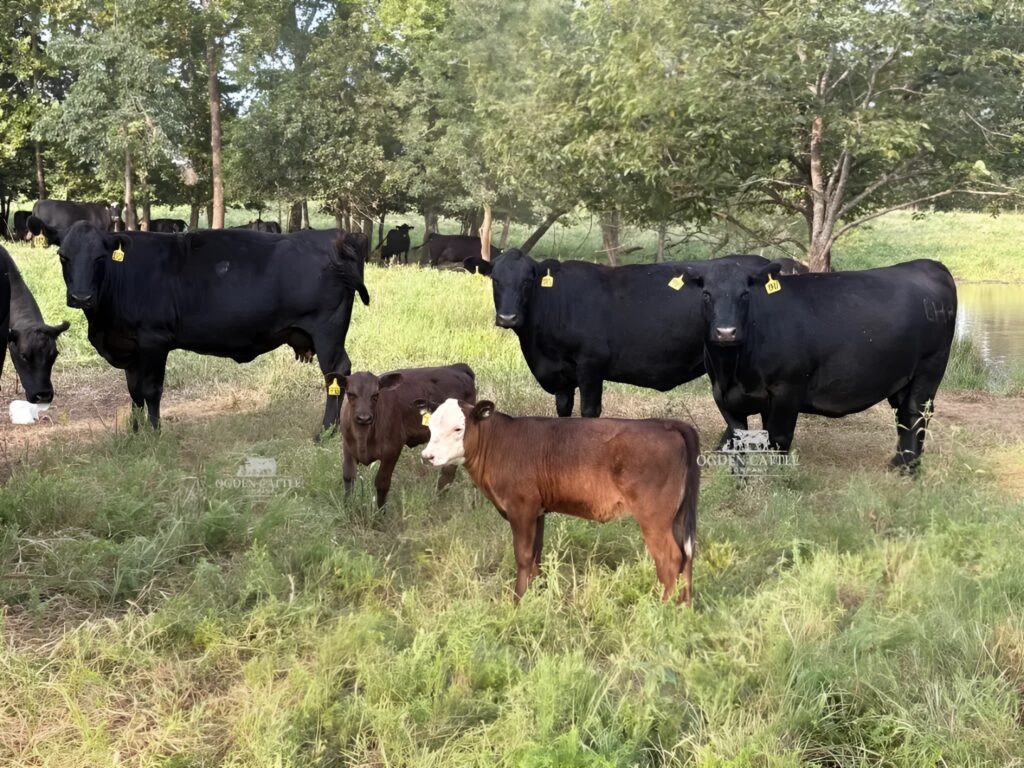
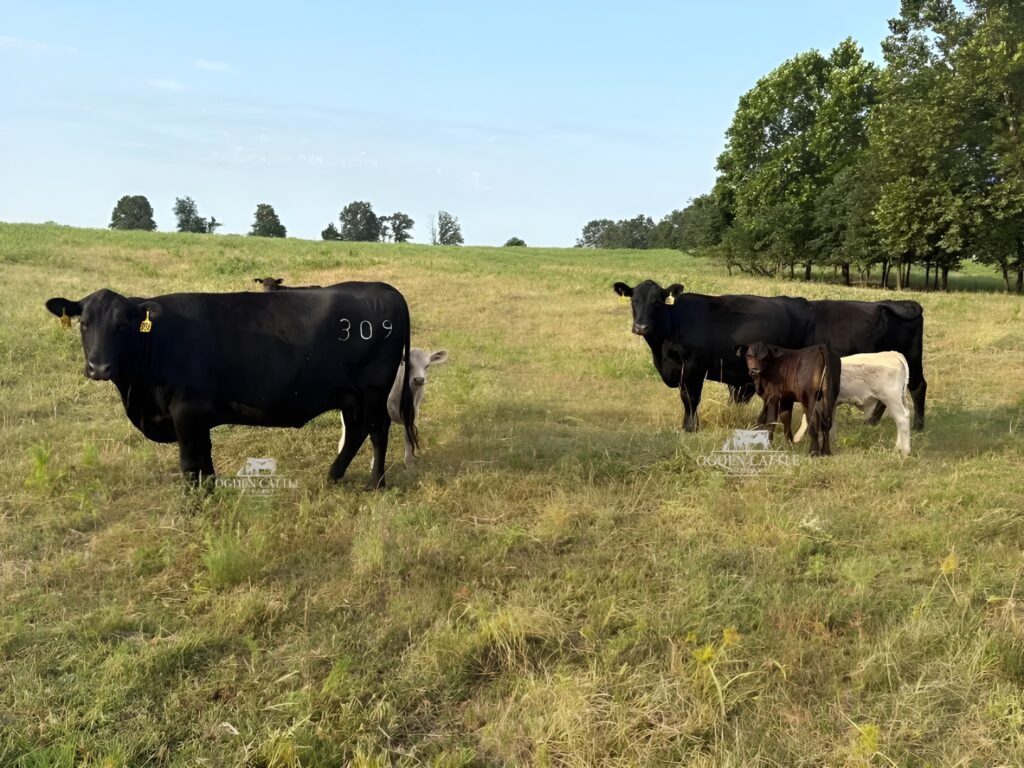
    Black angus and BWF cow calf pairs grazing on native pasture
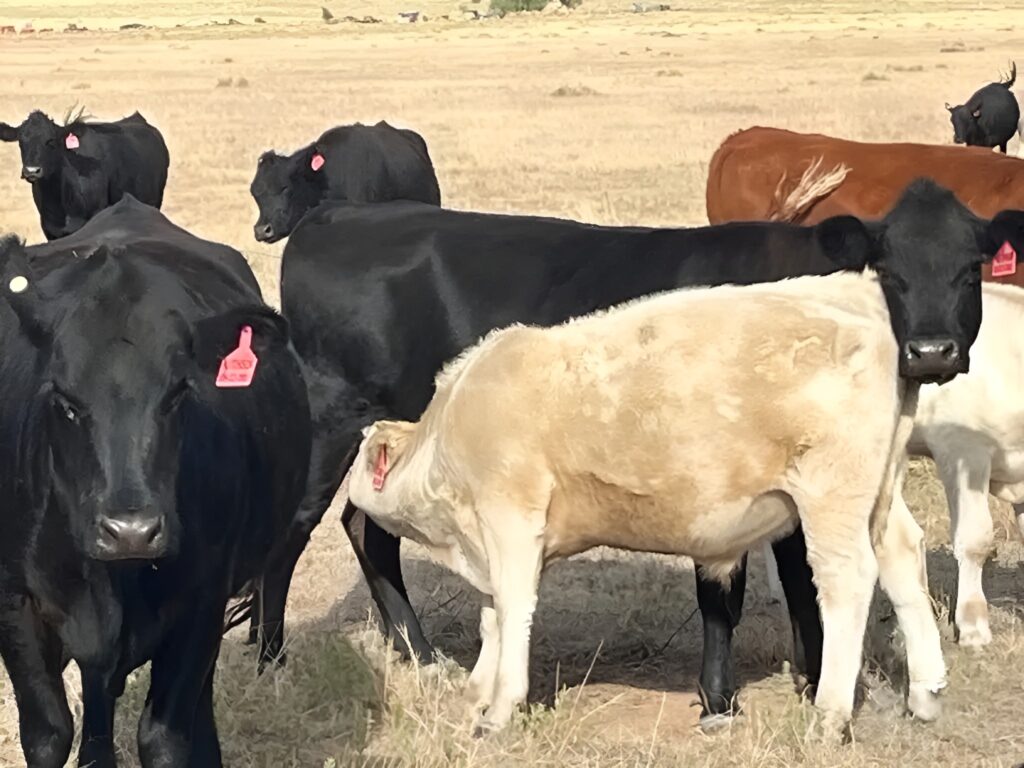
    Angus and Black Baldy pairs on native pasture — the breed’s genetics show up across a lot of commercial herds.

    Angus Beef Cattle Characteristics and Carcass Quality

    Part of why the black angus cattle breed commands a premium comes down to angus beef cattle characteristics that trace directly back to marbling. The breed deposits intramuscular fat more readily than most British and continental cattle, which is the trait behind branded-beef programs like Certified Angus Beef. That doesn’t mean every black animal grades the same — marbling still depends on genetics, age, and how the animal was finished — but it’s exactly why commercial buyers pay attention to Angus influence in a set of feeder calves. Beef cattle angus size also plays into this: a mature cow typically runs 1,100 to 1,400 pounds, with enough frame to grow calves fast without getting so big she costs more to feed than she’s worth.

    ClassTypical weightWhat buyers check
    Weaned calf450–600 lbGrowth, uniformity
    Bred heifer850–950 lbPelvic capacity, condition
    Mature cow1,100–1,400 lbDeep rib, easy fleshing

    Buyers restocking a feeder program often look specifically for black angus calves because of how consistently they finish and grade once they hit the rail.

    Where the Breed Stands in the US Market Today

    The black angus cattle breed now makes up the majority of registered beef cattle in the country, and its genetics show up even in herds that aren’t purebred Angus — a lot of commercial Black Baldy and crossbred cattle carry Angus influence for exactly the traits described above. A full accounting of characteristics of an angus cow has to include how well the breed crosses, since that flexibility is part of why it dominates the commercial market, not just the seedstock side. If frame and calving ease matter to your program, our angus heifers for sale are bred to low-birth-weight bulls specifically to keep first-calf heifers out of trouble.

    Buyer note: Angus influence doesn’t require a purebred animal to show up in performance. A Black Baldy or commercial cross with strong Angus genetics can carry a lot of the same carcass and maternal traits.

    From our place

    After 25 years running this breed, the angus cattle description we trust is the one that holds up in the pasture, not the one that sounds good in a sale catalog. The cattle that make us the most money are rarely the flashiest in the pen — they’re moderate-framed, easy-fleshing, quiet cows that breed back every year without extra feed. Our black angus cows for sale are handled regularly before they ship, which is the easiest way we know to confirm those traits before they become your problem or your profit. We’ve culled hard on structure and disposition for a quarter century now, and it shows in how little trouble these cattle give us at the chute.
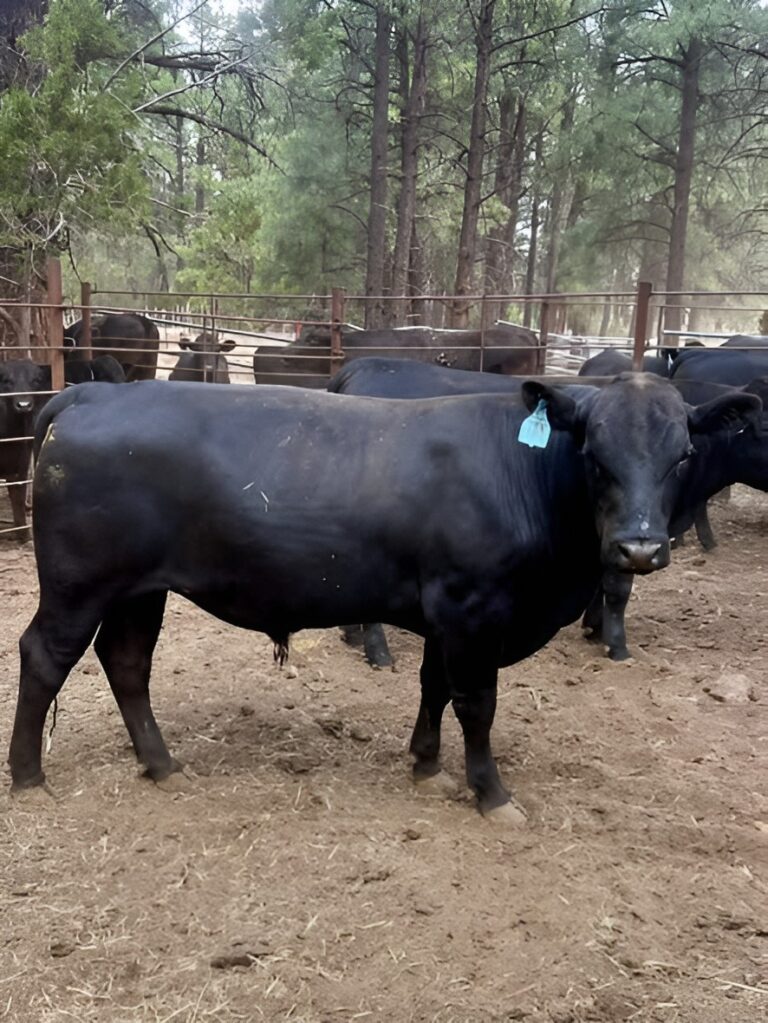
    Two year old black angus bull raised in the united states
    A two-year-old Black Angus bull — correct structure and the moderate frame the market rewards.

    Frequently asked questions

    What makes the black angus cattle breed different from other beef breeds?

    Solid black hide, polled heads, moderate frame, and genetics that favor marbling and easy calving. Those traits combine to make the breed both commercially efficient and popular for branded beef programs.

    Where did the black angus cattle breed originate?

    Aberdeenshire and Angus County in Scotland, where the breed was prized for hardiness before being imported to the United States in the 1870s and selected hard for American ranching conditions.

    Why do Black Angus genetics show up in so many crossbred cattle?

    Because Angus bulls reliably pass on polled heads, calving ease, and marbling potential even in a cross, which is why commercial programs use Angus genetics to improve herds that aren’t purebred.

    How big is a typical black angus cattle breed cow?

    Most mature cows run 1,100 to 1,400 pounds on a moderate program. Registered seedstock lines can run heavier depending on how they were developed and fed.

    Are black angus calves worth more than other feeder calves?

    Often yes, because of consistent grading and finishing performance tied to the breed’s marbling genetics — a premium that reflects real angus beef cattle characteristics, not just breed popularity.

    Whatever your program looks like, the black angus cattle breed rewards buyers who understand the traits behind the hide, not just the color. For more on the facts worth knowing before you buy, see our post on Angus cattle facts, or check current numbers on the black angus cattle prices page before you call.

    Looking for Black Angus backed by real genetics, not just hype?

    Every animal we list is priced on the listing, comes with health papers, and can be delivered to all 48 states.

    Shop angus bulls for sale near me
  • Hereford Cattle Breed: Registered vs Commercial Explained

    Hereford Cattle Breed: Registered vs Commercial Explained

    Hereford Cattle Breed: Registered vs Commercial Explained

    The hereford cattle breed is one of the most recognizable in the country — red body, white face, and a reputation for hardiness that goes back nearly two centuries. What confuses new buyers isn’t the breed itself, it’s the gap between a registered animal and a commercial one, since both carry the same look but not the same paper trail or price tag.

    We’ve raised Herefords at our place in Rochelle for more than 25 years, both registered and commercial, and this post lays out what actually defines the hereford cattle breed — its history, its traits, how registered and commercial cattle differ, and what the breed’s beef reputation means for your bottom line. If you’re comparing a set of hereford cattle for sale, this is the background we’d want before we bid.

    Group of registered hereford cattle breed bulls on pasture
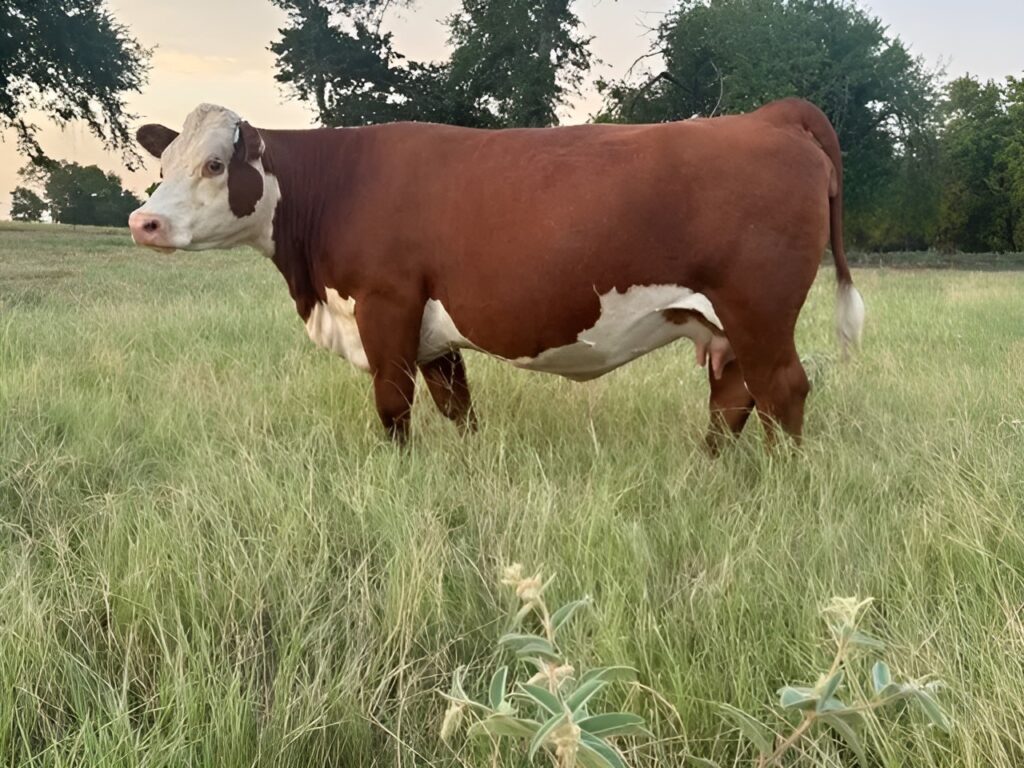
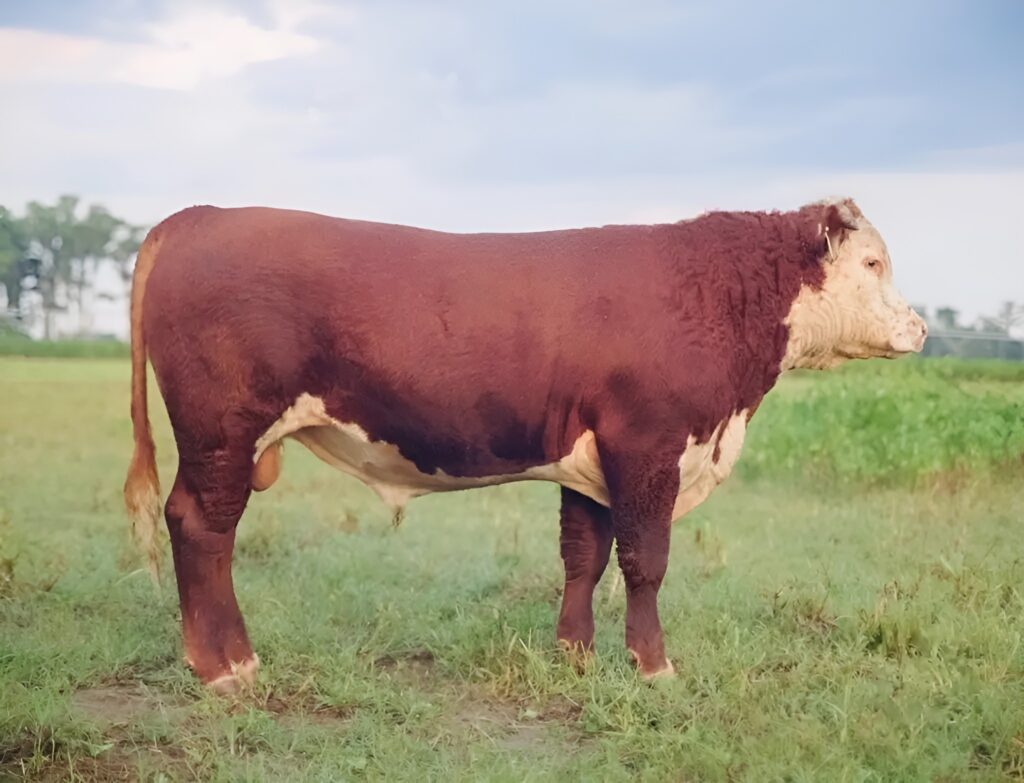
    A group of registered Hereford bulls — the red hide and white face that define the breed.

    What Makes the Hereford Cattle Breed Recognizable

    Anyone who’s spent time around cattle can pick a hereford cattle breed animal out of a mixed pen without thinking twice: solid red body with a white face, crest, underline, dewlap, and switch, and either horned or polled genetics depending on the line. Hereford cattle characteristics run consistent across the breed regardless of registration status — moderate to large frame, deep body, and enough bone to hold condition through a Texas summer. Any full rundown of hereford cattle breed characteristics also has to include disposition, since a calm herd is as much a selling point as a correct hide. That consistency is part of why the breed has stayed popular with commercial ranchers and 4-H families alike for generations.

    Hereford Cattle Traits That Matter Beyond Color

    Past the hide, the hereford cattle traits that actually affect a buying decision are calving ease, milk, and temperament. Herefords calve with less assistance than many continental breeds thanks to moderate birth weights, and the breed runs calm enough that families and first-time buyers gravitate toward it. Our 20 Reg. Hereford Bulls listing shows correct, documented examples of these traits at scale — horned and polled, tested fertile, ready to work.

    Registered vs Commercial: What Actually Changes

    The breed standard doesn’t change based on paperwork — a registered animal and a commercial one carry the same hide, frame, and hereford breed characteristics. What changes is documentation: registered cattle have American Hereford Association papers tracing parentage, often with EPDs predicting traits like birth weight and growth, while commercial cattle are unregistered and priced accordingly. Neither status changes the underlying hereford cattle description a buyer should be checking — hide, frame, feet, and disposition matter the same way in both.

    TraitRegisteredCommercial
    Papers / EPDsYes, AHA registeredNo, unregistered
    Typical priceHigherLower
    Best fitSeedstock, breeding programs, showsCommercial cow-calf, grass-based operations
    Hide, frame, traitsSame breed standardSame breed standard

    For commercial numbers on grass, our 50 Hereford Cows listing is a straightforward example — preg-checked, polled, and priced to work as a commercial herd rather than a show string. Most commercial operations don’t need papers at all; they need cows that breed back, raise a calf, and hold condition on what the ground actually grows.

    Color Variants Within the Breed

    Not every animal carrying Hereford genetics looks like the textbook version. Black hereford cattle — a cross between Hereford and black-hided breeds like Angus — keep the white face and much of the breed’s disposition and hardiness while adding a different hide color, and they’re sold as their own category rather than as straight Herefords. If you’re specifically shopping the traditional red-and-white pattern, it’s worth confirming with a seller whether an animal is a straight Hereford or a colored cross before you commit.

    Hereford Cattle Origin and How the Breed Developed

    The hereford cattle origin traces back to Herefordshire, England, where the breed was developed centuries ago as a dual-purpose draft and beef animal before American breeders imported it and selected hard for beef production and range hardiness. That long, stable breed history is exactly why the breed reads as consistent today — a registered bull from Nebraska and a commercial cow from Texas still carry the same recognizable pattern. The American Hereford Association keeps the full registry and EPD data if you want to verify a specific animal’s background before you buy.

    American breeders didn’t just import the breed and leave it unchanged — they selected specifically for traits that mattered on this side of the Atlantic: fertility on rougher forage, calving ease without assistance, and the ability to finish on grass instead of feedlot grain alone. That selection pressure over more than a century is why the modern breed performs so differently from its English ancestors, even though the hide pattern looks nearly identical. Herds established in Texas and the broader Southwest leaned especially hard on heat tolerance and drought resilience, since a cow that couldn’t hold condition through a dry August didn’t stay in the herd long.

    A correct Hereford, registered or not, should look like the same animal your grandfather would have recognized — that consistency is the whole point of the breed.
    Registered hereford cows with red hide and white faces on pasture
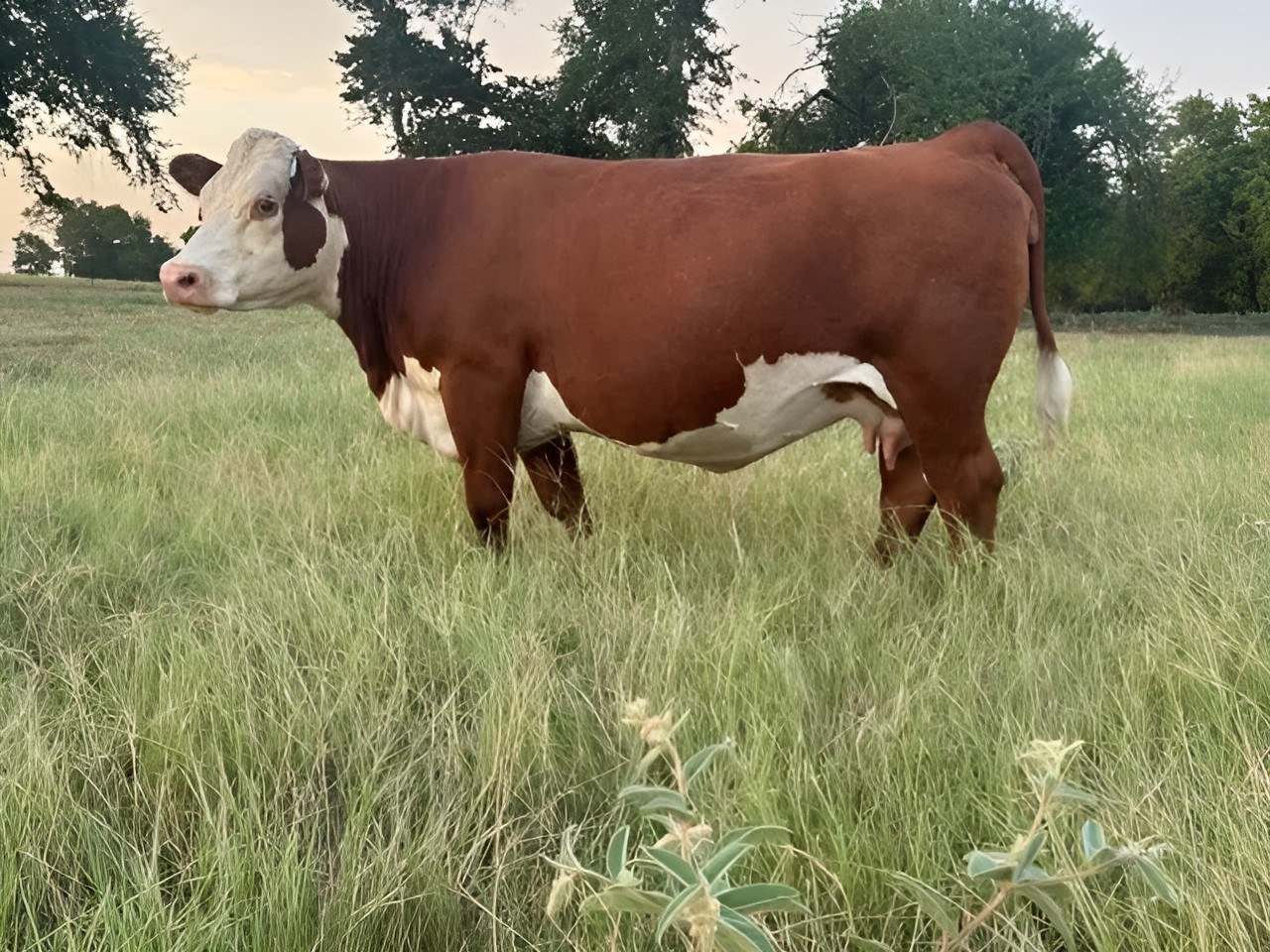
    Registered Hereford cows on pasture — the same breed standard whether papered or not.

    How the Breed Performs on the Rail

    Part of the breed’s staying power comes down to carcass performance, not just looks. Hereford cattle finish well on grass or grain and produce beef marketed through programs like Certified Hereford Beef, which sets standards for quality and consistency. A hereford calf destined for that kind of program still needs the right genetics behind it — growth, muscling, and marbling potential aren’t guaranteed just because the hide is red and white. Our hereford calves for sale come from cows selected for exactly that kind of consistent performance.

    Buyer note: Ask whether a seller’s cattle have documented calving or weaning records. That tells you more about real performance than a hide color ever will.

    Feet and leg structure deserve more attention than most first-time buyers give them. A Hereford with weak pasterns or a post-legged stance wears down faster on rocky Texas pasture than one with correct structure, no matter how good her hide and frame look standing in a pen. We walk every animal before it goes up for sale specifically to check that — structure holds up over a decade of grazing far better than papers do.

    Registered horned hereford bull standing on pasture
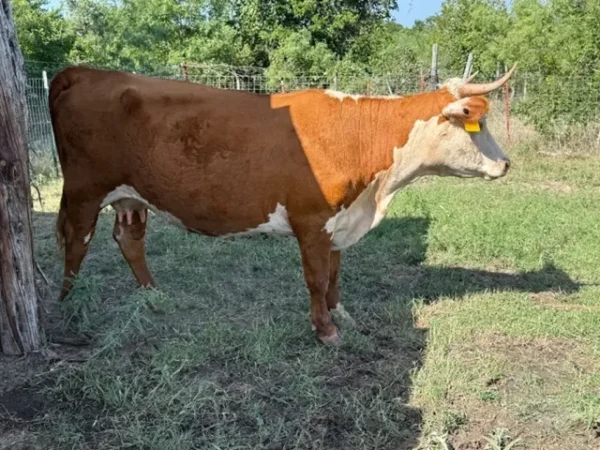
    A registered, horned Hereford bull — deep body, correct hide, documented genetics.

    From our place

    After 25 years working with this breed, our take on the hereford cattle breed is simple: the registration certificate matters for planning matings and proving genetics, but it doesn’t change what’s standing in the pasture. A commercial Hereford cow with the right frame, disposition, and calving history will make you just as much money as a registered one, for a lot less money down. We keep both kinds on hand for buyers who know exactly what they need.

    Frequently asked questions

    What defines the hereford cattle breed?

    A solid red body with a white face, crest, underline and switch, moderate to large frame, and either horned or polled genetics. Calving ease, calm temperament, and hardiness on rough ground round out the breed’s core hereford cattle characteristics.

    Is a registered Hereford worth more than a commercial one?

    Usually in price, yes, because of the documented pedigree and EPDs — but not necessarily in performance. A well-bred commercial cow can match a registered one on the traits that actually affect your operation.

    Where did the hereford cattle breed originate?

    Herefordshire, England, where it was developed as a dual-purpose draft and beef animal before American breeders selected it hard for beef production and range hardiness starting in the 1800s.

    What are the most important hereford cattle traits for a commercial buyer?

    Calving ease, moderate frame, easy fleshing, and calm disposition. Those traits affect your workload and your bottom line more directly than registration status does.

    Does a hereford calf need registered parents to perform well?

    No — commercial Hereford genetics can produce excellent growth and carcass performance. Registration provides documentation, not a performance guarantee on its own.

    Whether you’re buying registered or commercial, the hereford cattle breed rewards buyers who check structure and temperament over paperwork alone. For more on the traits that show up at the fence line, see our post on Hereford cow characteristics, or check current numbers on the hereford cow price page before you call.

    Looking for registered or commercial Herefords?

    Every animal we list is priced on the listing, comes with health papers, and can be delivered to all 48 states.

    Shop hereford heifers for sale
  • Hereford Cow Characteristics Explained by a Real Breeder

    Hereford Cow Characteristics Explained by a Real Breeder

    Hereford Cow Characteristics Explained by a Real Breeder

    Hereford cow characteristics are pretty consistent across the breed, which is exactly why so many buyers trust them for a first herd: red body, white face, moderate frame, and a temperament that doesn’t need a rodeo to load on a trailer. What trips people up isn’t the basics — it’s knowing which of those traits actually predict how a cow will perform once she’s on your ground.

    We’ve run Hereford cattle at our place in Rochelle for more than 25 years, and this post walks through the hereford cow characteristics that matter most before you buy — hide and frame, horns versus polled, calving and temperament, and what changes (and what doesn’t) between registered and commercial cows. If you’re comparing a set of hereford cattle for sale, this is the checklist we’d want if we were the ones bidding.

    Registered hereford cows grazing pasture at sunset, showing typical hereford cow characteristics
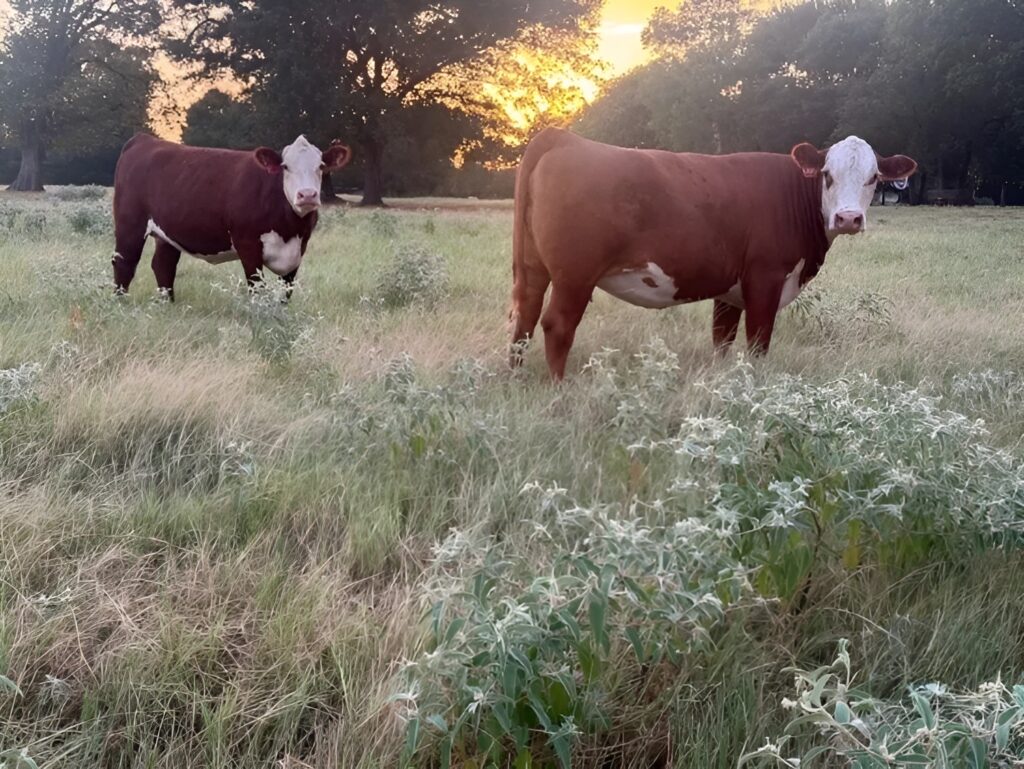
    Registered Hereford cows on tall pasture — the red hide and white face buyers recognize instantly.

    Hereford Cow Characteristics You Can Check at the Fence

    Most hereford cow characteristics don’t require papers to confirm — you can check them standing at the fence line. Red body color with a white face, crest, underline, and switch is the breed standard, no exceptions. A proper hereford cow description also covers frame: moderate to large, deep-bodied, with enough bone to carry condition through a Texas summer without falling apart by fall. Hereford cow size at maturity typically runs 1,100 to 1,500 pounds depending on frame score and nutrition, with registered seedstock lines sometimes running a bit heavier than commercial cows kept strictly for grass efficiency.

    Horned or Polled: Both Are Normal

    Don’t assume a hereford cow’s horn status tells you anything about her pedigree — polled hereford cow genetics and horned genetics both run through registered and commercial lines alike. It comes down to which bulls were used, not whether papers exist. Our 4 Reg. Hereford Cows are a good example of documented genetics with the breed’s full range of traits on display.

    Hereford Cow Description: Registered vs Commercial

    The hide, frame, and general hereford cow description are identical whether a cow is registered or commercial — the difference is entirely in the paperwork. Registered cows come with American Hereford Association papers and often EPDs that predict traits like birth weight and milk; commercial cows are unregistered but can carry excellent genetics without the documentation. Both types show the same physical hereford cow characteristics because they come from the same breed standard, not two different animals.

    TraitRegisteredCommercial
    Papers / EPDsYes, AHA registeredNo, unregistered
    Hide, frame, faceSame breed standardSame breed standard
    Best fitSeedstock, breeding programsCommercial cow-calf, grass-based operations

    For a straightforward commercial example, our 2 Unreg. Hereford Pairs from Evant, Texas show exactly this kind of solid, unpapered cow doing her job on native grass.

    Calving and Temperament: The Traits That Save You Work

    Beyond hide and horns, the hereford cow characteristics that affect your day-to-day workload most are calving ease and disposition. Herefords calve with less assistance than many continental breeds, thanks to moderate birth weights and good pelvic structure. Temperament runs calm across the breed, registered or commercial, which is a big reason Herefords stay popular with families and first-time buyers who don’t want a fight every time they doctor a calf.

    Buyer note: Ask any seller whether the cows have a history of calving unassisted. That single answer tells you more about a set’s real value than a pedigree ever will.

    Cows with a documented calving history are worth the extra look; our hereford cow for sale listings note calving records wherever we have them, so you’re not guessing.

    Registered hereford cow close up showing red hide and white face characteristics
    A registered Hereford cow up close — deep body, clean underline, correct white face.

    Where the Breed’s Consistency Comes From

    The consistency in hereford cow characteristics traces back to the breed’s hereford cow origin in Herefordshire, England, where cattle were selected for centuries as dual-purpose draft and beef animals before American breeders pushed hard for beef production and range hardiness. That long, stable history is exactly why a registered cow from Nebraska and a commercial cow from Texas still carry the same recognizable hide and frame today, and why a hereford cattle description written a hundred years ago still reads true. The American Hereford Association keeps the full registry and breed standard if you want to verify a specific animal’s background before you buy.

    A good Hereford cow looks like she’s built for the job the moment you see her — deep body, easy fleshing, calm enough that you forget she’s watching you.

    Hereford Breed Characteristics That Separate a Good Cow from a Great One

    Beyond the basics, the hereford breed characteristics that separate a good cow from a great one come down to udder soundness, structural correctness, and how she holds flesh through a dry summer. A black hereford cow crossed into commercial programs shows how flexible the breed’s genetics are when paired with other lines, but a straight Hereford still gives you the most predictable version of these traits. Feet and leg structure matter more than most buyers realize too — a cow with weak pasterns or post-legged conformation wears out faster on rough Texas ground, no matter how correct her hide and frame look standing still. If frame and calving ease are the priority, our hereford bulls for sale near me selection includes bulls proven to throw easy-fleshing, moderate-framed calves with sound structure underneath them.

    From our place

    After 25 years working with this breed, the hereford cow characteristics we trust most are the ones that show up in the pasture, not on paper. A cow that breeds back every year, raises a solid calf without extra feed, and doesn’t fight you at the chute is worth more than a stack of certificates. That’s what we select for, registered or not, before anything goes up for sale.

    Commercial hereford cow and calf pair on texas pasture
    A commercial Hereford cow-calf pair on Texas pasture — unregistered, but built to the same standard.

    Frequently asked questions

    What are the most important hereford cow characteristics for a first-time buyer?

    Red body with white face, moderate frame, calm temperament, and easy calving. Structure and udder soundness matter as much as color, and none of those traits require registration papers to confirm.

    Does hereford cow size vary much between registered and commercial cattle?

    Not dramatically — hereford cow size runs roughly 1,100 to 1,500 pounds at maturity in both types, though registered seedstock lines can run a bit heavier depending on how they were developed.

    Is a polled hereford cow different from a horned one in any other way?

    No — horned and polled are simply a genetic trait, not separate breeds or quality levels. Every other hereford cow characteristic, from hide color to temperament, stays the same either way.

    Do commercial Hereford cows calve as easily as registered ones?

    Yes — calving ease is tied to genetics and cow structure, not registration status. A commercial cow from a line selected for easy calving will perform just as well as a registered one with similar genetics.

    Where do Hereford cattle originally come from?

    Herefordshire, England, where the breed was developed as a dual-purpose draft and beef animal before American breeders selected it hard for beef production and range hardiness in the 1800s.

    Whatever set you’re comparing, the hereford cow characteristics that matter most come down to structure, disposition, and how well a cow fits your ground. For more on what to check before you buy, see our post on Hereford cattle facts, or check current numbers on the hereford cow price page before you call.

    Looking for Hereford cows with these traits?

    Every animal we list is priced on the listing, comes with health papers, and can be delivered to all 48 states.

    Shop hereford heifers for sale
  • Angus Cattle Facts Every Buyer Should Know Before They Bid

    Angus Cattle Facts Every Buyer Should Know Before They Bid

    Angus Cattle Facts Every Buyer Should Know Before They Bid

    Angus cattle facts get thrown around a lot online, and a good share of them are either outdated or apply only to registered show cattle, not the commercial black angus cattle most buyers actually put money down on. Before you bid on anything, you want the facts that hold up at the chute and the scale, not the ones that just sound good in a headline.

    We’ve run Angus and Angus-cross cattle at our place in Rochelle for more than 25 years, and this post covers what actually changes a buying decision — hide and polled genetics, frame and growth, temperament, calving, and what the breed’s carcass reputation really means for your bottom line. If you’re comparing a set of black angus cattle for sale, this is what we’d check first.

    Registered black angus yearling bulls on pasture, an example of angus cattle facts buyers should verify
    Registered Black Angus yearling bulls — the polled heads and moderate frame the breed is known for.

    Angus Cattle Facts About Color, Horns and Hide

    One of the first things buyers notice is hide color, but fewer understand why it matters beyond looks. Black angus cattle carry a solid black hide with no horns — Angus were bred polled from the start, which is one reason the breed spread so fast once ranchers realized they didn’t have to dehorn calves by hand. Black angus cow herds also tend to handle fescue toxicity and Texas heat better than white-faced breeds, since the dark hide doesn’t sunburn around the eyes and udder the way a Hereford’s can.

    Why Polled Genetics Still Matter

    Polled is a dominant trait in Angus, but it isn’t automatic — a bull with a scur or a stray horn gene can still throw horned calves if paired wrong. If correct polled genetics matter to your program, our 11 Reg. Angus Yearling Bulls are AAA registered with fertility guaranteed, so you know exactly what you’re breeding into your herd.

    Angus Cow Characteristics That Show Up at the Scale

    Angus cow characteristics worth checking before you buy start with frame and finish with fleshing ability. A mature Angus cow typically settles between 1,100 and 1,400 pounds on a moderate program, with deep ribs and a level topline that holds condition through summer without extra feed. Angus cattle description aside, the trait that separates a good cow from a great one is how she looks in September after a dry August — easy keepers stay in flesh, hard keepers don’t.

    ClassTypical weightWhat we check
    Weaned calf450–600 lbGrowth without excess frame
    Bred heifer, 18–20 mo850–950 lbPelvic capacity, condition
    Mature cow1,100–1,400 lbDeep rib, easy fleshing
    Mature bull1,800–2,100 lbStructure, tested fertility

    If frame and calving ease are the priority, our angus heifers for sale are bred to low-birth-weight bulls specifically so a first-calf heifer isn’t fighting an oversized calf.

    Temperament: One of the Angus Characteristics That Pays Off Daily

    Disposition doesn’t show up on a pedigree, but it’s one of the angus characteristics that decides whether cattle are easy to own or a daily fight. Generations of selection for docility have made well-bred Angus some of the calmest cattle on the market — they load, they work a chute, and they settle into new ground faster than flightier breeds. Individual temperament still varies, so we cull hard on it here and recommend any buyer watch a set move through a gate before they bid.

    Buyer note: A calm cow turns and follows the herd through a gate. A nervous one bunches in a corner or tries to jump the fence — watch for that before you buy, not after.

    Cow-calf pairs make temperament obvious fast, since a protective but flighty cow turns weaning into a fight every time. Our black angus cows for sale are handled regularly before they ever ship, which is the easiest way we know to weed out a nervous cow before she becomes your problem.

    Black Angus Calves: Growth Facts Worth Knowing

    Black angus calves are known for steady, efficient growth rather than explosive early weight — Angus genetics favor moderate birth weights for easier calving, then solid gains once they’re on grass and grain. A well-managed Angus calf typically weans between 450 and 600 pounds depending on the dam’s milk and the season. Buyers restocking a feeder program often look specifically for black angus calves because of how consistently they finish and grade. Our 120 Weaned, Backgrounded Black Angus Calves listing shows exactly that kind of consistency — 60 steers and 60 heifers, already weaned and backgrounded.

    Weaned black angus calves on rocky range
    Weaned, backgrounded Black Angus calves — the growth and uniformity buyers look for.

    What Angus Genetics Mean for Carcass and Beef Quality

    Part of why Angus command a premium comes down to angus cattle facts that trace back to marbling. The breed deposits intramuscular fat more readily than most British and continental cattle, which is the trait behind the branded-beef programs you see in the grocery store. That doesn’t mean every black animal grades the same — marbling still depends on genetics, age, and how the animal was finished — but it’s why commercial buyers pay attention to Angus influence in a set of feeder cattle. The American Angus Association keeps the registry, EPDs, and performance data seedstock buyers use to compare bulls on paper, and it’s worth checking any black angus cattle breed claim a seller makes before you pay a premium for papers.

    A correct Angus cow should look like she’s doing her job without help — deep-bodied, easy-fleshing, and quiet enough you forget she’s even there.

    From our place

    After 25 years running Angus at Rochelle, the angus cattle facts we trust most are the ones we’ve watched hold up year after year, not the ones that make a good headline. The cattle that make us the most money are rarely the flashiest in the pen — they’re moderate-framed, easy-fleshing, quiet cows that breed back every year without extra feed. We keep a few purebred herd bulls with that kind of structure on hand year-round for buyers building either a commercial or seedstock program.

    Commercial black angus cow and calf pair on pasture
    A commercial Black Angus cow-calf pair — the moderate frame and easy fleshing we select for.

    Frequently asked questions

    What are the most important angus cattle facts for a first-time buyer?

    Solid black hide, polled heads, moderate frame, easy fleshing, and calm temperament. Buyers should also weigh maternal traits like calving ease and milk, and on the carcass side, marbling ability, since those carry the most economic weight over time.

    Do all black angus cattle carry the same characteristics?

    No — hide color and polled heads are consistent, but frame, growth, and temperament vary by bloodline and management. Two black angus cows can look identical standing in a pen and perform very differently in the herd.

    What are the key characteristics of an angus cow to check before buying?

    Deep rib, level topline, clean underline, moderate frame, and calm disposition at the chute. For breeding stock, add calving history or EPDs if the animal is registered.

    Are black angus calves more expensive than other feeder calves?

    Often yes, because of consistent grading and finishing performance. The premium reflects real growth efficiency and carcass quality, not just breed popularity.

    Do Angus cattle handle Texas heat well?

    Better than white-hided breeds in most cases, since the dark hide doesn’t sunburn around the eyes or udder — though shade and water still matter in summer regardless of breed.

    Whatever set you’re comparing, weigh these angus cattle facts against what your own ground and program actually need. For a deeper look at frame, temperament and hide traits, see our post on Angus cattle characteristics, or check current numbers on the black angus cow price page before you call.

    Looking for Angus cattle backed by real facts, not hype?

    Every animal we list is priced on the listing, comes with health papers, and can be delivered to all 48 states.

    Shop angus bulls for sale near me
  • Hereford Cattle Facts: Registered vs Commercial Cattle

    Hereford Cattle Facts: Registered vs Commercial Cattle

    Hereford Cattle Facts: Registered vs Commercial Cattle

    Hereford cattle facts get repeated so often online that a lot of them are half-true by the time they reach a buyer — and the biggest point of confusion is the gap between registered and commercial Hereford cattle. They’re the same breed underneath, but the paperwork, the price, and what you’re actually buying are not the same thing, and mixing the two up is how buyers overpay or end up with cattle that don’t fit their program.

    We’ve raised both registered and commercial Herefords at our place in Rochelle for more than 25 years, and in this post we’ll lay out the facts that actually matter — what “registered” means on paper, how commercial cattle differ, hide and horn traits, calving behavior, and what to check before you buy either kind. If you’re weighing a set of hereford cattle for sale, this is the breakdown we’d want if we were the ones buying.

    Commercial hereford cows with red hide and white faces on pasture, an example of common hereford cattle facts buyers ask about
    Commercial Hereford cows on pasture — red with white faces, the trait everyone recognizes first.

    Hereford Cattle Facts: What “Registered” Actually Means

    The most important of the hereford cattle facts to get straight is that “registered” is a paperwork status, not a quality guarantee. A registered Hereford has papers filed with the American Hereford Association tracing its parentage, and often comes with EPDs (expected progeny differences) that predict traits like birth weight and growth. Commercial Hereford cattle are unregistered — they may carry excellent genetics, sometimes from registered parents, but there’s no paper trail and no EPDs to lean on. Both can be good cattle; the paperwork just tells you how much you can prove about them before you buy.

    What the Paperwork Is Actually Worth

    Registered cattle cost more because the paperwork lets a buyer plan breeding decisions with real data instead of guesswork — useful if you’re building a seedstock herd or need documented genetics for a breeding program. Commercial cattle cost less and are the backbone of most cow-calf operations, where a rancher cares more about how a cow performs on grass than what her pedigree says. Our 20 Reg. Hereford Bulls listing shows what documented genetics look like at scale — horned and polled, tested fertile, ready to work.

    Hereford Cow Characteristics You Can Verify Yourself

    Some hereford cow characteristics don’t need papers to confirm — you can check them standing at the fence. Red body color with a white face, crest, underline, and switch is the breed standard for both registered and commercial cattle. Horned or polled is a genetic trait either type can carry, so don’t assume registered means polled or commercial means horned; ask, or look. A hereford cattle description worth trusting also covers frame: moderate to large-framed, deep-bodied, with enough bone to hold condition through a Texas summer without falling apart by fall.

    TraitRegistered HerefordCommercial Hereford
    Papers / EPDsYes, AHA registeredNo, unregistered
    Typical priceHigherLower
    Best fitSeedstock, 4-H/FFA show, breeding programCommercial cow-calf, grass-based operations
    Hide and frameSame breed standardSame breed standard

    If commercial numbers on grass are what you need, our 50 Hereford Cows listing is a straightforward example — preg-checked, polled, and priced to work as a commercial set rather than a show string.

    Hereford Cattle Origin and Why the Facts Repeat So Much

    Part of why hereford cattle facts get repeated so consistently is that the breed’s story hasn’t changed much in two centuries — Herefords trace back to Herefordshire, England, bred originally as a dual-purpose draft and beef animal before American breeders selected them hard for beef production and range hardiness. That long, stable hereford cattle origin is exactly why the breed reads as consistent today: a registered bull from Nebraska and a commercial cow from Texas still carry the same recognizable hide pattern and frame. The American Hereford Association keeps the full registry and EPD data if you want to verify a specific animal’s background before you buy, and it’s the place to go if you want to confirm any hereford cattle breed claims a seller makes on paper.

    A good commercial Hereford cow and a good registered Hereford cow can stand in the same pen and look like twins — the difference is entirely in what you can prove on paper.

    Calving and Temperament: Hereford Cattle Traits That Matter Day to Day

    Beyond hide and papers, the hereford cattle traits that actually affect your workload are calving ease and disposition, and neither depends on registration status. Herefords are known for calving with less assistance than many continental breeds, largely because of moderate birth weights and good pelvic structure in the cows. Temperament runs calm across the breed, registered or commercial, which is one reason Herefords stay popular with families and first-time buyers. If calving ease is a priority, our hereford calves for sale come from cows we’ve already seen calve without trouble.

    Buyer note: Ask any seller, registered or commercial, whether the cows have a history of calving unassisted. That single fact tells you more about a set’s real value than a pedigree does.

    Facts About Hereford Cows Worth Remembering Before You Buy

    A short list of facts about hereford cows that hold true across registered and commercial lines: cows typically weigh 1,100 to 1,500 pounds at maturity depending on frame score, they breed back reliably on moderate pasture without heavy supplementation, and their white faces mean more attention to pinkeye and sunburn prevention than a solid-hided breed needs. None of that changes with a registration certificate — it’s the breed, not the paperwork, doing the work. These are the same hereford cow facts we walk every buyer through before they commit to a set.

    For herd sires with a documented pedigree behind those traits, our hereford bulls for sale near me selection includes both horned and polled bulls, tested fertile and ready to turn out.

    Registered horned hereford herd bull, deep red with white face
    A registered, horned Hereford herd bull — deep red hide, correct white face, and documented genetics.

    From our place

    After 25 years running both sides of this business, our honest take is that most buyers overthink the registered-versus-commercial decision. If you’re building seedstock or need EPDs to plan matings, pay for registered. If you’re stocking a commercial cow-calf operation and care about pounds weaned per acre, commercial cattle with the right hereford cow characteristics will make you just as much money for less up-front cost. We keep small, documented sets of registered cows on hand too, for buyers who do want that paper trail.

    Commercial hereford cow and horned calf pair on texas pasture
    A commercial Hereford cow-calf pair — unregistered, but built to the same breed standard.

    Frequently asked questions

    What are the most important hereford cattle facts for a first-time buyer?

    Registration is paperwork, not a quality guarantee; hide color and frame follow the same breed standard whether registered or not; and calving ease and temperament are consistent strengths across the breed. Those hereford cattle facts matter more than price alone when you’re comparing two sets.

    Is a registered Hereford always better than a commercial one?

    Not necessarily — “better” depends on your goals. Registered cattle give you documented genetics and EPDs for breeding decisions; commercial cattle can perform just as well on grass for a lot less money if you don’t need the paper trail.

    What is the typical hereford cow characteristics buyers should check?

    Red body with white face, crest, underline and switch; moderate to large frame; deep body; and either horned or polled heads, since both are normal for the breed. Structure and udder soundness matter as much as color.

    Do commercial Hereford cows calve as easily as registered ones?

    Yes — calving ease is a breed-wide trait tied to genetics and cow structure, not registration status. A commercial cow from a line selected for easy calving will calve just as well as a registered one from similar genetics.

    Why do Hereford cattle facts online repeat so much?

    Because the breed has changed very little in two centuries of selection — the hide pattern, frame, and temperament described a hundred years ago still describe the cattle today, so the same core facts about hereford cows keep getting repeated.

    Whether you land on registered or commercial, the hereford cattle facts that matter most come down to structure, disposition, and how a set fits your ground. For more on where the breed comes from, see our post on Hereford cow origin, or check current numbers on the hereford cow price page before you call.

    Looking for registered or commercial Herefords?

    Every animal we list is priced on the listing, comes with health papers, and can be delivered to all 48 states.

    Shop registered hereford cows for sale
  • Angus Cattle Characteristics That Actually Affect a Sale

    Angus Cattle Characteristics That Actually Affect a Sale

    Angus Cattle Characteristics That Actually Affect a Sale

    Angus cattle characteristics come down to a short list of traits that decide whether a set of cattle sells well or sits on the truck too long: a solid black hide, naturally polled heads, moderate frame, easy fleshing, and a temperament you can work without a fight. If you already know cattle, none of that is news — but knowing which of those traits actually move a bid, and which ones are just cosmetic, is what separates a buyer who overpays from one who builds a herd that works.

    We have run Angus and Angus-influenced cattle at our place in Rochelle for more than 25 years, and in this post we will walk through the traits that matter at the chute, on the scale, and at settlement — color and polled genetics, frame and weight, temperament, and what the breed’s carcass traits mean for your bottom line. If you are shopping a set of black angus cattle for sale, this is the checklist we run before we ever load a trailer.

    Angus and black white-faced cow-calf pairs showing typical angus cattle characteristics on pasture
    A set of Angus and BWF pairs on native grass — the hide color and moderate frame most buyers look for first.

    The Angus Cattle Characteristics Buyers Check First

    A full angus cattle description starts with what you can see across a pen: solid black hide (or solid red, in the Red Angus line), no horns, and a body that is deep and wide without being tall and rangy. The characteristics of an angus cow that sell fastest at our place are moderate frame, good bone, and enough natural fleshing that she is not fighting to hold condition on grass alone. Buyers who have shopped a lot of cattle can spot the difference in thirty seconds — a cow standing square with a level topline and a clean underline looks like money before you ever check her papers. These are the same angus cattle characteristics we grade every animal on before it goes up for sale.

    Polled Heads and Hide Color

    Angus were bred polled from the start, which is one of the breed’s biggest selling points — no horns to knock off calves, other cattle, or the inside of a trailer. Hide color matters for a practical reason too: black cattle handle Texas heat and fescue toxicity better than white-faced cattle do, since they do not sunburn on the udder and around the eyes the way a Hereford can. If you are pricing a set of registered herd sires, our 5 Reg. Angus Bulls listing shows exactly what correct polled, black bulls should look like standing in a pen.

    Angus Cow Characteristics: Frame, Weight and Fleshing

    When people search beef cattle angus size, they are usually asking two different questions at once — how tall should she stand, and how much should she weigh. A mature Angus cow on a moderate program typically settles between 1,100 and 1,400 pounds, with registered seedstock lines running a bit heavier than commercial cows kept strictly for grass efficiency. Angus cow characteristics worth checking at the scale include a deep rib cage, a wide pin-to-pin measurement for calving ease, and flesh cover that holds through a Texas summer without extra feed.

    ClassTypical weightWhat we look for
    Weaned heifer calf450–550 lbGrowth without excess frame
    Bred heifer, 18–20 mo850–950 lbPelvic capacity, moderate condition
    Mature cow, 4+ yr1,150–1,400 lbDeep rib, level topline, easy fleshing
    Mature herd bull1,800–2,100 lbMuscle, structure, tested fertility

    If frame and calving ease are what you are after, our angus heifers for sale are bred to low-birth-weight bulls specifically so a first-calf heifer is not fighting a big calf her first time through the chute.

    Temperament: The Angus Characteristic That Protects Your Investment

    Disposition does not show up on a pedigree, but it is one of the angus characteristics that determines whether cattle are a pleasure to own or a daily headache. Generations of selection for docility have made well-bred Angus some of the easiest cattle to work on the market — they load, they work a chute, and they settle into new pasture faster than flightier breeds. That said, disposition is still an individual trait, not a breed guarantee, so we cull hard on temperament here and recommend any buyer watch how a set handles pressure before they bid.

    Buyer note: Watch cattle move through a gate before you buy, not just stand in a pen. Calm cattle turn and follow the herd; nervous ones bunch in a corner or try to jump.

    Cow-calf pairs are where temperament shows up fastest, since a protective but flighty cow makes weaning and doctoring a fight every time. Our angus cows for sale are handled regularly on the place before they ever ship, which is the easiest way we know to sort out a nervous cow before she becomes your problem.

    A Few Angus Cattle Facts About Carcass and Beef Quality

    Part of why Angus cattle command a premium comes down to angus cattle facts that go back to how the breed marbles. Angus genetics deposit intramuscular fat more readily than most British and continental breeds, which is the trait that built the branded-beef programs you see in the grocery store. That does not mean every black animal grades the same — marbling is still driven by genetics, age, and how the animal was finished — but it is the reason commercial buyers pay attention to Angus influence in a set of feeder calves. The American Angus Association keeps the registry, EPDs, and performance data that seedstock buyers use to compare bulls on paper before they ever see one in person, and it’s a good place to double-check any angus cattle characteristics a seller claims on a pedigree.

    A correct Angus cow should look like she is doing her job without help — deep-bodied, easy-fleshing, and quiet enough that you forget she is even there.

    The Black Angus Cattle Breed: A Short History

    The black angus cattle breed traces back to Aberdeenshire and Angus County in Scotland, where the polled, black cattle were prized for hardiness on rough ground long before they were imported to the United States in the 1870s. American breeders selected hard for the traits that mattered on this side of the Atlantic — fertility, calving ease, and the ability to finish on grass or grain — and the breed grew into the most-registered beef breed in the country. That selection history is exactly why the angus cattle characteristics we sell today look so different from the rangier cattle that first came off the boat in the 1870s.

    Purebred solid black angus bull standing in pasture
    A purebred Black Angus bull — correct polled head, deep body, and the moderate frame breeders select for.

    From our place

    After 25 years of running Angus and Angus-cross cattle at Rochelle, the pattern we keep coming back to is simple: the cattle that make us the most money are rarely the flashiest ones in the pen. They are the moderate-framed, easy-fleshing, quiet cows that breed back every year without extra feed or extra trouble. When we put together a set like our 13 Angus Bred Heifers, we are selecting for exactly that — heifers bred to low-birth-weight bulls that should calve easy and keep working for you for a decade or more.

    Gentle black angus heifer on pasture showing typical angus cow characteristics
    A gentle, one-year-old Angus heifer — moderate frame and an easy disposition.

    Frequently asked questions

    What are the main angus cattle characteristics buyers look for?

    Solid black hide, polled heads, moderate frame, easy fleshing, and calm temperament. Buyers also weigh maternal traits like calving ease and milk, and on the carcass side, marbling ability, since those are the angus characteristics that carry the most economic weight over a cow’s lifetime.

    What is a good angus cow weight at maturity?

    Most commercial Angus cows settle between 1,150 and 1,400 pounds at maturity, depending on frame score and nutrition. Registered seedstock cows can run heavier. A cow that is too big for her environment usually costs more to feed than she returns in calf weight.

    Are Angus cattle known for being easy to handle?

    Generally yes — Angus have been selected for docility for generations, which is one of the angus cow facts most repeat buyers mention first. Individual temperament still varies, so it’s worth watching how a specific set handles pressure at the chute before you buy.

    How long do Angus cows stay productive?

    A well-managed Angus cow will often breed back reliably into her early-to-mid teens, though most commercial operations cull for age, teeth, or udder soundness well before that. Angus cow facts aside, longevity comes down more to management and nutrition than to genetics alone.

    Do Angus cattle handle Texas heat well?

    Better than white-hided breeds in most cases — their dark hide does not sunburn around the eyes or udder, though shade and water access still matter in summer. Angus cattle facts aside, no breed handles extreme heat without good pasture management behind it.

    What should I check before buying Angus cattle?

    Structure and feet, hide and polled heads, disposition at the chute, and — for breeding stock — calving history or EPDs if they’re registered. Ask to see cattle moved through a gate, not just standing still, before you commit to a set.

    Weigh these angus cattle characteristics against what your own operation needs before you buy — a set that looks right in the sale ring is not always the right fit for your ground. For more on what to check before you buy, see our post on Angus cow facts every buyer should know, or get straight pricing on the angus cattle prices page before you call.

    Looking for Angus cattle with these traits?

    Every animal we list is priced on the listing, comes with health papers, and can be delivered to all 48 states.

    Shop angus bulls for sale near me
  • Horned Hereford Cattle vs Polled: Which Should You Buy?

    Horned Hereford Cattle vs Polled: Which Should You Buy?

    Horned Hereford Cattle vs Polled: Which Should You Buy?

    Horned hereford cattle and polled Hereford cattle are the same breed carrying two different versions of one gene — horns versus no horns — and neither version is better in terms of growth, calving, temperament or beef quality. The choice usually comes down to how you plan to handle the cattle day to day, not which one is the “real” Hereford, since both have been part of the breed standard for generations.

    We run both horned and polled Hereford at Rochelle, so this post walks through what actually differs between the two types, what stays the same, and which one tends to make more sense depending on your own setup and preferences. If you want to see both side by side, our hereford bulls for sale listings include horned and polled bulls in the same lineup.

    Registered horned Hereford herd bull, deep red with white face
    A horned Hereford bull — same breed, same standard, one different gene from a polled bull.

    What Actually Separates Horned Hereford Cattle From Polled

    The difference between horned hereford cattle and a polled hereford cow comes down to a single genetic trait — whether the animal grows horns or not — and polled is dominant over horned, meaning a polled animal bred to a horned one usually produces polled calves in most matings. Every other hereford cattle characteristics trait — frame, color pattern, temperament, calving ease — shows up in both horn types equally, since horn status doesn’t ride along with anything else in the genetics. Both types register through the same American Hereford Association standard, and our registered hereford cattle for sale listing carries both.

    TraitHornedPolled
    GeneticsRecessive traitDominant trait
    Frame and growthSame as polledSame as horned
    Calving easeSame as polledSame as horned
    Handling requirementTypically dehorned youngNo dehorning needed
    Common associationOlder bloodlines, Line OneMost modern commercial stock

    Reading straight down that table, the only real operational difference is the dehorning step — everything that drives an animal’s productivity is identical between the two, which is why horn status is really a management decision rather than a quality decision.

    Why Some Buyers Choose Horned

    Some buyers specifically want horned genetics because certain hereford breed characteristics associated with older bloodlines, like the Line One Hereford program, were developed before polled became as widespread, and those horned lines carry decades of careful selection for maternal traits and hardiness on rough range conditions. Horns can also be useful for handling in some setups — sorting cattle by horn in certain chute systems, or simply because a buyer grew up around horned cattle and prefers the look. None of the hereford cattle traits that matter for production change because of horn status.

    Why Most Commercial Buyers Choose Polled

    The practical case for polled is mostly about safety and labor — no horns means no dehorning, less risk to other cattle in a pen, and less risk to the person working them. Most commercial buyers default to polled for that reason alone, even though it doesn’t change performance. Dehorning itself is a routine procedure when done young, but it’s still an added step, an added stress event for the calf, and an added line item on a vet bill that polled genetics simply skip. Our 20 Reg. Hereford Bulls listing includes both horned and polled options from the same group if you want to compare them directly rather than choosing sight unseen.

    Registered polled Hereford yearling bulls, the polled alternative to horned hereford cattle
    A polled Hereford bull — same frame and traits, just without the horn gene.

    Does Horn Status Affect Hereford Cow Size or Calving?

    Horn status has no bearing on hereford cow size or hereford cattle calving — a horned cow and a polled cow of the same bloodline will run the same frame and calve about the same. We cover calving specifically in more detail elsewhere, since the traits that actually predict calving ease, like birth weight and EPDs, are unrelated to whether the calf will grow horns.

    We go deeper on calving specifically in our buyer’s guide to Hereford cattle calving.

    Buyer note: Horn status is a coin-flip trait genetically — ask directly rather than assuming from a young calf, since scurs can develop into horns or stay dormant depending on the individual.

    What to Ask a Seller

    One of the more useful hereford cattle facts for a buyer is that a seller’s hereford cattle description should specify horn status clearly, since it isn’t always obvious from a young calf whether scurs will develop into horns or stay dormant. If you’re buying young stock specifically for horn status, ask directly rather than assuming from a photo or a parent’s appearance. Our 5 Reg. Hereford Bulls listing notes horn status individually for each bull.

    Registered horned Hereford bull, an example of clearly stated horn status when buying
    Clear horn status on the listing saves a buyer from guessing at scurs.

    From our place

    We’ve run both horn types side by side for years, and honestly the horn itself has never been the deciding factor in which animals we keep — disposition, structure and performance numbers matter far more. If anything, we lean polled on bulls we’re turning out with heifers or kids around, simply to remove one variable from the handling equation, but a good horned bull earns his keep the same as a good polled one. We’ve also found that buyers new to cattle tend to overthink the horn question more than experienced ones do — once you’ve worked both types for a season, the decision usually settles itself based on your own setup rather than any inherent advantage either way.

    Frequently asked questions

    Is horned or polled Hereford better?

    Neither is inherently better — they’re the same breed with different horn genetics. The right choice depends on your handling setup and preference, not on growth, calving or beef quality, which are unaffected either way by horn status.

    Can two horned Herefords produce a polled calf?

    No. Horned is recessive, so two horned parents can only produce horned calves. A polled calf requires at least one polled parent carrying the dominant polled gene.

    Do horned Herefords need to be dehorned?

    Most commercial operations dehorn horned cattle for safety, typically at a young age when it’s less stressful on the animal. It’s an added step polled cattle don’t require, which is part of why many buyers default to polled.

    Does horn status affect Hereford beef quality?

    No. Carcass quality, marbling and growth are unrelated to whether an animal carries horns, since horn status is a single independent genetic trait.

    Are horned Herefords more valuable than polled?

    Not generally. Most commercial buyers prefer polled for handling reasons, which can make polled cattle slightly more in demand, but registered horned bloodlines with strong maternal traits still hold real value with buyers who want them specifically.

    How do I know if a Hereford calf will grow horns?

    Check for scurs or small horn buds, which usually appear within the first few months, or ask the seller for the parents’ horn status. A polled parent doesn’t guarantee a polled calf if the other parent carries a recessive horned gene.

    Horned hereford cattle and polled cattle come down to one gene and a handling preference — everything else that actually matters to a buyer, from frame to fertility to disposition, carries over identically between the two.

    Looking for Horned or Polled Hereford Genetics?

    Every animal we list notes horn status, and everything is priced on the listing — see current hereford cow price figures and delivery is arranged to all 48 states.

    Hereford cow for sale
  • Lowline Angus vs Standard Angus: Size and Cost Compared

    Lowline Angus vs Standard Angus: Size and Cost Compared

    Lowline Angus vs Standard Angus: Size and Cost Compared

    Lowline Angus is a genuine small-frame branch of the Angus breed, not a miniature version created by crossbreeding — it was developed by selecting for smaller mature size within Angus genetics, starting at an Australian government research station in the late 1920s. Compared to a standard Angus, a Lowline runs roughly half the mature weight on a fraction of the pasture, while keeping the same black hide, calm temperament and much of the carcass quality the breed is known for.

    We run standard commercial and registered Angus at Rochelle, so this post looks at Lowline Angus from a buyer’s perspective — what actually separates it from a standard-frame Angus, what it costs relative to a full-size animal, and where to start if you want Angus genetics on our site while you search for a Lowline program specifically. Our angus heifers for sale listings are a reasonable starting point if a smaller standard heifer would work for your acreage in the meantime.

    Purebred Black Angus bull at standard frame, the baseline lowline angus is bred down from
    Standard-frame Angus like this bull are the baseline a Lowline program breeds down from.

    Where Lowline Angus Actually Came From

    Lowline angus cattle trace back to a research herd at the Trangie Agricultural Research Centre in New South Wales, Australia, where scientists selected Angus cattle for smaller frame size starting in 1929 to study how frame size affects feed efficiency. The smaller-framed line proved efficient enough that breeders eventually developed it into its own registered type rather than keeping it as a research curiosity, and it made its way to the US in the 1990s.

    Lowline Angus Size vs Standard Angus

    Beef cattle angus size varies enormously between a standard commercial Angus and a Lowline, which is really the whole point of the breed. A mature Lowline cow typically weighs less than half what a standard Angus cow does, and a mature Lowline bull follows the same pattern relative to a standard herd bull. We cover standard angus cow weight by age in more detail elsewhere, but the short version is that a Lowline essentially takes that whole curve and scales it down.

    We go deeper on standard Angus sizing in our post on Angus cow weight by age and frame.

    Young Black Angus heifer, a smaller individual relevant to lowline angus size comparisons
    Frame at a young age gives some sense of scale, though a true Lowline stays smaller even at maturity.

    Lowline Angus Bulls and What Carries Over

    A lowline angus bull carries the same black hide and much of the same disposition as any black angus cattle, since the breed didn’t change color or temperament when it was bred down for size — it only changed frame. Several angus characteristics buyers value in a standard bull, like calving ease and calm temperament, carried straight through to the Lowline, which is part of why the breed found a following with small-acreage owners rather than staying a research-only curiosity.

    Why Buyers Choose Lowline Over Standard

    Because of their reduced size, more Lowline cows can graze the same acreage than standard cattle, which matters on the kind of small acreage where stocking rate is the real limiting factor — Texas A&M AgriLife Extension publishes general stocking rate guidance if you want to run the numbers for your own ground. The angus cattle characteristics that matter most to a small-acreage buyer — calm temperament, easy calving, decent carcass quality — carry over from standard Angus, just packaged into a smaller, easier-to-manage animal.

    Polled black Angus bred heifers on coastal pasture, standard frame for lowline angus comparison
    Standard-frame bred heifers — the starting point most Lowline breeding programs work down from.

    Lowline Angus Carcass Quality

    One thing that didn’t shrink along with the frame is carcass quality. Lowline Angus still carries much of the marbling ability the parent breed is known for, and because the animal reaches maturity on a smaller overall frame, it can finish at a lighter live weight while still producing a reasonably sized carcass relative to its size. That’s part of why the breed has found a niche with small-scale producers finishing their own beef rather than selling calves into a commercial feeder system — a Lowline steer can be a manageable, freezer-sized project in a way a standard 1,400-pound steer isn’t. If you’re comparing that angle against standard Angus genetics, our angus cattle for sale listings show what a full-frame animal looks like for the same comparison.

    What Lowline Angus Actually Costs

    Like most bred-down miniature or small-frame lines, Lowline Angus often costs more per pound of body weight than a standard commercial Angus, not less — you’re paying for a specialized breeding program and registered genetics, not commodity beef weight. If you want to start with proven standard Angus while you search for a verified Lowline program, our Angus Heifer listing is a smaller individual animal from our own herd.

    Buyer note: Ask for registry documentation through a recognized Lowline program, not just a seller’s claim that an animal is “small” — a standard Angus that’s simply undersized isn’t the same as verified Lowline genetics.

    From our place

    We haven’t run Lowline Angus ourselves, but we get asked about them by small-acreage buyers often enough that it’s worth being straightforward: the appeal is real — less pasture pressure, easier handling, the same calm Angus temperament — but a true Lowline program takes verified genetics, not just a smaller-than-average calf out of a standard herd. What we can speak to firsthand is that frame size in Angus generally correlates less with temperament than people expect; small or large, a well-handled Angus tends to behave about the same, which lines up with the angus cow characteristics we’ve seen hold steady across every frame size we’ve worked with.

    Frequently asked questions

    Is Lowline Angus a separate breed?

    It’s a distinct registered type developed from within Angus genetics by selecting for smaller frame, rather than a cross with another breed. It functions as its own breed with its own registry today, though it started as a research line at an Australian government station.

    How big is a Lowline Angus compared to standard?

    A mature Lowline typically weighs less than half what a standard commercial Angus weighs, both for cows and bulls. Frame is reduced across the board, though the animal keeps proportionally similar build and muscling for its size.

    Do Lowline Angus cost more than standard Angus?

    Often, yes, per pound of body weight. Buyers are paying for specialized genetics and a smaller, harder-to-scale breeding program rather than commodity beef value, which tends to push price per animal higher relative to size than standard commercial Angus.

    Are Lowline Angus good for small acreages?

    Yes, that’s a big part of their appeal. Their reduced size means lower forage requirements, so more animals can graze the same ground compared to standard-frame cattle, which fits well on limited acreage.

    Do Lowline Angus have the same temperament as standard Angus?

    Generally yes. The breed didn’t change temperament when it was selected for smaller frame, so Lowlines carry the same reputation for calm, easy-to-handle disposition as standard Angus.

    Where did Lowline Angus originate?

    Lowline Angus originated at the Trangie Agricultural Research Centre in New South Wales, Australia, where researchers selected Angus cattle for smaller frame starting in 1929 to study feed efficiency, before the line was developed into its own registered type.

    Lowline Angus comes down to the same breed, deliberately bred smaller through generations of selection — same black hide, same temperament, half the frame and often a higher price per pound to match.

    Looking for Angus Genetics While You Search for a Lowline?

    Every animal we list is priced on the listing — see current angus cattle prices and know that delivery is arranged to all 48 states.

    Angus bull sales
  • Red Angus Origin: How the Red Hide Became Its Own Breed

    Red Angus Origin: How the Red Hide Became Its Own Breed

    Red Angus Origin: How the Red Hide Became Its Own Breed

    The short version of red angus origin is this: red-hided calves have always shown up occasionally in Black Angus herds, since red is a recessive color carried quietly alongside the dominant black gene. For decades those red calves were culled or sold as commercial stock rather than kept for breeding, until a group of breeders decided the red hide deserved its own registry instead of being treated as an off-color mistake.

    We run both Black Angus and Red Angus at Rochelle, and the origin question comes up more than you’d think, mostly from buyers who assume Red Angus is a separate breed that showed up independently. This post covers where the color actually comes from, when the registry split off, and where to look if you want Red Angus genetics today. On our site, Red Angus cattle are currently listed under our general Angus categories rather than a separate page, so our red angus cows for sale listings are the place to start.

    Black Angus and Red Angus cow-calf pairs on native grass, illustrating red angus origin as a color variant
    Black and Red Angus from the same program — the same breed, one recessive color gene apart.

    Red Angus Origin: Where the Red Hide Actually Comes From

    The red hide in a red angus cow comes from a simple recessive gene that’s been present in Angus genetics from the start, carried quietly behind the dominant black gene. Two black-hided Angus each carrying one copy of the recessive red gene can produce a red calf without either parent showing any red themselves, which is exactly how red calves kept appearing in otherwise all-black herds long before anyone thought to breed for it on purpose.

    Why the Registry Split Off

    For years, red-hided calves born into registered Black Angus herds couldn’t be registered with the American Angus Association, since the breed standard required black. That left breeders with productive, functional cattle they couldn’t paper, which is the practical root of red angus origin as its own registered line — it pushed a group of Red Angus breeders to form their own registry — the Red Angus Association of America — in 1954, so the red hide could be tracked, registered and bred for intentionally instead of treated as a cull.

    Red Angus Beef Cow and Bull Traits That Carried Over

    Once the registry split off, most of what makes a red angus beef cow valuable stayed the same as her black counterpart — moderate frame, good maternal instinct, and carcass quality close enough that some buyers argue you can’t taste the difference. Red angus bulls carry the same growth and calving-ease EPDs commercial buyers look for in any Angus bull; a red angus bull just happens to come from a coat color that was once considered a mistake. If you’re shopping herd sires either color, our angus bull sales page lists current bulls with EPDs attached.

    If you want to see Black Angus and Red Angus side by side in the same set of pairs, our 80 Angus & Red Angus Pairs listing shows both colors from the same program.

    Angus and Red Angus pairs side by side, showing the color difference behind red angus origin
    Side by side, the frame and build are identical — only the hide color separates them.

    Red Angus Cow, Calf and Bull Basics

    A red angus cow runs about the same frame and weight as a Black Angus cow of similar bloodline, since the only real difference is hide color. A red angus calf at side looks identical in build to a black calf, just red instead of black, and buyers raising a male red angus for a future herd sire should expect the same EPD-driven decision-making as they would with a black bull calf. A red angus bull calf with strong growth numbers is worth just as much attention as a black one with the same numbers — color doesn’t change the math. Most of what buyers ask about under red angus cattle characteristics turns out to be Angus breed characteristics generally, just wearing a different coat.

    Red Angus and Black Angus cows with calves at side on pasture
    Red Angus calves grow, wean and finish on the same timeline as their black counterparts.

    Buyer note: Don’t discount a red-hided calf out of an otherwise Black Angus herd — the color came from the same genetics, and the performance numbers matter more than the hide.

    Does Red Angus Handle Heat Better Than Black?

    One practical difference between the two colors comes up more in a Texas summer than anywhere else in the pedigree: a red hide reflects more sunlight than a black one, so red-hided cattle generally run a slightly lower hide temperature on hot, sunny days. That doesn’t make Red Angus a heat-tolerant breed on its own — Angus overall isn’t known for the heat tolerance of a Brahman-influenced breed — but between the two colors, red cattle do tend to handle direct summer sun a bit more comfortably than solid black cattle, which some southern operations weigh when deciding which color to run. It’s a minor factor compared to frame, EPDs and disposition, but it’s real enough that we’ve noticed it ourselves watching both colors work the same pasture in August.

    From our place

    We didn’t set out to run Red Angus specifically — we ended up with them the same way most commercial operations do, by keeping red calves that popped up out of Black Angus cows instead of culling them, and eventually deciding they were worth breeding for on purpose. What we’ve found running both colors side by side is that they perform about the same on our ground; the only real difference we manage for is that red cattle handle direct sun a little differently than black, which matters more in a Texas summer than any other trait we’ve noticed.

    We go deeper on sizing Angus cattle up, red or black, in our post on Angus cow weight by age and frame.

    Frequently asked questions

    Is Red Angus a separate breed from Black Angus?

    Genetically, Red Angus started as the same breed with a recessive red hide instead of the dominant black one. Since 1954 it has been registered and bred separately through its own association, so in practical terms it now functions as its own breed with its own registry.

    When did Red Angus get its own registry?

    The Red Angus Association of America was formed in 1954, after red-hided calves born into Black Angus herds couldn’t be registered under the black-only American Angus Association standard at the time.

    Why do some Black Angus cows have red calves?

    Because both parents can carry a hidden copy of the recessive red gene without showing it themselves. When two carriers are bred together, roughly a quarter of their calves can come out red, even though neither parent is red.

    Are Red Angus cattle worth less than Black Angus?

    Not inherently. Performance, EPDs and carcass quality drive value more than hide color for most commercial buyers, though some sale barns and buyers do pay a slight premium for black hides due to branded beef programs.

    Do Red Angus and Black Angus perform the same?

    Largely, yes. Frame, growth, maternal traits and carcass quality are comparable between the two colors, since the underlying genetics are otherwise the same Angus breed.

    Where can I buy Red Angus cattle?

    Look for sellers who run Angus programs that include red-hided animals, since Red Angus is often listed alongside Black Angus rather than as its own separate category. Check EPDs and registration papers the same way you would for any Angus purchase.

    Red angus origin comes down to one recessive gene and a group of breeders who decided a red hide was worth registering on its own — everything else about the breed carried straight over from Angus.

    Looking for Red or Black Angus Genetics?

    Every animal we list is priced on the listing — see current angus cattle prices and know that delivery is arranged to all 48 states.

    Angus heifers for sale
  • Mini Hereford Cattle: The Complete Guide for Small Acreages

    Mini Hereford Cattle: The Complete Guide for Small Acreages

    Mini Hereford Cattle: The Complete Guide for Small Acreages

    A mini hereford is exactly what it sounds like — a smaller-framed version of the standard Hereford, bred down carefully in size while keeping the same red-and-white coloring, temperament and general breed traits. For a small-acreage owner or a family wanting a manageable cow-calf project, the appeal is simple: the same easy-keeping Hereford disposition on roughly half the pasture a full-sized cow would need.

    We work almost exclusively with standard-size registered and commercial Hereford cattle at Rochelle, so this guide covers what a mini hereford actually is, how it differs from a standard Hereford, and what to expect if you’re considering one — along with where things stand on our own site if you want to start with Hereford genetics today while you look. Right now, Miniature Herefords are listed under our general registered hereford cattle for sale category rather than a separate page, so browse there if you’re comparing options.

    Commercial Hereford cows on native grass, relevant to mini hereford frame comparisons
    Standard-frame Hereford cows like these are the baseline a mini hereford is bred down from.

    What Makes a Mini Hereford Different From a Standard One?

    Hereford cattle miniature in frame are still genetically Hereford — the miniature designation comes from selecting for smaller mature height and weight over generations, not from crossing with a different breed. A miniature hereford typically stands well under the height of a standard animal at the hip, with the same red body, white face, and often the same horned or polled options, just scaled down to a smaller overall package. The Miniature Hereford Breeders Association maintains height standards that define what qualifies as miniature, midsize or standard within the registry, so that’s the place to check exact cutoffs rather than relying on a seller’s eye.

    Mini Hereford Cow, Bull and Calf Sizes

    A mini hereford cow generally runs a good deal lighter than a standard commercial Hereford cow, and a miniature hereford bull follows the same pattern relative to a standard herd bull. A mini hereford calf at birth tends to be proportionally smaller too, which is part of why the line gets used on small acreages — less pasture pressure, smaller equipment needs, and calving that’s generally easier given the reduced birth weight relative to a mature miniature cow’s frame and build.

    Hereford cow and calf pair on Texas pasture, illustrating frame relevant to mini hereford sizing
    Frame and proportion carry through from standard to miniature lines — the coloring and build stay recognizably Hereford.

    Why Buyers Choose Mini Herefords

    Miniature hereford cows show up most often on small acreages, hobby farms, and with 4-H and FFA families who want a project animal that’s manageable for a kid to handle alone. Mini herefords also get picked up by homesteaders raising their own beef on a couple of acres, since two or three mini hereford cattle can graze comfortably on ground that would only support one standard cow. None of that changes the breed’s basic temperament — they’re still easy-keeping, calm cattle, just built smaller. If a first heifer project is the goal rather than a full-grown cow, our hereford heifers for sale listings are worth a look while you keep searching for miniature stock specifically.

    Why Mini Herefords Often Cost More Per Pound

    It’s a common surprise for first-time buyers: a mini hereford frequently costs more per pound of body weight than a standard commercial Hereford, not less. You’re not paying for beef by the pound — you’re paying for the generations of selection behind the smaller frame, the registry paperwork, and a breeding program that’s harder to scale than a standard commercial herd. That math changes the calculation for a lot of buyers who assume “smaller” automatically means “cheaper,” when the opposite is usually closer to true once you account for what a verified miniature program actually represents.

    What We’d Tell a First-Time Mini Hereford Buyer

    If you’re set on a true miniature, buy from a program that can show you registration paperwork through a recognized miniature registry, not just a smaller-than-average commercial cow — plenty of standard Herefords run small for their age without being genetically miniature. While we don’t currently list miniature-specific stock, our 4 Reg. Hereford Cows are homegrown, moderate-framed registered animals if you want to start with proven standard Hereford genetics while you look for a miniature program.

    Horned Hereford cow with calf on Texas pasture, standard frame for comparison to mini hereford
    A standard horned Hereford cow and calf — the frame a mini hereford program breeds down from.

    Buyer note: Ask for registry paperwork through a recognized miniature association, not just a seller’s description of “small” — plenty of standard Herefords run undersized without being genetically miniature, and paperwork is the only reliable way to tell the difference.

    From our place

    We haven’t run Miniature Herefords ourselves — our program has stayed with standard commercial and registered cattle for 25 years — but we get asked about them often enough from small-acreage buyers that it’s worth being straight about it: we can point you toward what a real mini looks like on paper, but if you want one in hand, you’ll want a breeder who specializes in the miniature line specifically. What we can tell you from handling plenty of Herefords over the years is that the calm, easy-keeping temperament holds true whether the animal is full-sized or bred down, and that’s usually the trait people are actually chasing when they ask us about minis, more than the size itself.

    If breed variety within Hereford genetics interests you, we also cover black Hereford cattle in a separate post.

    Frequently asked questions

    How big is a Mini Hereford compared to a standard one?

    Miniature Herefords are bred to stand well below standard height at the hip, with the exact cutoffs defined by the Miniature Hereford Breeders Association’s registry standards. Weight follows proportionally, so a mature mini typically weighs a fraction of a standard commercial Hereford cow.

    Are Mini Herefords a separate breed?

    No, they’re still Hereford genetically. Miniature Herefords come from selecting for smaller frame size within the breed over generations, not from crossing with a different breed, so the color, temperament and general characteristics stay the same.

    How much pasture does a Mini Hereford need?

    Considerably less than a standard Hereford, since a smaller frame means lower forage requirements. Exact acreage depends on your grass quality and climate, but the appeal for small-acreage owners is fitting more animal units on less ground.

    Are Mini Herefords good for beginners?

    Generally yes. They carry the same calm Hereford temperament as standard cattle, just in a smaller, easier-to-manage package, which makes them a common choice for first-time owners, 4-H projects and small hobby farms.

    Do Mini Herefords calve easier than standard Herefords?

    Often, yes, since a proportionally smaller calf from a proportionally smaller cow tends to mean fewer calving difficulties. Individual results still depend on the specific cow and bull, so it isn’t a guarantee.

    Where can I find registered Mini Herefords?

    Start with the Miniature Hereford Breeders Association’s registry to find breeders who specialize in the line and can provide papers. A seller describing cattle as “small” without registry documentation isn’t the same as a verified miniature program.

    A mini hereford comes down to genetics and generations of selecting for smaller frame, not a different breed — the same color, temperament and easy-keeping reputation, just scaled down for a smaller piece of ground and a smaller feed bill to match.

    Interested in Hereford Genetics While You Search for a Mini?

    Every animal we list is priced on the listing — see current hereford cow price figures and know that delivery is arranged to all 48 states.

    Hereford cow for sale